
SEO setup (copy into your SEO plugin, then delete this block before publishing)
- Focus keyword: malaria symptoms
- Secondary keywords: malaria symptoms in Pakistan, early signs of malaria, malaria test, malaria treatment, malaria vs dengue
- SEO title (about 53 characters): Malaria Symptoms in Pakistan: Signs, Tests & Treatment
- Meta description (about 130 characters): Learn the early signs of malaria, how it is tested and treated in Pakistan, how it differs from dengue, and when to seek urgent care.
- Slug: keep the current one, /malaria-symptoms-early-signs-testing-treatment-and-prevention/
- Category: Common Diseases (do not use General Health)
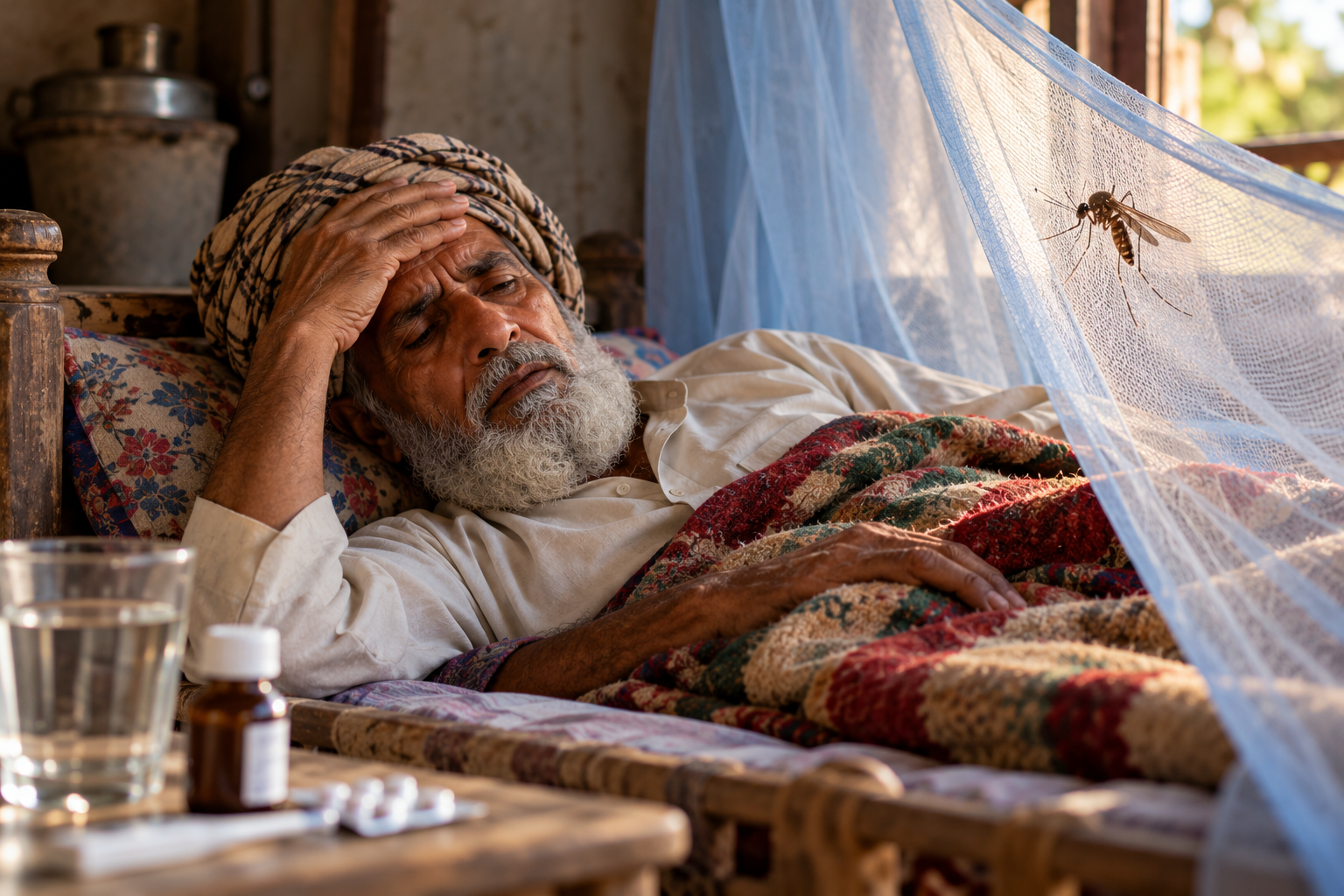
- Image alt text idea: Anopheles mosquito bite and common malaria symptoms: fever, chills and headache
Written by [Author name]. Medically reviewed by [Reviewer name, credentials], [date].
Malaria symptoms often begin like an ordinary fever: chills, headache, body aches and tiredness. That is exactly why malaria is easy to miss, and why a simple blood test matters. In Pakistan, where malaria is still common and can look like dengue or flu, getting tested early is the safest step.
This guide explains the early signs of malaria, how it is tested and treated, how to tell it apart from dengue, and when a fever becomes an emergency.
Quick answers
- Common early symptoms: fever, chills, sweating, headache, muscle aches and tiredness.
- When they start: usually 10 to 15 days after an infected mosquito bite.
- How to confirm it: a blood test. Symptoms alone cannot tell malaria from dengue or flu.
- Treatment: depends on the parasite type. Never treat yourself with leftover or store-bought antimalarial tablets.
- Emergency signs: confusion, seizures, trouble breathing, being unable to drink, jaundice or dark urine.
What Is Malaria?
Malaria is an illness caused by Plasmodium parasites. They are passed to people by the bite of an infected female Anopheles mosquito. After a bite, the parasites travel to the liver, then invade red blood cells, which is when fever and other symptoms begin.
Five parasite species can infect humans, but two matter most. Plasmodium falciparum is the most dangerous. Plasmodium vivax is the most common type in Pakistan. According to the World Health Organization (WHO), malaria does not spread from person to person. In rare cases it can pass through blood transfusion or contaminated needles.
Malaria in Pakistan: What the Numbers Show
Malaria has not gone away in Pakistan, and it can surge after floods and heavy rain.
- Two main parasites. In a WHO outbreak report on Pakistan, 77% of laboratory-confirmed cases in 2022 were P. vivax and 23% were P. falciparum, the type linked to the most severe cases.
- Floods raise the risk. The same WHO report described a rapid rise in cases after the 2022 floods. Sindh and Balochistan together accounted for 78% of confirmed cases at that time.
- Cases remain high. Dawn reported that Pakistan recorded about 1.8 million malaria cases in 2025, roughly 10% fewer than in 2024 but still a heavy burden.
- Seasonal peaks. Pakistani studies report that P. vivax tends to peak earlier in the year, while P. falciparum peaks in autumn, around October and November (national data review). If you have a fever now, the season is a reason not to wait.
Risk varies by area, so wherever you live, a fever after mosquito exposure deserves a proper test rather than guesswork.
Early Symptoms of Malaria
The first signs are often mild and look like many other fevers. Common early malaria symptoms include:
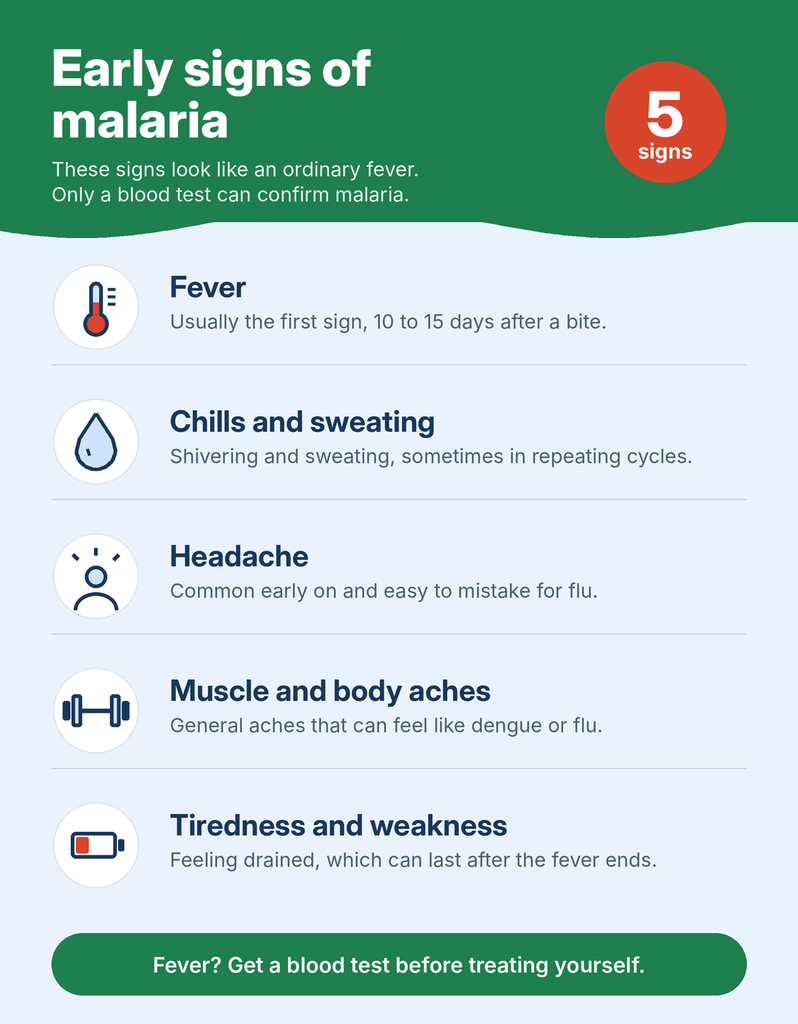
- Fever
- Chills or shivering
- Sweating
- Headache
- Muscle and body aches
- Tiredness and weakness
- Nausea or vomiting
Some people have repeating cycles of chills, high fever and sweating, but many do not. Symptoms usually start 10 to 15 days after the bite, according to WHO. People who have had malaria before may have milder symptoms, which can make the illness easier to dismiss.
P. vivax has an extra feature worth knowing: it can stay dormant in the liver and cause the fever to come back weeks or months after the first illness. If your fever returns after you felt better, tell your doctor that you had malaria before.
Malaria or Dengue? How They Differ
Both cause fever, headache, body aches and weakness, so you cannot tell them apart by how you feel. They are different infections, though.
| Malaria | Dengue | |
|---|---|---|
| Cause | Plasmodium parasite | Dengue virus |
| Mosquito | Anopheles, which bites mostly from dusk to dawn | Aedes, which bites mostly in the daytime |
| Features that stand out more often | Shaking chills and sweating in cycles | Severe muscle and joint pain, pain behind the eyes, rash |
| How it is confirmed | Blood smear under a microscope or rapid test | Dengue-specific blood tests |
| Fever medicine caution | Ask your doctor what is safe | Avoid ibuprofen and aspirin, which can raise bleeding risk |
Because the symptoms overlap, ask your doctor which tests make sense for your fever. For the dengue side of the picture, read our guide to dengue fever symptoms, warning signs and prevention in Pakistan.
When Malaria Becomes an Emergency
Malaria can turn serious quickly. WHO warns that P. falciparum malaria can progress to severe illness, even death, within 24 hours if it is not treated. Go to an emergency department right away if someone with suspected or confirmed malaria has:
- Confusion, unusual behaviour or reduced alertness
- Seizures
- Difficulty breathing
- Extreme weakness or being unable to sit or stand
- Repeated vomiting or being unable to drink
- Yellow eyes or skin (jaundice)
- Dark or bloody urine
- Collapse
Children who are unusually sleepy, hard to wake, unable to drink or having seizures need emergency care. Do not wait for every sign to appear.
How Malaria Is Diagnosed
A doctor cannot confirm malaria from symptoms alone. Two blood tests are common:
- Microscopy (blood smear). A trained technician looks for parasites in a blood sample. It can also show which species is present and how heavy the infection is.
- Rapid diagnostic test (RDT). A quick test that detects malaria proteins in a drop of blood. Some rapid tests are designed mainly to detect P. falciparum, so ask which parasites the test covers.
If malaria is strongly suspected but the first test is negative, a doctor may repeat it. If your fever lasts several days without a clear cause, go back rather than assuming it is something minor.
Malaria Treatment
Treatment depends on the parasite species, how severe the illness is, your age, whether you are pregnant, and local drug resistance. That is why testing comes before treatment.
- For P. falciparum, WHO describes artemisinin-based combination therapy as the most effective treatment. Pakistan’s national approach, as reported by The News, pairs artemether-lumefantrine with primaquine.
- For P. vivax, chloroquine is used where the parasite is still sensitive to it, and primaquine is added to prevent relapses. Pakistan’s approach uses chloroquine with primaquine.
- Severe malaria needs hospital care.
Primaquine needs a quick safety check. In people with G6PD deficiency, a common inherited enzyme condition, primaquine can cause red blood cells to break down. WHO guidance supports checking G6PD status before anti-relapse treatment. Tell your doctor if you or a close relative has ever been told you have G6PD deficiency, and report dark urine or sudden weakness during treatment.
Other important points:
- Do not buy antimalarial tablets and treat yourself. The wrong medicine or an incomplete course can lead to treatment failure.
- Finish the full course even if the fever settles in a day or two.
- Rest and drink fluids. If you cannot keep fluids down, seek urgent care.
- Ask your doctor which fever and pain medicine is safe for you. Our guide to over-the-counter pain relievers explains common options and risks, but a clinician should decide while the cause of fever is still being sorted out.
Recovery: Why Malaria Can Leave You Anemic
Malaria destroys red blood cells, so tiredness and paleness can last after the fever is gone. WHO notes that severe anemia is a common complication in children with severe malaria. If you stay weak or pale after treatment, ask for a blood count.
Do not start iron tablets on your own. Iron helps only when low iron is the cause, and it can be harmful when it is not. Read about anemia causes, symptoms and types and iron deficiency anemia, foods and treatment, and see our healthy diet guide for balanced eating while you recover.
How to Prevent Malaria
Prevention comes down to avoiding bites from Anopheles mosquitoes, which are most active from dusk to dawn.
- Sleep under a mosquito net, ideally an insecticide-treated one, especially in areas with malaria.
- Use screens on windows and doors, and keep them in good repair.
- Use a repellent that is approved locally, and follow the label. Check age limits for children and ask a doctor about use in pregnancy.
- Cover arms and legs in the evening, when mosquitoes are most active.
- Remove standing water around your home. The same weekly habits that prevent dengue also reduce mosquito breeding. See our home dengue prevention checklist.
- Follow local public health advice during floods and after heavy rain, when mosquito numbers rise.
- Before travelling to a malaria area, talk to a doctor or travel clinic about preventive medicine. Advice depends on the destination and your health.
Frequently Asked Questions About Malaria
What are the first signs of malaria?
Usually fever, chills, sweating, headache, muscle aches and tiredness. They can be mild, which is why testing matters.
How long after a mosquito bite do malaria symptoms start?
Usually 10 to 15 days, according to WHO, though it can be longer, especially with P. vivax.
Is malaria contagious?
No, not through everyday contact. It spreads through infected mosquito bites. Rarely, it can spread through blood transfusion or contaminated needles.
Is every fever malaria?
No. Dengue, flu and other infections cause similar fevers. A blood test is the only reliable way to know.
Can malaria come back after treatment?
Yes, with P. vivax. The parasite can hide in the liver and cause relapses weeks or months later, which is why anti-relapse treatment with primaquine is used. See a doctor if the fever returns.
Can malaria be cured?
Yes. Most malaria is curable with the right medicine, started early and taken for the full course.
Can I take ibuprofen or aspirin for a fever if I might have malaria or dengue?
Ask a doctor first. Ibuprofen and aspirin can raise bleeding risk if the illness turns out to be dengue.
Conclusion
Malaria is serious but treatable. The key steps are simple: do not guess when you have a fever, get a blood test, take the full course your doctor prescribes, and protect your home from mosquitoes. Seek emergency care for confusion, seizures, breathing trouble or an inability to drink.
Next, learn the difference with our guide to dengue fever in Pakistan, or browse more health articles on Medicshint.
Sources
- WHO: Malaria fact sheet
- WHO: Disease Outbreak News, Malaria in Pakistan (October 2022)
- Dawn: WHO urges intensified efforts to prevent malaria resurgence
- The News: Malaria cases soar in Pakistan amid rising fears of treatment failure
- PubMed Central: Malaria incidence and seasonality in Pakistan (2011-2016 data)
- CDC: Malaria
Medical Disclaimer
This article is for general education only and does not replace diagnosis or treatment from a qualified healthcare professional. See our full medical disclaimer. If you or a family member has severe symptoms, seek emergency care.