
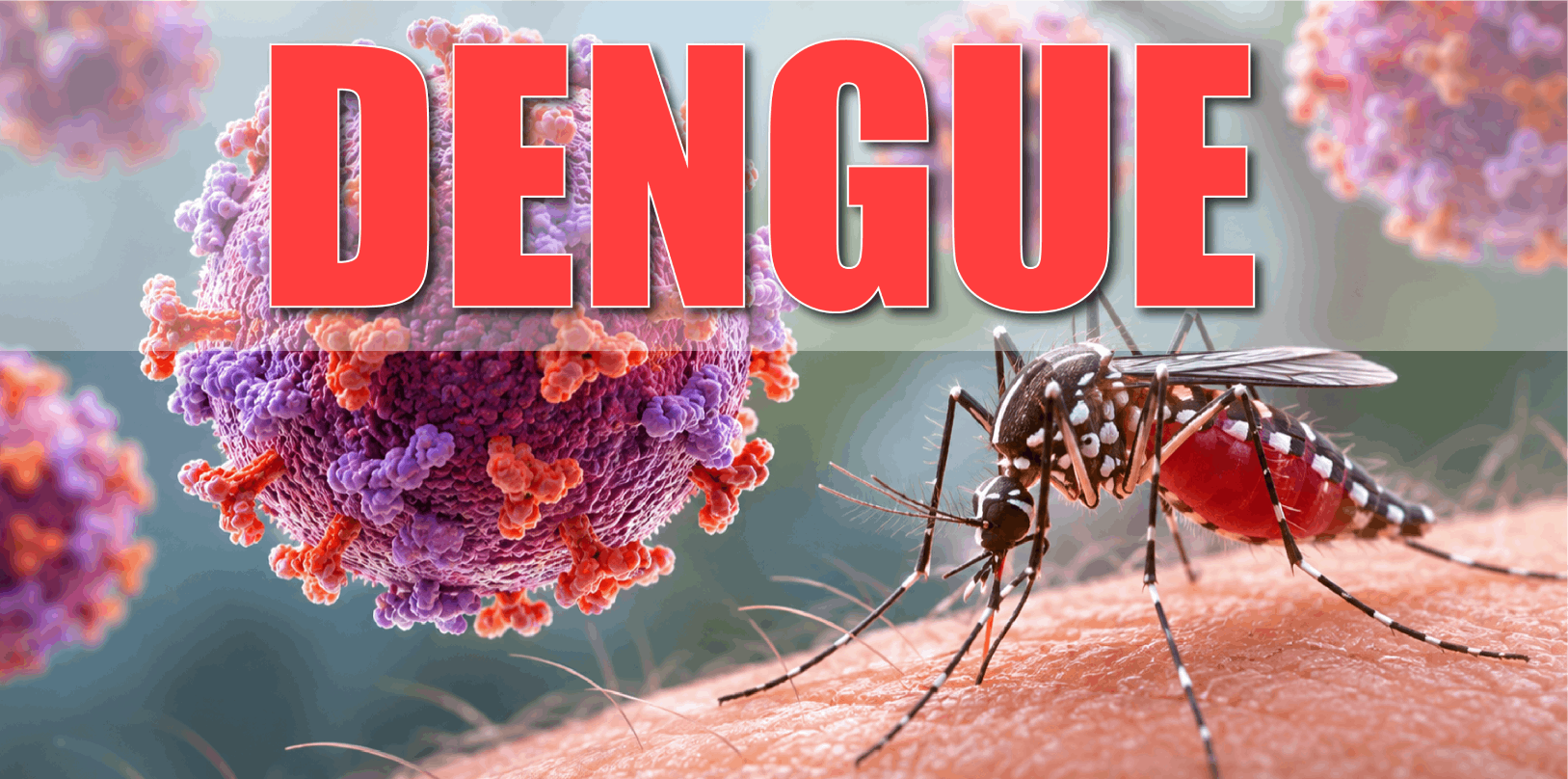
Dengue fever in Pakistan is a growing health concern. It is a mosquito-borne viral infection, and it can range from a mild fever to a life-threatening illness. According to the National Institute of Health (NIH), Pakistan recorded 21,016 dengue cases in 2023 and 24,182 in 2024. In 2025, the number reached 33,394 laboratory-confirmed cases.
Because case numbers keep rising, every family should know the basics. In this guide, you will learn the main dengue symptoms, the warning signs of severe dengue, safe care at home, and practical ways to prevent dengue. Moreover, you will see when to go to a doctor without delay.
Quick Facts About Dengue
- Dengue is caused by a virus that infected Aedes mosquitoes spread, mostly by day.
- Symptoms usually start 4 to 10 days after the bite and last 2 to 7 days.
- No specific antiviral medicine cures dengue. Rest, fluids, and paracetamol are the main home care.
- Aspirin and ibuprofen should be avoided because they can raise the risk of bleeding.
- Warning signs of severe dengue often appear when the fever goes down. Seek medical care at once.
- Removing standing water and preventing mosquito bites are the best ways to prevent dengue.
What Is Dengue Fever?
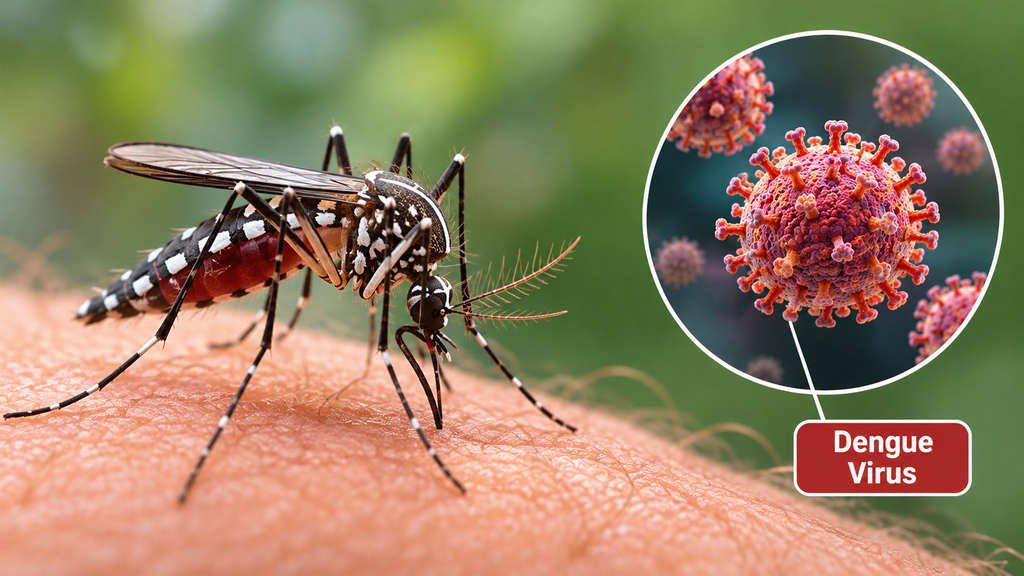
Dengue is a viral infection caused by the dengue virus. Infected female mosquitoes spread it to people through bites. The main carrier is the Aedes aegypti mosquito. In Pakistan, Aedes aegypti and Aedes albopictus both play a role, and they breed in clean, stagnant water in towns and cities.
There are four types (serotypes) of dengue virus. Recovering from one type does not fully protect you from the others. In fact, a second infection with a different type raises the risk of severe dengue.
Many people with dengue have mild symptoms or none at all. However, some people develop severe dengue, which needs hospital care.
How Does Dengue Spread?
Dengue spreads through mosquito bites, not through casual contact. The cycle works like this:
- A mosquito bites a person who has the dengue virus in their blood.
- The virus multiplies inside the mosquito.
- After about 8 to 12 days in warm weather, the mosquito can pass the virus on.
- The infected mosquito bites another person and spreads the infection.
Notably, a sick person can pass the virus to mosquitoes up to 2 days before symptoms start. They can also pass it on for up to 2 days after the fever ends. Therefore, protecting a sick family member from mosquito bites matters for the whole household.
In rare cases, dengue can also pass from a pregnant mother to her baby, or through blood products and organ donation.
How Long Do Dengue Symptoms Take to Appear?
Dengue symptoms usually begin 4 to 10 days after the bite of an infected mosquito. They typically last 2 to 7 days, and most people recover within 1 to 2 weeks. Still, tiredness can last for several weeks after recovery.
Common Symptoms of Dengue Fever
Dengue symptoms often look like the flu. Common signs include:
- High fever (up to 40°C or 104°F)
- Severe headache
- Pain behind the eyes
- Muscle and joint pain
- Nausea and vomiting
- Swollen glands
- Skin rash
- Fatigue and weakness
Fever and headache usually come first. The headache can be strong, and it often comes with pain behind the eyes. Body pain can be severe, which is why dengue is also called “break-bone fever.” Meanwhile, nausea, vomiting, and a rash can appear at different stages of the illness.
Is It Dengue or Another Fever?
A fever alone does not prove dengue. Flu, typhoid, and malaria can look very similar. For this reason, please do not guess. A doctor and a blood test are the only reliable way to know.
Dengue Warning Signs You Should Never Ignore
Here is the most important point about dengue. A falling fever does not always mean the danger has passed. In fact, severe dengue often develops just after the fever goes away.
Seek urgent medical care if a person with suspected or confirmed dengue has:
- Severe stomach pain
- Persistent vomiting
- Fast or difficult breathing
- Bleeding from the gums or nose
- Blood in vomit or stool
- Extreme weakness or tiredness
- Restlessness
- Very strong thirst
- Pale, cold skin
If you see any of these signs, go to a hospital immediately. Do not wait for the next day. For a closer look, read our full guide on dengue warning signs that need immediate medical attention.
Who Is at Higher Risk of Severe Dengue?
Anyone can become seriously ill with dengue. However, some people need extra attention.
- People who have had dengue before, because a second infection with another type can be more severe
- Young children and older adults
- Pregnant women
- People with long-term health conditions
If you belong to one of these groups, speak to a doctor early rather than managing symptoms alone.
How Is Dengue Diagnosed?
Doctors cannot confirm dengue from symptoms alone, because early signs overlap with other infections. Instead, they look at your symptoms, a physical exam, and whether dengue is spreading in your area. Then they may order tests.
- NS1 antigen test or PCR: These can detect the virus in the first week of illness.
- Antibody tests (IgM and IgG): These are used later, once the body has made antibodies.
- Complete blood count (CBC): This checks your platelets and other blood cells.
Timing matters a lot. A test taken too early or too late can be misleading, so always let your doctor read the result.
Dengue Platelet Count: What You Should Know
Platelets are blood cells that help your blood clot. In dengue, the platelet count often falls during the illness. In most cases, it recovers on its own.
A healthy count is roughly 150,000 to 450,000 per microliter, although lab ranges differ. A low number worries many families, and that is understandable. Nevertheless, doctors look at the whole picture, including bleeding, fluid levels, and other blood results, rather than the platelet number alone. Platelet transfusion is not needed for every low count, and doctors decide case by case.
What about papaya leaf juice or extract? Many people in Pakistan try it. Some small studies report a rise in platelets, but the evidence is limited and the results are mixed. It is not an official dengue treatment. Therefore, never use it instead of medical care or delay a hospital visit because of it.
Dengue Treatment: What to Do and What to Avoid
There is no specific antiviral medicine for dengue. Treatment focuses on easing symptoms, watching for warning signs, and preventing complications. People with severe dengue usually need hospital care.
What to Do
- Rest as much as possible.
- Drink plenty of fluids, such as water, oral rehydration solution (ORS), and soups, unless your doctor advises otherwise.
- Use paracetamol (acetaminophen) for fever and pain. Follow the label or your doctor’s instructions for the dose.
- Check your symptoms every day, including your temperature, fluid intake, and how much you urinate.
- Eat light, nutritious meals as you recover. Our guide to a healthy diet and essential nutrients can help.
- Follow up with your doctor as advised.
What to Avoid
- Aspirin and ibuprofen, because they can increase the risk of bleeding.
- Other painkillers of the same family, such as diclofenac, unless a doctor approves. If you are unsure, ask a doctor or pharmacist before taking any tablet.
- Antibiotics without a prescription. Dengue is a viral infection, so antibiotics do not treat it.
- Herbal or home remedies instead of medical care.
Why Fluids Matter During Dengue
Dengue can cause dehydration, especially with fever and vomiting. For this reason, drinking enough fluids is a key part of home care. However, if someone cannot keep fluids down, becomes very weak, or shows any warning sign, they need medical attention right away.
How to Prevent Dengue at Home
Dengue prevention depends on two things: removing mosquito breeding sites and avoiding mosquito bites.
1. Remove Standing Water
Check your home every week for places where water collects. For example:
- Buckets and water drums
- Flowerpots and plant trays
- Air coolers and refrigerator trays
- Discarded tyres and containers
- Roof tops and balconies
- Open water tanks and blocked drains
2. Cover, Empty, and Clean Water Containers
If you store water, keep containers covered. In addition, empty and clean them once a week, because mosquitoes lay eggs in open water.
3. Use Mosquito Repellent
Choose a repellent with DEET, picaridin, or IR3535, and follow the instructions on the product. Repellent is especially useful outdoors and in areas where mosquitoes are common.
4. Wear Protective Clothing
Long sleeves and trousers reduce the number of bites. This matters even more at dawn and dusk, when mosquitoes are often active.
5. Use Screens, Nets, Coils, and Vaporizers
Window and door screens keep mosquitoes out. Likewise, mosquito nets help if you or a child rests during the day, because Aedes mosquitoes bite in daylight. Coils and vaporizers can add extra protection indoors.
6. Protect a Family Member Who Has Dengue
A person with dengue can pass the virus to mosquitoes. Those mosquitoes can then infect others at home. Consequently, keep the sick person under a net or in a screened room until they recover.
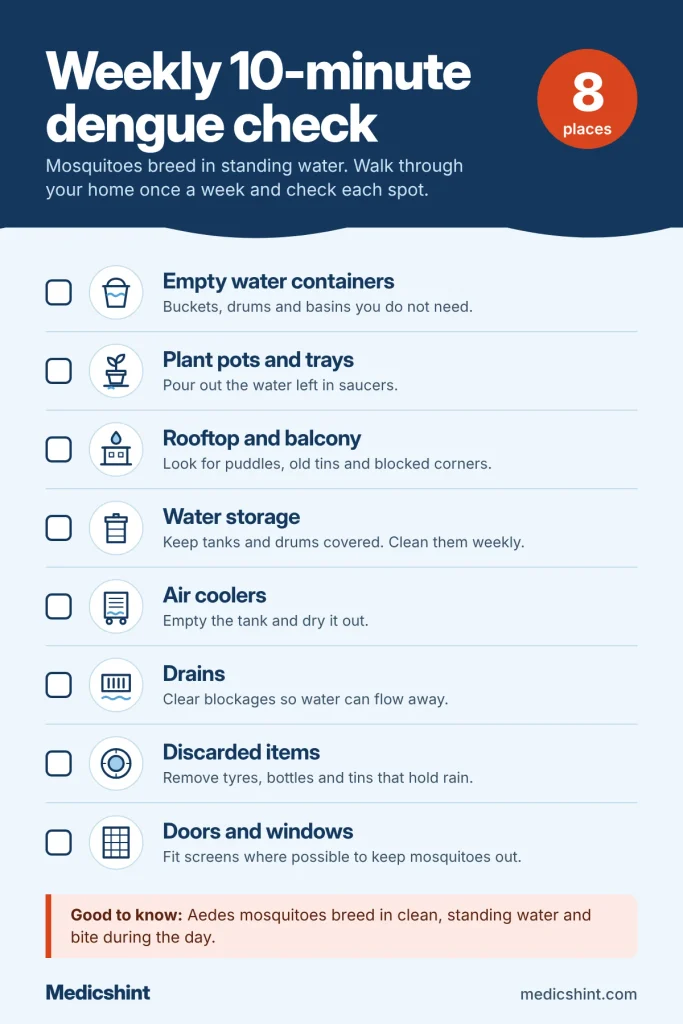
A Weekly 10-Minute Dengue Check for Pakistani Families
Try this simple checklist once a week:
- Empty unnecessary water containers.
- Check plant pots and trays.
- Inspect rooftops and balconies.
- Keep water storage containers covered.
- Empty and dry air coolers.
- Clear blocked drains.
- Remove discarded items that can hold rainwater.
- Make sure doors and windows have screens where possible.
In addition, help your neighborhood. Dispose of waste properly, and report blocked drains or standing water to your local authorities.
Dengue Vaccine: Is One Available?
According to the WHO, one dengue vaccine (Qdenga) is licensed in some countries. However, it is recommended only for children and teens aged 6 to 16 in areas with high dengue transmission. Several other vaccines are still under evaluation. If you want to know whether a vaccine is available or suitable for your child, ask your doctor. In any case, a vaccine does not replace mosquito protection.
Dengue Season in Pakistan: Why Timing Matters
Dengue can occur at any time of year, but cases usually rise during and after the monsoon. Rain, heat, and humidity create ideal conditions for mosquitoes to breed. In past seasons, cases have been reported in Punjab, Sindh, Khyber Pakhtunkhwa, Balochistan, and Islamabad.
In March 2026, the NIH issued a dengue advisory. It urged health departments to improve surveillance and to remove mosquito breeding sites. As a result, families should not wait for an outbreak. Instead, start the weekly home check before the rainy season and keep it up through the post-monsoon months.
Can Dengue Be Prevented Completely?
No method can promise zero risk. Nevertheless, removing breeding sites and preventing bites greatly lowers the chance of infection. Prevention works best when the whole community takes part, not just one household.
When Should You See a Doctor for Suspected Dengue?
Contact a healthcare professional if you develop:
- Sudden high fever
- Severe headache
- Pain behind the eyes
- Strong body or joint pain
- Rash
- Nausea or vomiting
- Unusual weakness
Seek urgent medical care if any warning sign appears, such as severe stomach pain, persistent vomiting, bleeding, difficulty breathing, or pale, cold skin. Do not wait for symptoms to become severe.
Frequently Asked Questions About Dengue
How long after a mosquito bite do dengue symptoms appear?
Symptoms usually appear 4 to 10 days after the bite of an infected mosquito.
How long does dengue fever last?
Symptoms usually last 2 to 7 days, and most people recover within 1 to 2 weeks. However, tiredness can continue for several weeks.
Can dengue be treated at home?
Mild dengue can often be managed at home with rest, fluids, and paracetamol, under a doctor’s guidance. However, anyone with a warning sign needs hospital care immediately.
Which painkiller is safe for dengue?
The WHO advises paracetamol (acetaminophen) for fever and pain. Aspirin and ibuprofen should be avoided because they can increase the risk of bleeding.
Is dengue contagious from person to person?
Dengue does not spread through casual contact. It spreads through the bite of infected mosquitoes. Rarely, it can pass from mother to baby or through blood products.
Can you get dengue more than once?
Yes. There are four dengue virus types. Infection with one does not fully protect you from the others, and a second infection can be more severe.
Does a low platelet count always mean severe dengue?
No. Platelets often drop in dengue and usually recover on their own. A doctor decides on treatment by looking at your overall condition, not the number alone.
Is there a medicine or vaccine for dengue?
No specific antiviral medicine cures dengue. One vaccine is licensed in some countries, but only for certain age groups in high-transmission areas. Ask your doctor about your situation.
Final Takeaway
Dengue fever in Pakistan should be taken seriously, especially after the rains. Know the symptoms, watch for warning signs, avoid aspirin and ibuprofen, and drink enough fluids. Above all, remove standing water around your home and protect yourself from daytime mosquito bites.
Most importantly, do not assume you are safe because the fever is going down. Severe dengue can develop at that very moment, so stay alert and see a doctor when in doubt.
Medical Disclaimer
This article is for general education only and does not replace advice from a qualified healthcare professional. If you or someone close to you has severe symptoms, such as difficulty breathing, heavy bleeding, constant vomiting, or severe stomach pain, seek urgent medical care. Please read our full Medical Disclaimer.
Sources
- World Health Organization (WHO): Dengue fact sheet
- WHO: Dengue and severe dengue
- Centers for Disease Control and Prevention (CDC): Dengue
- Dawn: NIH issues dengue advisory (March 18, 2026)
- The News: NIH warns provinces of dengue surge after rains (March 17, 2026)
- PLOS ONE (2020): Papaya leaf extract in dengue with severe low platelets, pilot study