By the Medicshint Team | Educational information only, not medical advice. Read our Medical Disclaimer. Last updated: November 2026
Quick answer: A healthy diet is an eating pattern built mostly on vegetables, fruit, whole grains, beans, fish, nuts, and lean protein. It also keeps salt, added sugar, and saturated fat low. US and UK guidelines agree on these basics, so you can follow the same pattern wherever you live.
A healthy diet gives your body the nutrients it needs. At the same time, it keeps salt, added sugar, and unhealthy fats low. It is not a short-term plan or a list of banned foods. Instead, it is a simple eating pattern you can follow for years.
Most people know they should eat better. However, the hard part is knowing where to start. For that reason, this healthy eating guide breaks everything into clear steps. It also includes a sample 7-day plan that you can adapt to your budget and culture.
What Is a Healthy Diet?
A healthy diet supplies the energy and nutrients you need at every age. Most of it comes from whole foods. For example, these include vegetables, fruit, whole grains, beans, nuts, fish, and lean protein.
Health agencies in the USA and the UK agree on the basics. In the US, MyPlate fills half the plate with fruit and vegetables. Similarly, the UK Eatwell Guide gives them the biggest share of the day’s food. Whole grains and protein come next. Meanwhile, fats and sugars stay small, and water is the main drink.
Why Is a Healthy Diet Important?
What you eat affects almost every part of your health. For instance, a balanced diet can help you:
- Keep a healthy body weight
- Support heart health and healthy blood pressure
- Lower the risk of type 2 diabetes
- Support digestion and gut health
- Keep your energy steady through the day
- Support your immune system and mood
Poor eating habits, on the other hand, work in the opposite direction. Diets high in salt, added sugar, and processed meat raise the risk of high blood pressure, heart disease, and other long-term conditions. To learn more, read our guide to high cholesterol and heart disease. Likewise, our article on high cholesterol and diabetes explains how food choices affect blood sugar and blood fats.
Healthy Eating Guidelines: US vs UK at a Glance
Both countries give similar advice. However, the numbers differ slightly. This table shows daily guidance for healthy adults.
| Topic | US guidance | UK guidance |
|---|---|---|
| Fruit and vegetables | About 2 cups of fruit and 2.5 cups of vegetables (2,000-calorie plan) | At least 5 portions (80 g each) |
| Added or free sugar | Under 10% of daily calories | Under 5% of energy, about 30 g |
| Salt | Under 2,300 mg sodium | No more than 6 g salt |
| Saturated fat | Under 10% of daily calories | About 30 g (men), 20 g (women) at most |
| Fish | About 8 oz of seafood a week | 2 portions a week, one of them oily |
| Fiber (fibre in the UK) | 25 to 38 g, depending on age and sex | 30 g |
Your own needs may differ. Therefore, ask your doctor or a registered dietitian for personal advice.
The Building Blocks of a Balanced Diet
1. Fruit and Vegetables
Fruit and vegetables supply fiber, vitamins, minerals, and plant compounds. Therefore, aim to fill about half your plate with them at main meals. UK guidance suggests at least five portions a day. In the US, guidance also encourages a wide variety of colors. Fresh, frozen, and canned (in water, without added sugar or salt) all count. In fact, frozen produce is often cheaper and just as nutritious.
2. Whole Grains and Starchy Foods
For better energy, choose whole grains more often than refined ones. Good options include oats, brown rice, whole wheat bread, whole wheat pasta, quinoa, and barley. Because they digest slowly, they give you steady energy and fiber (spelled fibre in the UK). Potatoes with the skin on also count as a starchy food.
3. Lean Protein
Protein helps your body build and repair tissue. Good sources include:
- Fish, especially oily fish such as salmon, sardines, and mackerel
- Skinless chicken and turkey
- Eggs
- Beans, lentils, and chickpeas
- Tofu, nuts, and seeds
Try to eat fish twice a week. On the other hand, limit red and processed meat. UK guidance suggests no more than about 70 g a day on average. As a result, beans, lentils, and fish make smart swaps on several days of the week.
4. Dairy and Alternatives
Dairy foods provide calcium, protein, and iodine. For example, lower-fat milk and plain yogurt are easy choices. If you prefer plant-based drinks, pick unsweetened versions with added calcium. In either case, check labels for hidden sugar.
5. Healthy Fats
Not all fats act the same way. Unsaturated fats from olive oil, nuts, seeds, avocado, and oily fish support heart health. In contrast, saturated fat from butter, fatty meat, and pastries should stay limited. For instance, you can cook with olive oil instead of butter.
6. Water and Other Fluids
Water is the best everyday drink. The UK Eatwell Guide suggests about 6 to 8 glasses of fluid a day, although needs vary with weather and activity. Tea and coffee without sugar also count. Sugary drinks, however, add calories with few nutrients. So swap soda and energy drinks for water, and keep fruit juice to a small glass a day.
What to Limit in a Healthy Diet
Some foods are fine in small amounts. However, eating them often can harm your health over time.
- Salt: Too much salt can raise blood pressure. Our high blood pressure guide explains the risks. Meanwhile, herbs, lemon, and spices add flavor without salt.
- Added sugar: Sweets, sweet drinks, and many breakfast cereals contain a lot of it. Check the label before you buy.
- Saturated and trans fats: Fried food, fatty meat, and baked snacks are common sources.
- Ultra-processed foods: Packaged snacks, ready meals, and instant noodles often contain salt, sugar, and fat together. Therefore, cook from scratch when you can.
How to Build a Healthy Plate
A simple plate rule makes healthy eating easier. First, fill half your plate with vegetables and fruit. Next, add whole grains to one quarter. Then, fill the last quarter with lean protein. Finally, add a small amount of healthy fat, such as olive oil or nuts.
Your hand also works as a portion guide. For example, a palm-sized piece of protein suits most meals. Likewise, a fist-sized serving of grains is a good start. A thumb-sized amount of oil or nuts is enough.
Sample 7-Day Healthy Eating Plan
Use this plan as a template. In addition, swap foods to suit your culture, taste, and budget.
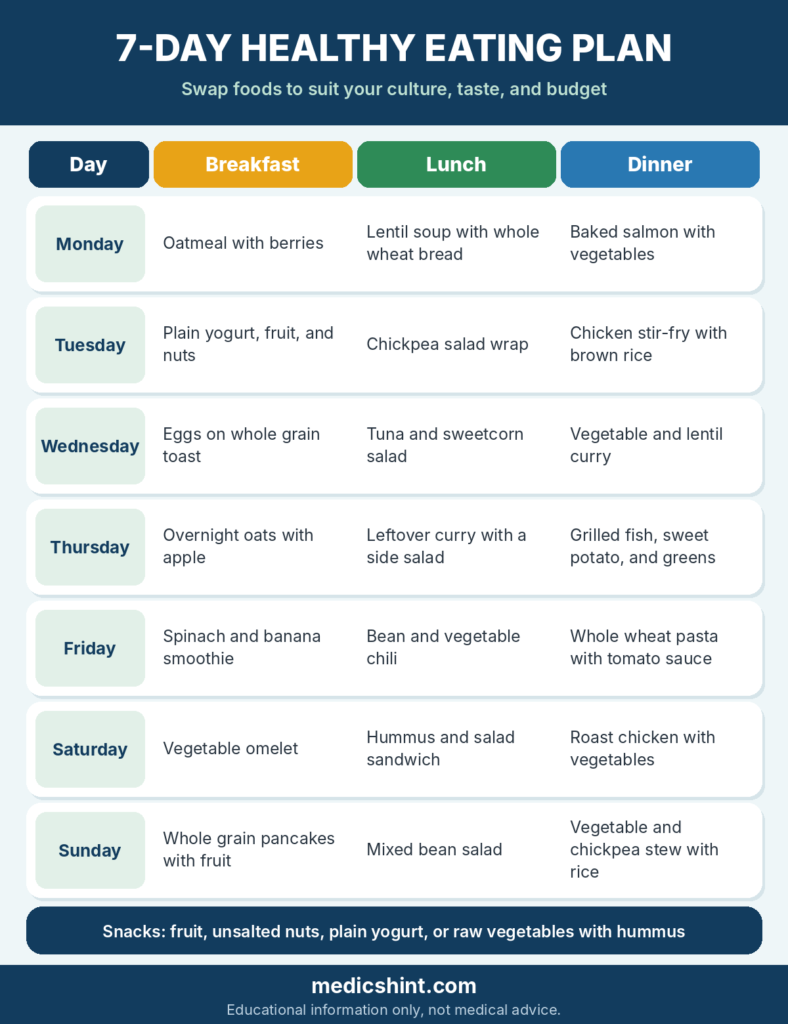
For snacks, choose fruit, unsalted nuts, plain yogurt, or raw vegetables with hummus.
Healthy Diet Tips for Beginners
- Start small. First, change one meal or one habit this week.
- Plan ahead. A short weekly plan stops last-minute takeout orders.
- Read labels. Next, compare sugar, salt, and saturated fat per 100 g.
- Cook more often. Home cooking also gives you control over ingredients.
- Eat regularly. Skipping meals often leads to overeating later.
- Allow treats. In fact, a flexible approach is easier to keep for years.
Healthy Eating on a Budget
Eating well does not have to cost a lot. For example, frozen vegetables, dried beans, oats, eggs, and canned fish are cheap and nutritious. In addition, buying seasonal produce and cooking in batches saves money. As a result, you waste less food and spend less each week.
Diet and Common Health Concerns
Food choices can affect many everyday health issues. For instance, low iron may cause tiredness, so our guide to iron deficiency anemia lists iron-rich foods. Similarly, heavy late meals and too much caffeine can disturb rest. Our insomnia guide covers habits that help.
However, some people need personal advice before they change their diet. This includes anyone who is pregnant or has diabetes, kidney disease, a food allergy, or a history of disordered eating. In these cases, speak to a doctor or registered dietitian first.
Common Mistakes to Avoid
- Cutting out whole food groups without medical advice
- Trusting “diet” or “low-fat” products that still contain a lot of sugar
- Eating too little fiber or protein
- Skipping breakfast and then snacking all day
- Following extreme online trends instead of proven advice
Frequently Asked Questions About a Healthy Diet
What is the healthiest diet for adults?
No single diet suits everyone. However, the healthiest pattern is rich in vegetables, fruit, whole grains, beans, fish, and healthy fats. It is also low in ultra-processed food, salt, and added sugar.
How many calories should I eat a day?
It depends on age, sex, height, and activity. US guidance uses 2,000 calories as a reference. UK guidance lists about 2,000 for women and 2,500 for men. Your doctor or dietitian can give a personal target.
Can I follow a healthy diet as a vegetarian?
Yes, you can. However, plan carefully. Beans, lentils, tofu, eggs, dairy, and nuts provide protein. Also, check your intake of iron, vitamin B12, and omega-3 fats.
How long does it take to see results?
Many people notice better energy and digestion within a few weeks. Benefits for weight, blood pressure, and cholesterol usually take longer. Therefore, focus on steady habits instead of quick fixes.
Is a healthy diet enough to lose weight?
A healthy diet supports weight loss when you eat fewer calories than you use. In addition, regular activity and good sleep help. Speak to a healthcare professional for personal guidance.
Key Takeaways
- A healthy diet is a long-term pattern, not a short-term plan.
- Fill half your plate with vegetables and fruit.
- Choose whole grains, lean protein, and unsaturated fats most often.
- Limit salt, added sugar, saturated fat, and ultra-processed food.
- Start with one small change, then build from there.
This article is for general education and does not replace professional medical advice. Please read our Medical Disclaimer and speak to a qualified healthcare provider about your own needs. Questions? Visit our Contact Us page.