
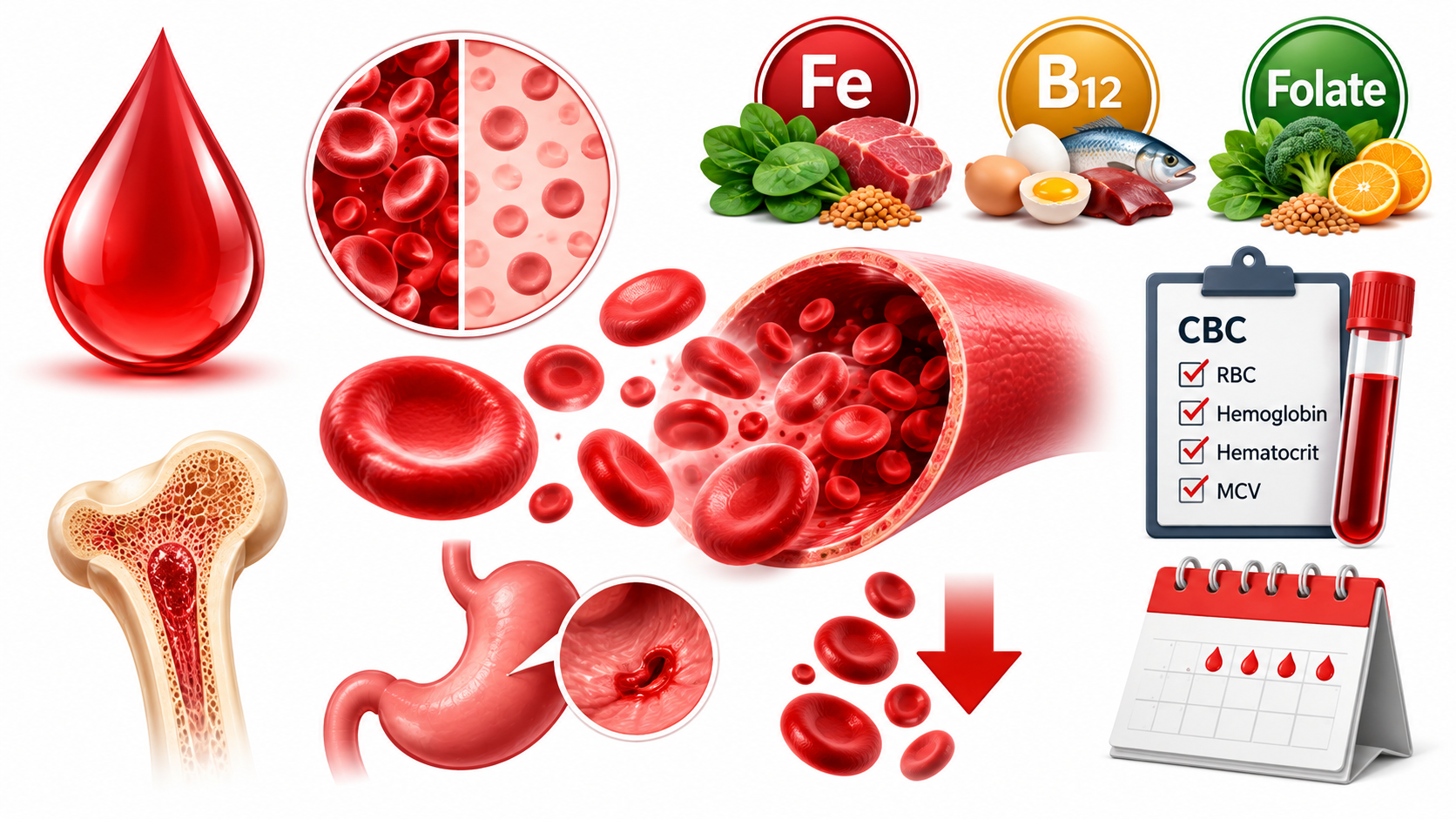
Anemia is a common blood condition that develops when the blood has too few healthy red blood cells or not enough hemoglobin to carry oxygen effectively to the body’s tissues. Common anemia causes include nutritional deficiencies, blood loss, chronic diseases, infections, pregnancy-related changes, and inherited blood disorders. Iron-deficiency anemia is the most common type, but not every case of anemia is caused by low iron. World Health Organization
Some people with mild anemia may have few or no noticeable symptoms. When symptoms occur, they can include tiredness, weakness, dizziness, headaches, pale skin, and shortness of breath, particularly during physical activity. The symptoms and treatment depend largely on the underlying cause and severity of the anemia. World Health Organization
What Is Anemia?
Anemia occurs when the body does not have enough healthy red blood cells or when hemoglobin levels are lower than expected for a person’s age, sex, pregnancy status, and other physiological factors. Hemoglobin is the protein in red blood cells that carries oxygen from the lungs to tissues throughout the body. World Health Organization
Because oxygen delivery is important for normal body function, anemia can affect energy levels, physical activity, concentration, and overall well-being. The severity of symptoms can vary considerably from one person to another.
Anemia is not a single disease. Instead, it is a condition that can result from several underlying problems. Finding the cause is therefore an important part of diagnosis and treatment.
Common Reasons for Anemia
Anemia can develop when the body does not produce enough red blood cells, loses blood, or destroys red blood cells faster than the body can replace them. Nutritional deficiencies, chronic diseases, infections, inflammation, blood loss, and inherited blood disorders can all contribute to anemia. World Health Organization
Iron Deficiency
Iron is needed to make hemoglobin. Iron-deficiency anemia develops when the body’s iron supply is too low to support normal red blood cell production.
Possible reasons include:
- Not getting enough iron from food
- Increased iron needs during periods of growth
- Pregnancy
- Heavy menstrual bleeding
- Blood loss from the digestive tract
- Certain conditions that reduce iron absorption
Iron deficiency is the most common nutritional cause of anemia. World Health Organization
Vitamin B12 Deficiency
Vitamin B12 is important for normal red blood cell production and nervous-system function. A deficiency can lead to anemia and may occur because of inadequate intake, problems absorbing the vitamin, or certain medical conditions.
People who have difficulty absorbing vitamin B12 may develop deficiency even when their diet contains adequate amounts.
Folate Deficiency
Folate is another nutrient required for normal red blood cell production. Inadequate dietary intake or increased nutritional requirements can contribute to folate-deficiency anemia.
Pregnancy increases nutritional requirements, making adequate folate particularly important during this period.
Blood Loss
Blood loss can reduce the number of red blood cells and the amount of iron available for new blood-cell production.
Possible sources include:
- Heavy menstrual bleeding
- Bleeding during or after childbirth
- Gastrointestinal bleeding
- Surgery or significant injury
- Frequent blood donation in some circumstances
Persistent or unexplained blood loss should be medically evaluated rather than treated simply by taking iron supplements. NHLBI, NIH
Chronic Diseases and Inflammation
Long-term health conditions can contribute to anemia. Chronic kidney disease, inflammation, infections, cancer, and autoimmune diseases are among conditions that may affect red blood cell production or survival. NHLBI, NIH
Inherited Blood Disorders
Some forms of anemia are inherited. Examples include thalassemia and sickle cell disorders.
These conditions affect hemoglobin or red blood cells differently from nutritional anemia and may require specialized medical care.
Types of Anemia
There are many types of anemia, and they can be classified according to their cause or the characteristics of red blood cells.
Common types include:
Iron-Deficiency Anemia
This occurs when the body does not have enough iron to produce adequate hemoglobin. It is the most common type of anemia. NHLBI, NIH
Vitamin B12-Deficiency Anemia
This develops when the body does not have enough vitamin B12 for normal blood-cell production.
Folate-Deficiency Anemia
This occurs when inadequate folate affects normal red blood cell production.
Anemia of Chronic Disease
Long-term inflammation or chronic illnesses can interfere with normal red blood cell production.
Hemolytic Anemia
In hemolytic anemia, red blood cells are destroyed faster than the body can replace them. Causes can include inherited conditions, autoimmune diseases, infections, or certain medicines.
Aplastic Anemia
Aplastic anemia is an uncommon condition in which the bone marrow does not produce enough blood cells. It can affect red blood cells as well as other blood-cell types.
Thalassemia and Other Inherited Anemias
Thalassemia and other inherited blood disorders can affect hemoglobin production and red blood cell function.
Because different types have different causes, treatment should be based on proper medical evaluation rather than symptoms alone.
What Are the Symptoms of Anemia?
Mild anemia may cause no obvious symptoms. As anemia becomes more significant, symptoms may become more noticeable. NHLBI, NIH
Common symptoms can include:
- Tiredness or fatigue
- Weakness
- Dizziness or light-headedness
- Headaches
- Pale skin
- Shortness of breath, particularly with exertion
- Cold hands and feet
- Reduced ability to exercise
- Difficulty concentrating
More severe anemia can cause faster breathing, a rapid heartbeat, fainting, or other significant symptoms. World Health Organization
Because these symptoms can occur with many other conditions, they do not by themselves prove that someone has anemia.
Who Is More Likely to Develop Anemia?
Certain groups have a higher risk of anemia.
These include:
Women With Heavy Menstrual Bleeding
Regular heavy menstrual blood loss can gradually reduce iron stores and contribute to iron-deficiency anemia. Heavy menstrual bleeding should be discussed with a healthcare professional. NHLBI, NIH
Pregnant Women
Pregnancy increases the body’s nutritional and blood-volume requirements. This can increase the risk of anemia if nutritional needs are not adequately met.
Children and Adolescents
Rapid growth increases nutritional requirements, including the need for iron and other nutrients.
People With Certain Digestive Conditions
Some gastrointestinal conditions can affect the absorption of iron, vitamin B12, folate, or other nutrients.
People With Chronic Diseases
Kidney disease, chronic inflammation, infections, cancer, and autoimmune conditions can increase the risk of certain forms of anemia. NHLBI, NIH
People With a Family History of Inherited Anemia
A family history may increase the likelihood of inherited conditions such as thalassemia or other blood disorders.
How Is Anemia Diagnosed?
Doctors usually begin with a medical history, physical examination, and blood tests. A complete blood count (CBC) is one of the most common tests used when evaluating anemia. NHLBI, NIH
A CBC can provide information about:
- Red blood cell count
- Hemoglobin level
- Hematocrit
- Mean corpuscular volume (MCV)
- Other blood-cell measurements
Additional tests may be needed to determine why anemia is present.
Depending on the situation, doctors may check:
- Iron levels and iron stores
- Vitamin B12
- Folate
- Kidney function
- Other blood markers
- Signs of infection or inflammation
If blood loss is suspected, further testing may be needed to identify its source. For example, doctors may use stool testing, endoscopy, colonoscopy, or other investigations depending on the person’s symptoms and medical history. NHLBI, NIH
The exact interpretation of blood-test results depends on factors such as age, sex, pregnancy status, altitude, and individual health circumstances.
How Is Anemia Treated?
Treatment depends on the type, cause, and severity of anemia. There is no single treatment that works for every type. NHLBI, NIH
Iron Supplements
Iron supplements can help treat iron-deficiency anemia when iron deficiency has been confirmed or appropriately assessed.
However, taking large amounts of iron without medical guidance is not recommended. Excess iron can be harmful, and anemia caused by another condition will not necessarily improve with iron. NHLBI, NIH
Vitamin B12 Treatment
People with vitamin B12 deficiency may need oral supplements or injections, depending on the underlying cause and the ability of the body to absorb B12.
Folate Treatment
Folate deficiency may be treated with folate supplements and appropriate dietary changes.
Treating Blood Loss
If ongoing bleeding is causing anemia, identifying and treating the source of bleeding is essential.
For example, people with heavy menstrual bleeding may need treatment to reduce blood loss.
Treating Underlying Diseases
When anemia results from chronic kidney disease, inflammation, infection, autoimmune disease, or another health condition, treatment may focus on the underlying problem.
Blood Transfusion
In certain situations involving severe anemia or significant blood loss, a blood transfusion may be necessary. Transfusions are performed based on the individual’s clinical condition and medical assessment. NHLBI, NIH
What Foods Help Prevent Anemia?
A varied diet can help provide nutrients needed for healthy red blood cell production. Foods containing iron, vitamin B12, folate, vitamin C, and other nutrients can contribute to a balanced diet. World Health Organization
Iron-Rich Foods
Examples include:
- Lean red meat
- Fish
- Poultry
- Lentils
- Beans
- Fortified cereals
- Dark green leafy vegetables
Vitamin B12 Sources
Vitamin B12 is naturally found in foods such as meat, fish, eggs, and dairy products. Some fortified foods can also provide vitamin B12.
Folate Sources
Folate can be obtained from foods such as:
- Leafy green vegetables
- Beans and lentils
- Certain fruits
- Fortified grains and cereals
Vitamin C and Iron Absorption
Vitamin C can help the body absorb iron from plant-based foods. Including fruits and vegetables rich in vitamin C alongside iron-containing foods may therefore be useful. World Health Organization
Tea and coffee can reduce iron absorption when consumed with iron-rich meals, so people concerned about iron deficiency may benefit from discussing dietary timing with a healthcare professional. World Health Organization
Can Anemia Be Prevented?
Some forms of anemia can be prevented, while others cannot.
Helpful measures may include:
- Eating a varied and nutritious diet
- Getting enough iron, vitamin B12, folate, and other important nutrients
- Treating heavy menstrual bleeding
- Seeking medical care for unexplained bleeding
- Managing chronic health conditions
- Following medical advice during pregnancy
- Addressing nutritional deficiencies when identified
Inherited forms of anemia cannot generally be prevented through diet alone. People with a family history of inherited blood disorders may benefit from appropriate medical or genetic counseling. NHLBI, NIH
When Should You See a Doctor?
You should consider medical evaluation if you have persistent fatigue, weakness, dizziness, shortness of breath, recurrent headaches, pale skin, or other unexplained symptoms that could be associated with anemia.
Medical attention is particularly important if symptoms are severe, rapidly worsening, or associated with significant bleeding, fainting, chest discomfort, severe shortness of breath, or a very rapid heartbeat.
Unexplained anemia should also be evaluated because it can sometimes be a sign of another underlying health problem.
Anemia During Pregnancy
Anemia is common during pregnancy and deserves appropriate medical attention because pregnancy increases the body’s nutritional and blood-volume requirements.
Iron deficiency is an important contributor, but other causes are possible. Pregnant women should discuss anemia screening, diet, and supplements with their healthcare provider rather than starting high-dose supplements independently. WHO identifies pregnant women as one of the groups particularly affected by anemia. World Health Organization
Anemia in Children
Children can develop anemia for nutritional, inherited, infectious, or other medical reasons.
Iron requirements can increase during periods of rapid growth. Symptoms may include tiredness, weakness, reduced activity, dizziness, or difficulty concentrating, although symptoms vary depending on severity and cause.
Because anemia can affect development and learning when significant or prolonged, children with suspected anemia should receive appropriate medical evaluation. World Health Organization
Frequently Asked Questions About Anemia
Is anemia the same as iron deficiency?
No. Iron deficiency can cause anemia, but anemia has many other symptoms, including vitamin deficiencies, chronic diseases, infections, blood loss, and inherited blood disorders. World Health Organization
Can anemia make you tired?
Yes. Fatigue and weakness are common symptoms of anemia because reduced hemoglobin can limit the amount of oxygen delivered to tissues. NHLBI, NIH
Can anemia cause dizziness?
Yes. Dizziness or light-headedness can occur with anemia, particularly when anemia is more significant. NHLBI, NIH
Should everyone with anemia take iron?
No. Iron supplements are appropriate for iron-deficiency anemia but are not automatically appropriate for every type of anemia. Taking unnecessary iron can be harmful. NHLBI, NIH
Can anemia be cured?
Many forms of anemia can be treated effectively once the underlying cause is identified. Treatment varies according to the type and severity of anemia. NHLBI, NIH
Can a blood test detect anemia?
Yes. A CBC commonly provides important information for diagnosing anemia, including hemoglobin, hematocrit, red blood cell count, and MCV. Additional tests may help identify the underlying cause. NHLBI, NIH
Medical Disclaimer
This article is provided for general educational and informational purposes only. It is not a substitute for professional medical advice, diagnosis, or treatment.
Anemia can have many different causes, and symptoms alone cannot determine which type of anemia a person has. If you think you may have anemia, consult a qualified healthcare professional for appropriate evaluation and testing.
Do not start high-dose iron or other supplements without appropriate medical advice, particularly if the cause of anemia has not been established.
If you experience severe shortness of breath, fainting, chest discomfort, significant bleeding, or rapidly worsening symptoms, seek urgent medical care.
References
References
- World Health Organization (WHO) — Anaemia
- National Heart, Lung, and Blood Institute (NHLBI/NIH) — Anemia
- NHLBI/NIH — Anemia: Causes and Risk Factors
- NHLBI/NIH — Anemia: Diagnosis
- NHLBI/NIH — Anemia: Treatment and Management
- NHLBI/NIH — Iron-Deficiency Anemia