Iron deficiency anemia develops when your body does not have enough iron to make hemoglobin. Hemoglobin is the protein in red blood cells that carries oxygen from your lungs to the rest of your body. When iron runs low, your tissues receive less oxygen. As a result, you may feel tired, weak, dizzy, or short of breath.
Anyone can develop iron deficiency anemia. However, women with heavy periods, pregnant women, growing children, and people with digestive conditions face a higher risk. In Pakistan and India, a balanced diet, symptom awareness, and timely blood testing all play a key role in protecting your health.
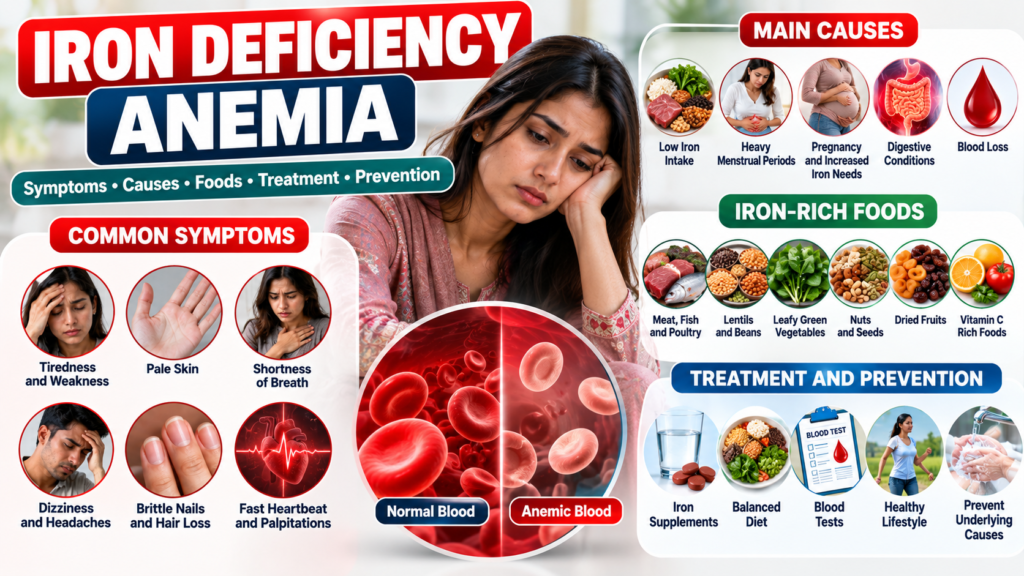
Iron-rich foods help, but food alone may not correct established anemia. Therefore, finding the cause and following proper medical treatment are essential. This guide covers symptoms, causes, diagnosis, iron-rich foods, treatment, prevention, and when to see a doctor.
What Is Iron Deficiency Anemia?
Iron deficiency anemia is a type of anemia caused by too little iron. Your body uses iron to build hemoglobin, which allows red blood cells to carry oxygen.
When iron stores run out, your body makes fewer red blood cells, or red blood cells with less hemoglobin. Consequently, you may feel unusually tired, struggle to concentrate, or become breathless during daily activities.
Iron deficiency and iron deficiency anemia are not exactly the same. You can have low iron stores before your hemoglobin drops low enough to count as anemia. A blood test shows which stage you are in.
Moreover, anemia has other causes, including vitamin B12 deficiency, folate deficiency, chronic inflammation, inherited blood disorders, and some infections. For this reason, not everyone with anemia needs iron supplements.
Iron Deficiency Anemia Symptoms
Symptoms usually appear slowly, and some people notice very little in the early stages. As the condition gets worse, the signs become clearer.
1. Persistent Tiredness and Weakness
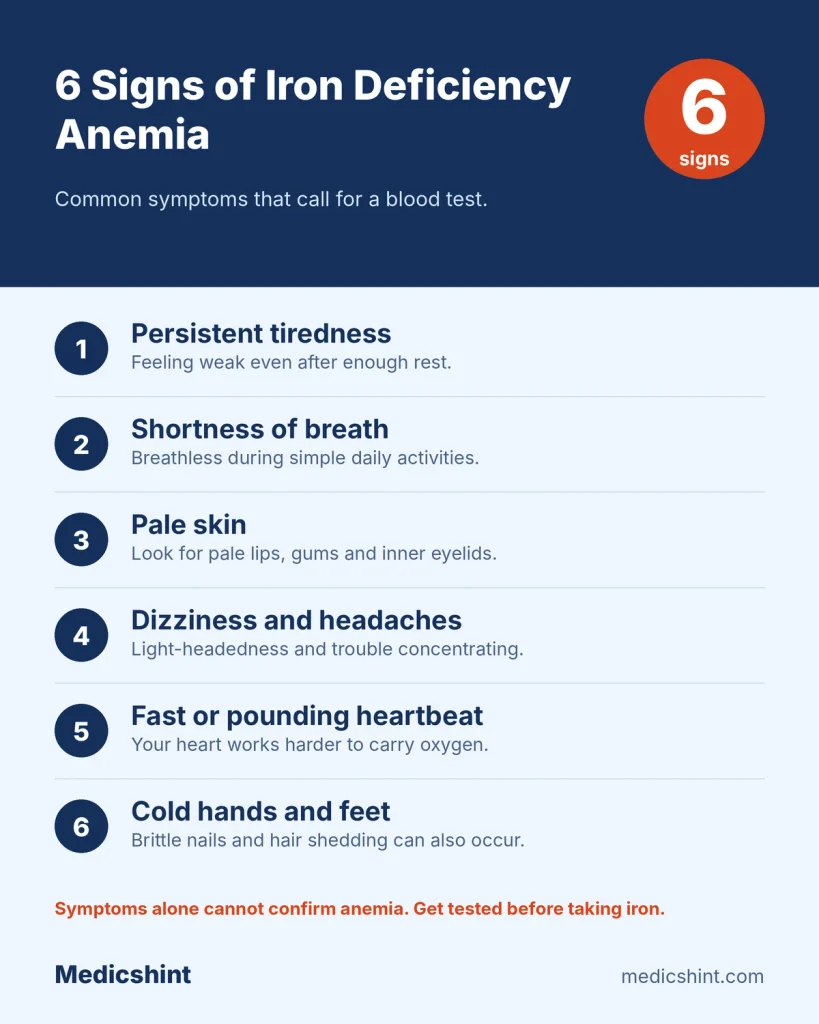
Feeling exhausted even after rest is the most common symptom. Walking, climbing stairs, working, or studying may feel harder than usual.
Note that tiredness has many causes, including stress, infections, and thyroid problems. Poor sleep is another common one, so you may also want to read our insomnia guide if you sleep badly.
2. Shortness of Breath
Your blood carries less oxygen than your body needs, so you may feel breathless during activity. Get urgent medical help if breathlessness is severe, happens at rest, or starts suddenly.
3. Pale Skin
Some people look paler than usual, or notice paleness inside the lower eyelids, gums, or lips. However, skin colour alone cannot confirm anemia, and paleness is harder to spot in some people.
4. Dizziness and Headaches
Low hemoglobin can cause light-headedness, headaches, and poor concentration. Do not ignore dizziness that leads to fainting or comes with chest pain or severe breathlessness.
5. A Fast or Pounding Heartbeat
Your heart may beat faster when it tries to make up for reduced oxygen delivery. See a doctor if palpitations persist, especially alongside weakness or breathlessness.
6. Cold Hands and Feet
Some people with anemia feel unusually cold in their hands and feet. This symptom is not specific to iron deficiency, so other explanations are possible.
7. Hair and Nail Changes
Iron deficiency may cause hair shedding, brittle nails, or, in advanced cases, spoon-shaped nails. Other nutritional or medical problems can cause the same changes.
8. Unusual Cravings (Pica)
Some people crave non-food items such as ice, paper, or soil. This is called pica. Talk to a healthcare professional about persistent cravings instead of starting supplements without testing.
What Causes Iron Deficiency Anemia?
Iron deficiency anemia happens when you do not get enough iron, cannot absorb it well, need more than usual, or lose iron through bleeding.
1. Low Iron in the Diet
A diet that rarely includes iron-rich foods can lower your iron stores. This may happen when meals lack variety or when nutritious food is hard to access.
You can get iron from animal foods such as meat and fish, and from plant foods such as lentils, chickpeas, beans, and some leafy vegetables. Your body absorbs different amounts from each source. Poor diet is not the only possible cause, though.
2. Heavy Menstrual Periods
Heavy bleeding is a common cause of iron loss in women and teenage girls. Talk to a doctor if your periods last unusually long, need very frequent pad changes, or disrupt daily life. Treating the cause of heavy bleeding matters as much as replacing iron.
3. Pregnancy
During pregnancy, your body needs extra iron to support a larger blood supply and your growing baby. If your iron intake and stores are too low, deficiency can develop. Follow antenatal care advice, have blood tests when recommended, and use iron supplements only under professional guidance.
4. Blood Loss From the Digestive Tract
Bleeding in the stomach or intestines can cause iron deficiency. Possible causes include stomach ulcers, inflammatory bowel conditions, and hemorrhoids. Certain painkillers can also contribute to bleeding.
Doctors should investigate unexplained iron deficiency, particularly in adult men and postmenopausal women, instead of blaming diet alone.
5. Poor Iron Absorption
Some digestive conditions, such as celiac disease, reduce iron absorption. Certain digestive surgeries can have the same effect. If your iron stays low despite treatment, your doctor may check for absorption problems or ongoing blood loss.
6. Rapid Growth in Childhood and Adolescence
Children and teenagers need extra iron for growth. Parents should seek advice if a child shows persistent tiredness, poor growth, or unusual paleness. Never give children adult iron supplements without professional guidance.
7. Other Medical Conditions
Chronic diseases, infections, and inherited blood disorders can cause anemia or change how your body uses iron. In some people, more than one cause is present.
For example, thalassemia causes anemia but needs different treatment from iron deficiency. Taking iron you do not need can be harmful.
Who Is at Higher Risk?
Anyone can develop iron deficiency anemia, but these groups face a greater risk:
- Women with heavy menstrual bleeding
- Pregnant and recently postpartum women
- Infants, children, and teenagers
- People whose diets contain too little iron
- Frequent blood donors
- People with digestive conditions that affect iron absorption
- People with ongoing or unexplained blood loss
- People with certain chronic illnesses
A risk factor does not confirm a diagnosis. Your medical history and blood tests show whether you actually have iron deficiency.
How Is Iron Deficiency Anemia Diagnosed?
Your doctor will ask about symptoms, diet, periods, pregnancy, medicines, digestive problems, and any possible bleeding. Then, blood tests help confirm anemia and look for its cause.
Complete Blood Count (CBC)
A CBC measures your hemoglobin and other features of your blood cells. It shows whether you have anemia and whether your red blood cells look typical of iron deficiency. Doctors interpret hemoglobin levels according to age, sex, and pregnancy.
Ferritin Test
Ferritin is a protein that stores iron, so a ferritin test shows your iron stores. A low result usually supports a diagnosis of iron deficiency. Ferritin can rise during infection or inflammation, so doctors read it alongside your other results.
Additional Tests
Depending on your situation, your doctor may order transferrin saturation or other iron studies, vitamin B12 and folate levels, or tests for underlying disease. If blood loss is possible, you may need further investigation.
Important: Do not diagnose iron deficiency from tiredness alone, and do not start long-term iron supplements without medical advice.
Iron-Rich Foods to Include in Your Diet
Food helps prevent iron deficiency and supports treatment when your doctor recommends dietary changes. Fortunately, many familiar South Asian foods can fit into balanced meals.
Lentils, Daal, and Beans
Lentils, chickpeas, kidney beans, and other pulses provide iron, protein, and fibre. Add them to daal, curries, and soups. Your body absorbs plant iron less efficiently than the heme iron in meat, but regular pulses still add up.
Meat, Fish, and Poultry
These foods contain heme iron, which your body absorbs more easily. Choose portions that suit your health needs and prepare food safely. People who avoid animal products can still meet their needs with a carefully planned plant-based diet, although they should watch their iron intake and absorption.
Green Leafy Vegetables
Spinach and other leafy greens common in South Asian cooking provide iron and other nutrients. Even so, they are not a guaranteed cure for diagnosed anemia.
Iron-Fortified Foods
Some cereals and flour products have added iron. Check the label to see whether a product is fortified. These foods work best as part of a balanced diet.
Nuts and Seeds
Some nuts and seeds contain iron and add variety to meals and snacks. Keep portions in line with your dietary needs.
Dried Fruits
Raisins and apricots provide some iron. Because they also contain natural sugars, eat reasonable portions, especially if you manage blood glucose.
For more ideas on building balanced meals, read our healthy diet guide.
How Vitamin C Helps Iron Absorption
Vitamin C improves the absorption of non-heme iron from plant foods. Therefore, pair iron-rich meals with vitamin C foods such as:
- Guava
- Oranges and other citrus fruits
- Tomatoes
- Capsicum
- Lemon added to suitable dishes
For example, serve lentils or beans with tomatoes or a squeeze of lemon. The aim is to improve variety and absorption, not to rely on one food as treatment.
Tea, Coffee, and Iron Absorption
Tea and coffee contain compounds that reduce non-heme iron absorption when you drink them with iron-rich meals. If you have iron deficiency, your doctor may suggest keeping tea and coffee apart from meals and iron tablets.
Calcium supplements and some calcium-rich foods can also interfere when you take them together with iron supplements. Ask a doctor or pharmacist how to space them if you take both.
You do not have to cut out tea, coffee, or dairy completely. The best approach depends on your diet, medical needs, and treatment plan.
Iron Deficiency Anemia Treatment
Treatment depends on how low your iron is, how severe the anemia is, what caused it, and your overall health.
1. Oral Iron Supplements
Doctors commonly prescribe iron tablets or liquids to rebuild iron stores. The right dose and schedule depend on your circumstances. Side effects may include constipation, nausea, stomach discomfort, and darker stools. If side effects bother you, speak to your prescriber before changing the dose or stopping.
Keep iron tablets out of children’s reach. Accidental iron overdose can be extremely dangerous for young children.
2. Treating the Underlying Cause
Replacing iron will not solve the problem if you keep losing it. Heavy periods, digestive bleeding, and absorption problems may need their own treatment. Even if you feel better on iron, further assessment may be necessary when the cause is unclear.
3. Intravenous Iron
In some cases, doctors give iron through a vein. They may consider this when oral iron causes problems, is poorly absorbed, or has not worked. Intravenous iron needs medical supervision and is not necessary for everyone.
4. Follow-Up Blood Tests
Your doctor may repeat blood tests to check that hemoglobin and iron stores are improving. Treatment often continues after hemoglobin recovers so that your iron stores fill up fully. Follow your doctor’s plan instead of stopping as soon as symptoms improve.
5. Blood Transfusion in Severe Cases
Doctors may consider a transfusion in severe or urgent situations. It is not the routine treatment for iron deficiency anemia, and the underlying cause still needs management.
Can Iron Deficiency Anemia Be Prevented?
You can prevent or reduce many cases through good nutrition, proper medical care, and early investigation of blood loss.
- Eat a varied diet. Include pulses, meat or suitable alternatives, leafy vegetables, and fortified foods. Pair plant iron with vitamin C when possible.
- Attend antenatal appointments. Screening and recommended supplements help detect and manage deficiency in pregnancy. Follow local antenatal guidance.
- Investigate heavy periods. Do not accept heavy bleeding as normal if it causes fatigue or disrupts daily life.
- Follow medical advice for children. Discuss diet, growth, and symptom concerns with a qualified professional before giving supplements.
- Do not ignore unexplained symptoms. Early testing can reveal iron deficiency or another condition that needs treatment.
Our healthy diet guide offers broader nutrition tips to support these habits.
When Should You See a Doctor?
Book an appointment if you have persistent tiredness, dizziness, headaches, pale skin, or reduced exercise tolerance.
Seek urgent medical attention for chest pain, severe breathlessness, fainting, significant bleeding, or rapidly worsening symptoms. Do not manage these with dietary changes alone.
If you already have a diagnosis but feel no better on treatment, contact your doctor. They may need to review the cause, absorption, treatment schedule, or diagnosis.
Frequently Asked Questions
What are the first signs of iron deficiency anemia?
Early signs include tiredness, weakness, headaches, dizziness, and reduced ability to exercise. Some people have no obvious symptoms, so a blood test may be needed.
Which foods contain iron?
Iron is found in meat, fish, poultry, lentils, beans, chickpeas, leafy vegetables, nuts, seeds, and fortified foods. How much you absorb depends on the food and your overall diet.
Can iron deficiency anemia be treated with food alone?
Diet helps prevent deficiency and supports recovery. However, established anemia may need supplements and treatment of the underlying cause.
How long does iron deficiency anemia take to improve?
The timeline depends on severity, treatment, absorption, and whether bleeding continues. Many people feel better as treatment works, but rebuilding iron stores takes longer. Follow-up tests track progress.
Is iron deficiency anemia the same as thalassemia?
No. Iron deficiency anemia comes from too little iron, while thalassemia is an inherited disorder of hemoglobin production. Testing tells them apart because treatment differs.
Should everyone with tiredness take iron supplements?
No. Tiredness has many causes, and unneeded iron can be harmful. Testing is the safer way to decide whether you need it.
Can men develop iron deficiency anemia?
Yes. Men can develop it from low intake, poor absorption, or blood loss. Doctors should investigate unexplained iron deficiency in adult men.
Is iron deficiency common during pregnancy?
Yes, because pregnancy raises iron needs. Antenatal testing and doctor-directed supplements help manage the risk.
Conclusion
Iron deficiency anemia can affect your energy, concentration, and overall well-being. Tiredness, weakness, dizziness, paleness, and shortness of breath are common symptoms, but symptoms alone cannot confirm the diagnosis.
A varied diet with iron-rich foods and vitamin C supports healthy iron levels. Still, many people also need proper diagnosis, supplements, follow-up testing, and treatment of the cause. If you suspect iron deficiency anemia, see a doctor instead of relying on supplements or food changes alone.
Medical disclaimer: This article is for educational purposes only and does not replace professional medical advice, diagnosis, or treatment. Please read our full medical disclaimer and consult a qualified healthcare professional, especially during pregnancy, for children, or when symptoms are severe. Questions about the site? Contact us.