

A healthy diet gives your body the energy and nutrients it needs to grow, work, and stay well. However, it does not mean strict rules or cutting out whole food groups. Instead, a healthy diet means eating a balanced mix of minimally processed foods most of the time, and limiting foods that are high in free sugars, salt, and unhealthy fats.
In this guide, you will learn what a healthy diet is, which nutrients your body needs, and which healthy foods to choose. In addition, you will find practical eating tips and meal ideas that fit a Pakistani kitchen.
Healthy Diet at a Glance
According to the World Health Organization (WHO), adults should aim for the following each day:
- At least 400 g of fruits and vegetables (about five portions), not counting potatoes and other starchy roots
- At least 25 g of dietary fiber from foods
- Less than 10% of daily energy from free sugars, which is about 50 g (12 level teaspoons) on a 2,000-calorie diet
- Less than 5 g of salt (about one teaspoon)
- Less than 10% of daily energy from saturated fat, and less than 1% from trans fat
What Is a Healthy Diet?
The WHO describes a healthy diet with four core principles:
- Adequacy: you get enough nutrients to prevent deficiencies, without eating too much.
- Balance: the energy you eat matches the energy you use, with a good mix of protein, fats, and carbohydrates.
- Moderation: you limit foods and ingredients that can harm health.
- Diversity: you eat a wide variety of nutritious foods from different food groups.
The exact make-up of a healthy diet differs from person to person. Age, gender, lifestyle, physical activity, culture, and locally available foods all matter. Nevertheless, the basic principles stay the same.
A healthy diet is also a safe one. For this reason, wash your hands and fresh produce, store food properly, and cook it thoroughly.
Why Healthy Eating Matters
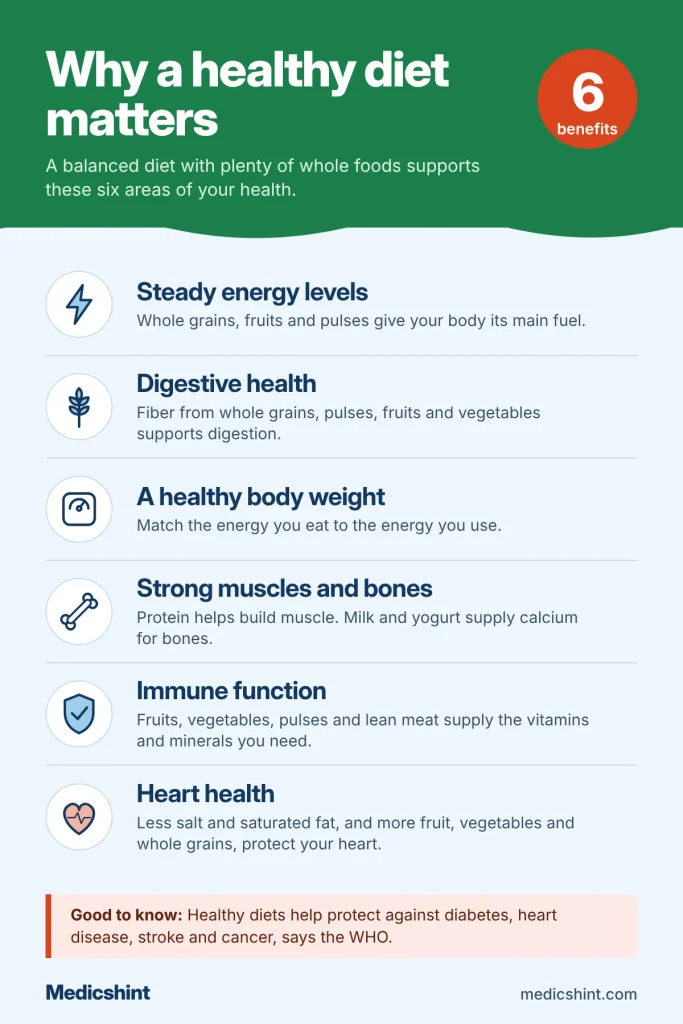
The food you eat every day shapes your health over time. Healthy diets help protect against malnutrition in all its forms. They also lower the risk of noncommunicable diseases such as diabetes, heart disease, stroke, and some cancers.
Good nutrition can also support:
- Steady energy levels
- Digestive health
- A healthy body weight
- Strong muscles and bones
- Immune function
- Heart health
Keep in mind that nutrition needs are different for everyone. People who are pregnant, older, very active, or living with a medical condition may need personal advice.
Essential Nutrients and Healthy Foods
Nutrients fall into two groups: macronutrients (carbohydrates, protein, and fats) and micronutrients (vitamins and minerals).
1. Carbohydrates
Carbohydrates are the body’s main source of energy. For most people, unrefined carbohydrates can make up a large part of the diet, roughly 45% to 75% of daily energy. The WHO advises getting them mainly from whole grains, vegetables, fruits, and pulses.
Good choices include:
- Oats and brown rice
- Whole-wheat roti
- Whole-grain bread
- Lentils, chickpeas, and beans
- Fruits and vegetables
You do not need to cut out carbohydrates. Instead, choose better-quality ones and watch your portions.
2. Protein
Protein builds and repairs body tissue. For most adults, about 10% to 15% of daily energy is enough. This is roughly 50 to 75 g a day for a person of healthy weight eating about 2,000 calories.
Protein comes from both animal and plant foods:
- Eggs, fish, and chicken
- Milk and yogurt
- Lentils, chickpeas, and beans
- Nuts and seeds
Eating a mix of sources gives you a wider range of nutrients. For many adults, shifting toward more plant-based protein, especially instead of red meat, may bring health benefits. However, very high protein intake can put extra strain on the kidneys.
3. Healthy Fats
Fat is an essential nutrient, but the type matters. Unsaturated fats are the better choice. You can find them in fish, nuts, seeds, avocado, and in sunflower, soybean, canola, and olive oils.
On the other hand, saturated fats come from fatty meat, butter, cream, cheese, palm and coconut oil, and ghee. The WHO advises limiting saturated fat and avoiding industrially produced trans fat, which is found in many fried foods, biscuits, and packaged snacks.
4. Vitamins and Minerals
The body needs vitamins and minerals in small amounts, but they do important jobs. A varied diet is the best way to get them.
For example, beans and lean meat help with iron. Dark green leafy vegetables help with vitamin A. Iodized salt helps prevent iodine deficiency. Notably, the WHO reports that more than half of children under five and over two-thirds of non-pregnant women of reproductive age worldwide lack at least one key micronutrient, often iron, zinc, vitamin A, or folate.
Iron is a common concern, so read our guide on iron deficiency anemia, its symptoms, foods, and treatment.
Eat More Fruits and Vegetables
Fruits and vegetables should fill a large part of your plate. The WHO advises everyone over 10 years old to eat at least 400 g a day. For children aged 2 to 5, the minimum is 250 g, and for ages 6 to 9, it is 350 g.
Try to eat different colors through the day:
- Leafy greens such as spinach and fenugreek (methi)
- Tomatoes, carrots, and bell peppers
- Citrus fruits, apples, and berries
- Bananas and seasonal fruits
Fresh produce is great. However, frozen and canned options are good too, as long as they have no added sugar or extra salt.
What about fruit juice? Even juice without added sugar contains free sugars. Therefore, whole fruit is the better everyday choice, because it also gives you fiber.
Choose Whole Grains and High-Fiber Foods
Fiber supports digestion and helps you feel full for longer. The WHO advises at least 25 g a day for everyone over 10 years old.
Good sources include:
- Whole-wheat flour and roti
- Oats, barley, and brown rice
- Lentils, chickpeas, and beans
- Vegetables and fruits
- Nuts and seeds
Small swaps help. For example, choose whole-wheat roti instead of white bread, or brown rice more often.
Limit Free Sugars
Free sugars include sugars added to food and drinks, and sugars in honey, syrups, and fruit juice. They add calories without much nutrition and raise the risk of tooth decay and weight gain.
The WHO advises keeping free sugars below 10% of daily energy. Going down to 5% or less may bring extra benefits. The WHO also advises cutting sugar without relying on non-sugar sweeteners.
Try these steps:
- Drink water instead of sweet drinks.
- Add less sugar to chai and coffee.
- Choose plain yogurt and add fresh fruit.
- Read food labels.
- Keep sweets and desserts for occasional treats.
Cut Back on Salt
Your body needs some sodium. However, too much salt raises blood pressure and the risk of heart disease. The WHO advises adults to eat less than 5 g of salt a day.
In many places, a lot of salt comes from processed foods and salty snacks. Salt added during cooking and at the table adds up too.
Simple ways to reduce salt:
- Taste your food before adding salt.
- Do not keep salt or salty sauces on the table.
- Eat fewer salty packaged snacks.
- Use herbs and spices for flavor.
- Compare labels and choose lower-sodium products.
If you use salt, choose iodized salt, but keep the amount small.
Choose Healthier Fats and Cooking Methods
How you cook matters as much as what you cook. The WHO suggests steaming or boiling instead of frying. It also advises replacing butter and ghee with cooking oils rich in unsaturated fat, such as sunflower, canola, or soybean oil.
Other practical tips:
- Measure oil with a spoon instead of pouring freely.
- Trim visible fat from meat.
- Bake, grill, or roast more often than you deep-fry.
- Limit packaged snacks, biscuits, and bakery items.
Drink Enough Fluids
Water is the best choice for staying hydrated. Needs vary with the weather, physical activity, age, and health. For example, people who work in hot places or exercise heavily may need more.
Make water your main drink, and keep sugary drinks as occasional extras. During illnesses with fever, such as dengue, fluids matter even more, so follow your doctor’s advice.
A Healthy Diet on a Pakistani Plate
Healthy eating does not need expensive or unfamiliar foods. Pakistan’s national dietary guidelines also stress a variety of safe, nutritious foods and less deep-fried, bakery, and processed food. In fact, many everyday dishes fit well when you watch the portions and the cooking method.
A balanced meal could include:
- Roti made from whole-wheat flour
- Daal, chana, or beans
- Seasonal sabzi
- A fresh salad
- Yogurt
- A moderate portion of chicken, fish, or eggs
Simple Healthy Swaps
- Instead of paratha, choose a plain roti or phulka.
- Instead of fried samosas or pakoras, try roasted chana or fruit chaat.
- Instead of sweet drinks, choose water, plain lassi with less sugar, or lemon water with little sugar.
- Instead of a large plate of biryani, take a smaller portion and add salad and yogurt.
- Instead of gravies swimming in oil, cook with less oil and less ghee.
A Sample Day of Healthy Eating
This is one example, not a fixed plan. Adjust it to your age, appetite, and health.
- Breakfast: Whole-wheat roti or oats with an egg or yogurt, plus a piece of fruit. Chai with little or no sugar.
- Lunch: Daal or chana, a cooked vegetable, salad, and a small portion of roti or brown rice.
- Snack: A fruit, roasted chana, or a small handful of nuts.
- Dinner: Grilled or lightly cooked chicken or fish, vegetables, salad, and a roti.
- All day: Water as your main drink.
Healthy Eating for Weight Management
A healthy diet can support a healthy weight. However, weight also depends on physical activity, sleep, genes, medicines, and medical conditions. Poor sleep can play a role, so see our guide on insomnia and how to sleep better.
A lasting approach focuses on your overall eating pattern, not extreme diets. Helpful habits include:
- Eating more vegetables and fruits
- Choosing high-fiber foods
- Including protein with meals
- Limiting sugary drinks
- Watching portion sizes
- Eating slowly
- Eating fewer highly processed foods
- Staying physically active
Common Healthy Eating Mistakes
Even people with good intentions make these mistakes:
- Skipping meals. You may become very hungry later and choose less nutritious foods.
- Drinking too many sugary drinks. Soft drinks, packaged juices, and energy drinks add a lot of free sugar.
- Eating too much processed food. Highly processed foods are often high in salt, sugar, and unhealthy fats.
- Cutting out entire food groups without a medical reason. This makes it harder to get all the nutrients you need.
- Counting only calories. Two foods with the same calories can differ greatly in fiber, protein, and vitamins.
Simple Everyday Healthy Eating Tips
You do not need to change everything at once. Start with a few realistic habits:
- Add a vegetable to lunch and dinner.
- Keep fresh fruit ready for snacks.
- Drink more water.
- Choose whole grains more often.
- Include protein with meals.
- Cut down on sugary drinks.
- Use less salt and less oil when cooking.
- Choose nuts or fruit instead of packaged snacks.
- Eat slowly and notice your portions.
- Plan meals before you get very hungry.
Small changes that you can keep up are more useful than extreme diets that last a few weeks.
Who Needs Personal Nutrition Advice?
General guidelines work for most healthy adults. However, some people need advice that fits their situation, including:
- Pregnant and breastfeeding women
- Infants and young children
- Older adults
- People with diabetes, kidney disease, high blood pressure, or digestive problems
- People with food allergies
- People who take regular medicines
For babies, the WHO advises exclusive breastfeeding for the first six months and continued breastfeeding up to two years and beyond. From six months, breast milk should be complemented with safe, nutrient-dense foods, with no added salt or sugar.
Frequently Asked Questions About a Healthy Diet
What is the healthiest diet?
No single diet suits everyone. A healthy diet is varied, balanced, adequate, and moderate, and it fits your age, health, culture, and local foods.
How much fruit and vegetables should I eat each day?
The WHO advises at least 400 g a day, which is about five portions, for people over 10 years old. Potatoes and other starchy roots do not count.
Are carbohydrates unhealthy?
No. Carbohydrates are the body’s main energy source. Choose whole grains, vegetables, fruits, and pulses more often than refined foods.
Is fruit juice as healthy as whole fruit?
No. Whole fruit gives you fiber and is more filling. Most fruit juices, even without added sugar, contain significant free sugars.
Should I stop eating sugar completely?
Most people do not need to remove every source of sugar. Instead, keep free sugars low and choose nutritious foods most of the time.
How much salt is too much?
The WHO advises adults to eat less than 5 g of salt a day, which is about one teaspoon.
Is ghee unhealthy?
Ghee is high in saturated fat, so the WHO advises limiting it. Using small amounts and choosing unsaturated oils for everyday cooking is a sensible approach.
Can a healthy diet help prevent disease?
Yes. Healthy eating lowers the risk of several chronic diseases, including heart disease, stroke, and type 2 diabetes. Nevertheless, diet is only one part of overall health, along with activity, sleep, and medical care.
Final Thoughts
A healthy diet does not have to be complicated. Focus on variety, balance, and moderation. Fill your plate with vegetables, fruits, whole grains, pulses, nuts, and suitable protein foods. At the same time, limit salt, free sugars, unhealthy fats, and highly processed foods.
Perfection is not the goal. Healthy habits that you can keep for years matter more than strict diets for a few weeks. If you have a medical condition, are pregnant, or have special nutritional needs, please talk to a qualified doctor or registered dietitian.
Medical Disclaimer
This article is for general education only and does not replace advice from a qualified healthcare professional. Nutrition needs vary, especially with medical conditions or medicines. Please read our full Medical Disclaimer.