
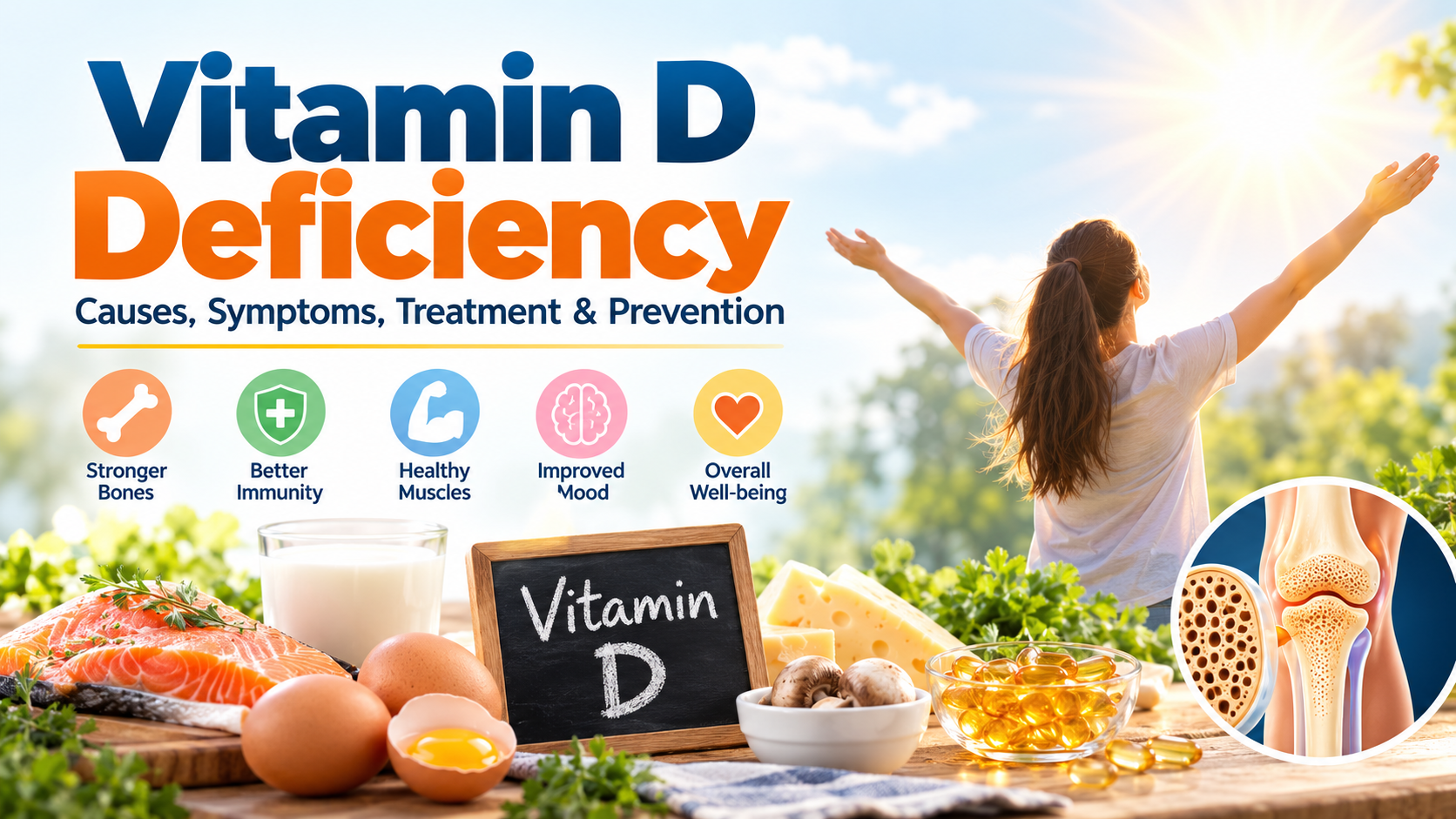
Vitamin D deficiency means your body does not have enough vitamin D to keep your bones, muscles and immune system working well. It is very common, and many people do not know they have it. In fact, a simple blood test is the only sure way to find out.
This guide explains the symptoms, causes, tests and treatment. It also shows how to get enough vitamin D from sun, food and supplements in a safe way.
What Is Vitamin D Deficiency?
Vitamin D helps your body absorb calcium and phosphorus. These minerals build strong bones and teeth. Vitamin D also supports your muscles and your immune system.
Your skin makes vitamin D when sunlight touches it. You also get a smaller amount from food and supplements. When you get too little from all three sources, your blood level drops. Over time, this leads to deficiency.
Doctors measure vitamin D with a blood test called 25-hydroxyvitamin D, or 25(OH)D. The result appears in ng/mL or nmol/L. As a general guide:
- Below 12 ng/mL (30 nmol/L): too low for bone and overall health, which doctors call deficiency.
- 12 to 20 ng/mL (30 to 50 nmol/L): low, and some people may not get enough.
- 20 ng/mL (50 nmol/L) or above: enough for most people.
- Above 50 ng/mL (125 nmol/L): possibly too high.
Labs and medical groups use slightly different cut-offs. For example, some doctors prefer a level of at least 30 ng/mL. Therefore, ask your doctor what your own result means.
Vitamin D Deficiency Symptoms
Mild deficiency often causes no clear symptoms. As a result, many people stay unaware for years. When symptoms do appear, they can include:
- Constant tiredness or low energy
- Bone pain, especially in the back, hips, legs or ribs
- Muscle weakness, aches or cramps
- Low mood
- Slow recovery after illness or injury
However, these signs are not specific. Iron deficiency, thyroid problems and poor sleep can look the same. For instance, our guide to iron deficiency anemia lists many of the same symptoms. Please do not guess. Get tested instead.
Signs in Children
Severe deficiency in children can cause rickets. In this condition, the bones become soft and weak. Watch for:
- Delayed walking or growth
- Bowed legs or a curved spine
- Bone pain or muscle weakness
- Swollen wrists or ankles
- Late teething
Take a child with these signs to a doctor soon.
Signs in Adults
In adults, long-term deficiency can cause osteomalacia. This means soft bones that ache and break more easily. It also raises the risk of falls and fractures in older adults.
What Causes Vitamin D Deficiency?
Most cases come from one or more of these causes:
- Little sun exposure. Staying indoors, working long hours inside or covering most of your skin lowers vitamin D production.
- Darker skin. Skin with more melanin makes less vitamin D from the same amount of sun.
- Low intake from food. Few foods contain vitamin D naturally, so a diet without them often falls short.
- Age. Older skin makes vitamin D less efficiently, and older adults often spend more time indoors.
- Obesity. Body fat holds on to vitamin D, so less of it reaches the blood.
- Digestive and gut conditions. Celiac disease, Crohn’s disease and weight-loss surgery can reduce absorption.
- Liver or kidney disease. These organs turn vitamin D into its active form.
- Some medicines. Certain anti-seizure drugs, steroids and other medicines can lower vitamin D levels.
- Exclusive breastfeeding without supplements. Breast milk contains little vitamin D, so doctors often advise a supplement for babies.
Vitamin D Deficiency in Pakistan
Pakistan has plenty of sunshine. Even so, studies from Pakistan report that low vitamin D is very common. Several habits explain this. Many people work indoors, avoid the midday sun because of heat, or cover most of their skin. In addition, air pollution in big cities can reduce the UV light that reaches the skin. Finally, diets that rarely include fish, eggs or fortified foods add to the problem.
Women, children, older adults and people with darker skin face a higher risk. If you belong to one of these groups, ask your doctor about testing.
Who Is at Higher Risk?
You have a higher risk if you:
- Are 65 or older
- Are pregnant or breastfeeding
- Spend most of your day indoors
- Cover most of your skin outdoors
- Have darker skin
- Live with obesity
- Have a gut, liver or kidney condition
- Take medicines that affect vitamin D
How Is Vitamin D Deficiency Diagnosed?
Your doctor will ask about your symptoms, diet, sun exposure and medicines. Then a simple blood test measures your 25(OH)D level. You do not need to fast for this test.
Doctors do not test everyone. Instead, they usually test people who have symptoms or a higher risk. If your result is low, your doctor may also check calcium, phosphate and other tests to see how your bones are doing.
How Is Vitamin D Deficiency Treated?
Treatment depends on your level, your age and your health. In most cases, doctors prescribe a vitamin D supplement. The usual steps are:
- Take the right supplement. Doctors use vitamin D3 (cholecalciferol) or vitamin D2 (ergocalciferol). Both raise your blood level.
- Follow your doctor’s dose. Treatment doses are often higher than everyday doses. Your doctor sets the dose and the length of treatment.
- Take it with a meal. Vitamin D dissolves in fat, so your body absorbs it better with food that contains some fat.
- Retest later. Your doctor will usually repeat the blood test after a few months to check your progress.
- Switch to a maintenance dose. After your level recovers, a smaller daily dose keeps it steady.
Your doctor may also treat the cause. For example, they may adjust a medicine or treat a gut condition.
Do Not Take Too Much
More is not better. Very high vitamin D levels can cause nausea, vomiting, weakness, confusion and kidney stones. In severe cases, they can damage the kidneys. These problems almost always come from too many supplements, not from sun or food.
For most adults, the upper daily limit from all sources is 4,000 IU (100 mcg). Do not take high-dose products on your own. Always follow your doctor’s advice.
Best Food Sources of Vitamin D
Food alone rarely fixes a deficiency. Still, it helps you stay in a healthy range. Good sources include:
- Fatty fish such as salmon, sardines, mackerel and tuna
- Egg yolks
- Liver
- Fortified foods, such as some milks, cereals and cooking oils (check the label)
- Mushrooms exposed to UV light
For more meal ideas, read our healthy diet guide.
How Much Vitamin D Do You Need?
The NIH Office of Dietary Supplements gives these daily amounts for healthy people:
- Babies (0 to 12 months): 400 IU (10 mcg)
- Children and adults (1 to 70 years): 600 IU (15 mcg)
- Adults over 70: 800 IU (20 mcg)
Some people need more, such as those with a confirmed deficiency. Your doctor will tell you the right amount for you.
Sunlight and Vitamin D
Sunlight is the main natural source. However, the amount you make depends on your skin tone, the season, the time of day and how much skin you expose.
A few safe habits help:
- Spend short, regular periods outdoors with your face, arms or legs uncovered.
- Choose a time when the sun is not at its harshest.
- Never let your skin burn, because sunburn raises the risk of skin damage.
- Do not rely on sun alone if you cover your skin or live in a polluted area.
How to Prevent Vitamin D Deficiency
You can lower your risk with a few simple steps:
- Get regular, sensible time outdoors.
- Eat vitamin D-rich and fortified foods.
- Ask your doctor about a supplement if you are in a high-risk group.
- Give babies the vitamin D supplement their doctor recommends.
- Get a blood test if you have symptoms that do not go away.
When to See a Doctor
See a doctor if you have ongoing tiredness, bone pain or muscle weakness. Likewise, get your child checked if you notice bowed legs, delayed walking or slow growth. Also talk to your doctor before you start any high-dose supplement, especially if you are pregnant, have kidney disease or take regular medicines.
Frequently Asked Questions
What is the main cause of vitamin D deficiency? The main cause is too little sun exposure combined with a diet low in vitamin D. Other causes include darker skin, obesity, gut disease and some medicines.
What are the first signs of vitamin D deficiency? Early signs are often mild. They include tiredness, bone pain, muscle aches and low mood. Many people have no symptoms at all.
Can you get enough vitamin D from the sun in Pakistan? Sometimes, but not always. Indoor work, covered skin, darker skin tones and city air pollution can all limit how much your skin makes. Therefore, many people in sunny countries still have low levels.
How long does it take to fix vitamin D deficiency? It depends on how low your level is and on the dose your doctor prescribes. Blood levels often improve within weeks to a few months, and your doctor will retest to confirm.
Is vitamin D3 better than D2? Both raise your blood level. Many doctors prefer D3, but your doctor will choose the best option for you.
Can I take vitamin D every day? Yes, in the amount your doctor advises. Daily doses within the recommended limits are generally safe, but very high doses can cause harm.
Can vitamin D deficiency cause hair loss or weight gain? Strong proof for this is limited. Many other conditions cause hair loss and weight gain, so ask a doctor to check the real cause.
Conclusion
Vitamin D deficiency is common, easy to miss and easy to treat. Tiredness, bone pain and muscle weakness are the main warning signs. However, only a blood test can confirm it. With the right supplement, safe sun habits and a balanced diet, most people restore healthy levels. Above all, follow your doctor’s advice and avoid high doses on your own.
Medical Disclaimer
This article is for general education. It does not replace professional medical advice, diagnosis or treatment. Do not start or change any supplement or medicine based on this article. Read our full medical disclaimer or contact us if you have questions about the site.
This article draws on guidance from the NIH Office of Dietary Supplements and the Endocrine Society.