Introduction
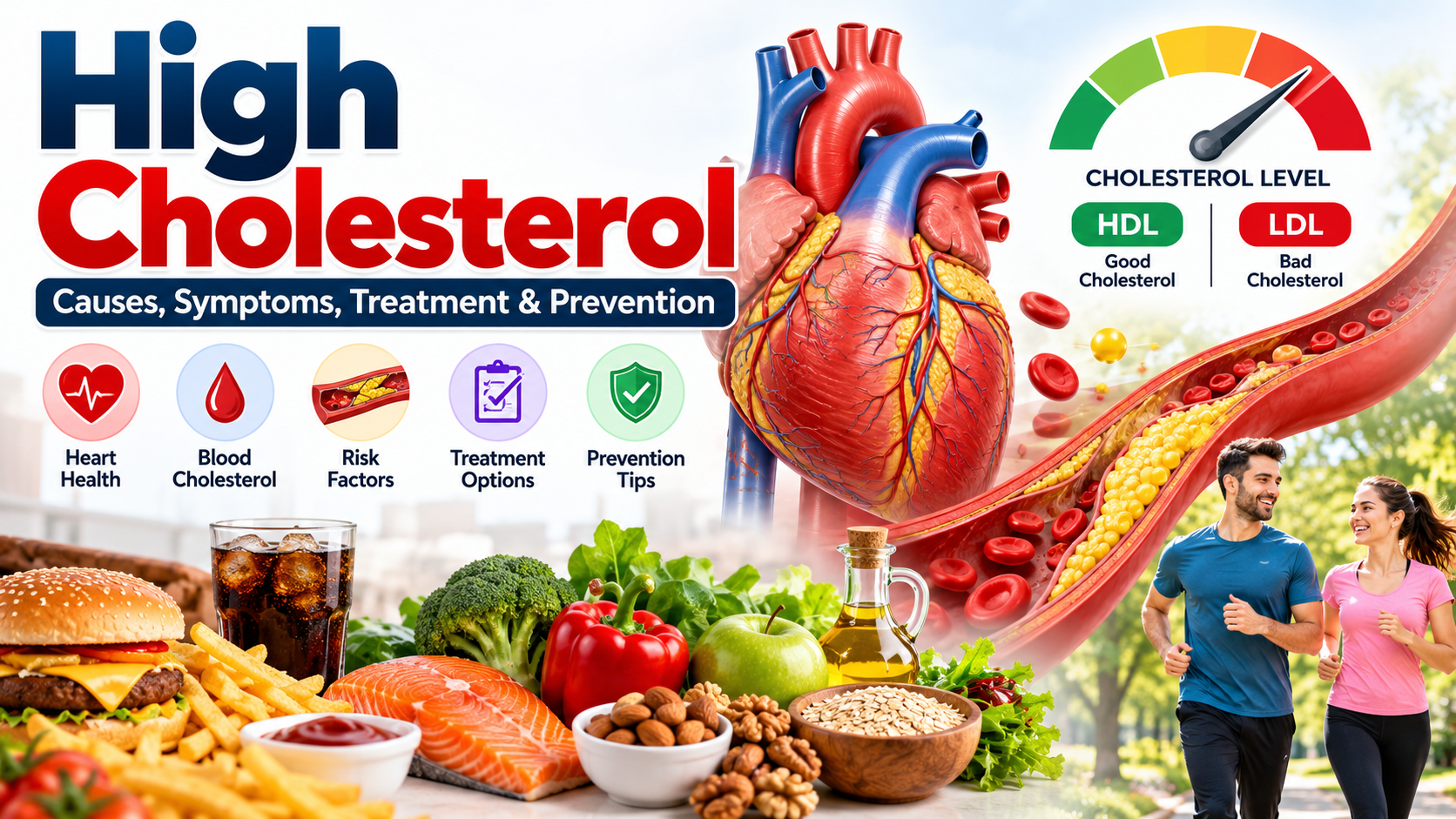
High cholesterol means there is too much fat-like material in your blood, especially LDL cholesterol. It usually causes no symptoms, so many people only find out through a blood test. Left unmanaged, it raises the risk of heart disease and stroke. The good news is that it is very manageable with the right habits and, when needed, medicine.
This guide explains what cholesterol is, what causes it to rise, and how it connects to heart disease and diabetes.
What Is Cholesterol?
Cholesterol is a waxy substance found in every cell of your body. Your liver makes most of it, and the rest comes from animal-based foods. Your body needs some cholesterol to build cells and make hormones.
Because fat does not dissolve in blood, cholesterol travels inside particles called lipoproteins:
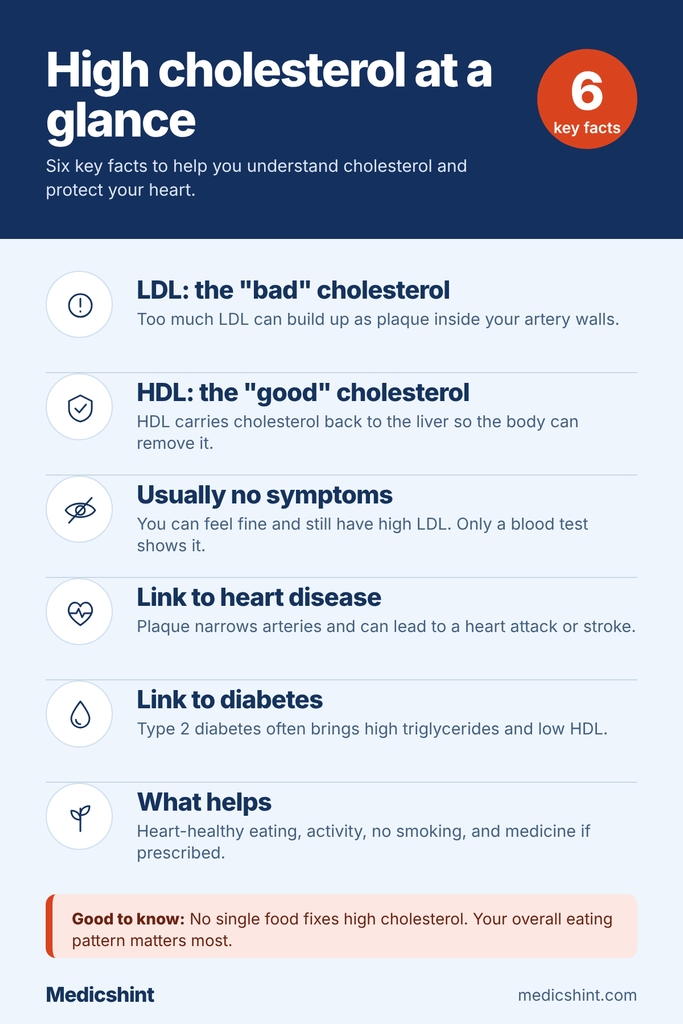
- LDL (low-density lipoprotein): often called “bad” cholesterol. Too much can build up in artery walls.
- HDL (high-density lipoprotein): often called “good” cholesterol. It carries cholesterol back to the liver for removal.
- Triglycerides: another blood fat. High levels add to heart risk, especially with high LDL or low HDL.
Symptoms of High Cholesterol
In most people there are none. You can feel completely well and still have high LDL. Symptoms usually appear only after cholesterol has contributed to artery damage, for example chest pain, a heart attack or a stroke. That is why testing matters more than waiting for warning signs.
What Causes High Cholesterol?
- Diet: frequent saturated fat (fatty meat, full-fat dairy, many processed foods) and trans fat raise LDL.
- Inactivity: too little exercise can lower HDL and raise LDL.
- Excess weight: linked with higher LDL and triglycerides.
- Smoking: lowers HDL and damages blood vessels.
- Genetics: familial hypercholesterolemia is an inherited condition that causes very high LDL, sometimes from a young age.
- Medical conditions: type 2 diabetes, chronic kidney disease, hypothyroidism and polycystic ovary syndrome can all affect cholesterol.
- Some medicines: the effect depends on the medicine and the person. Never stop a prescribed medicine on your own; ask your doctor to review it.
Age and family history are risk factors you cannot change, but most of the others you can.
High Cholesterol and Heart Disease
The link between high cholesterol and heart disease is plaque. When LDL stays high, cholesterol and other material collect in artery walls and form plaque. Over time arteries become narrower and stiffer, which reduces blood flow to the heart.
If a plaque ruptures, a blood clot can form and block the artery. Depending on where this happens, the result can be a heart attack or stroke. Plaque in the legs can also cause pain when walking because of poor circulation.
High cholesterol is one of several heart disease risk factors, alongside high blood pressure, smoking, diabetes and family history. Doctors look at all of them together, not cholesterol alone. For the full picture, read our guide to heart disease.
High Cholesterol and Diabetes
People with type 2 diabetes often have a typical pattern: high triglycerides, low HDL and raised LDL. Combined with high blood sugar, this significantly increases the risk of heart disease and stroke.
If you have diabetes, cholesterol should be checked regularly and managed together with blood sugar, blood pressure, weight and physical activity. Improving one often helps the others. To learn more, see our guide to type 2 diabetes.
How Is High Cholesterol Diagnosed?
A simple blood test called a lipid panel measures total cholesterol, LDL, HDL and triglycerides. Your doctor reads the results together with your age, blood pressure, smoking status, diabetes and family history.
How often you need testing depends on your risk. Adults at low risk are commonly tested every few years, while people with risk factors or a past high result may need testing more often.
How to Lower Cholesterol
Eat for your heart. Build meals around vegetables, fruit, whole grains, beans, nuts, seeds and fish. Choose unsaturated fats such as olive oil over butter and ghee, and limit fried and heavily processed foods. Oats and beans contain soluble fiber, which helps lower LDL. No single food fixes cholesterol; your overall eating pattern is what counts. See our healthy diet guide for everyday meal ideas.
Move regularly. Aim for steady activity most days, such as brisk walking. If you have a medical condition or have been inactive, check with your doctor first.
Manage your weight gradually. Small, sustainable changes work better than extreme diets.
Stop smoking. Your HDL and blood vessels begin to benefit after you quit.
Take medicine if prescribed. Statins are the most common treatment for high LDL, and other medicines may be added depending on your risk. Take them as directed and speak to your doctor, nurse or pharmacist before making any change.
Can High Cholesterol Be Prevented?
Inherited forms cannot be prevented, but healthy habits lower your risk of the rest: balanced eating, regular activity, a healthy weight, no tobacco, good diabetes control and cholesterol checks when recommended.
When Should You See a Doctor?
Talk to a healthcare professional about cholesterol testing if you:
- have a family history of high cholesterol, or a close relative with early heart disease or stroke
- have diabetes, high blood pressure or chronic kidney disease
- smoke
- have been told your cholesterol or triglycerides are high
- take medicines that may affect cholesterol
Seek urgent medical care for severe chest pain, trouble breathing, sudden weakness on one side of the body or other emergency symptoms.
Frequently Asked Questions
Does high cholesterol cause symptoms? Usually not. A blood test is the only reliable way to find out.
Can diet alone lower cholesterol? For some people, yes. Others also need medicine, especially with a strong family history or existing heart disease.
Is high cholesterol hereditary? It can be. Familial hypercholesterolemia is passed through families and causes very high LDL.
Do I always need medicine? No. It depends on your cholesterol levels and overall cardiovascular risk. Your doctor will advise you.
How often should I check my cholesterol? It depends on your age, health and risk factors. Ask your doctor for a schedule that suits you.
Medical Disclaimer
This article is for general education and does not replace professional medical advice, diagnosis or treatment. Do not start, stop or change any medicine based on this article. Read our full medical disclaimer or contact us with questions about the site.
Information in this article is based on guidance from the CDC, NHLBI and MedlinePlus.