
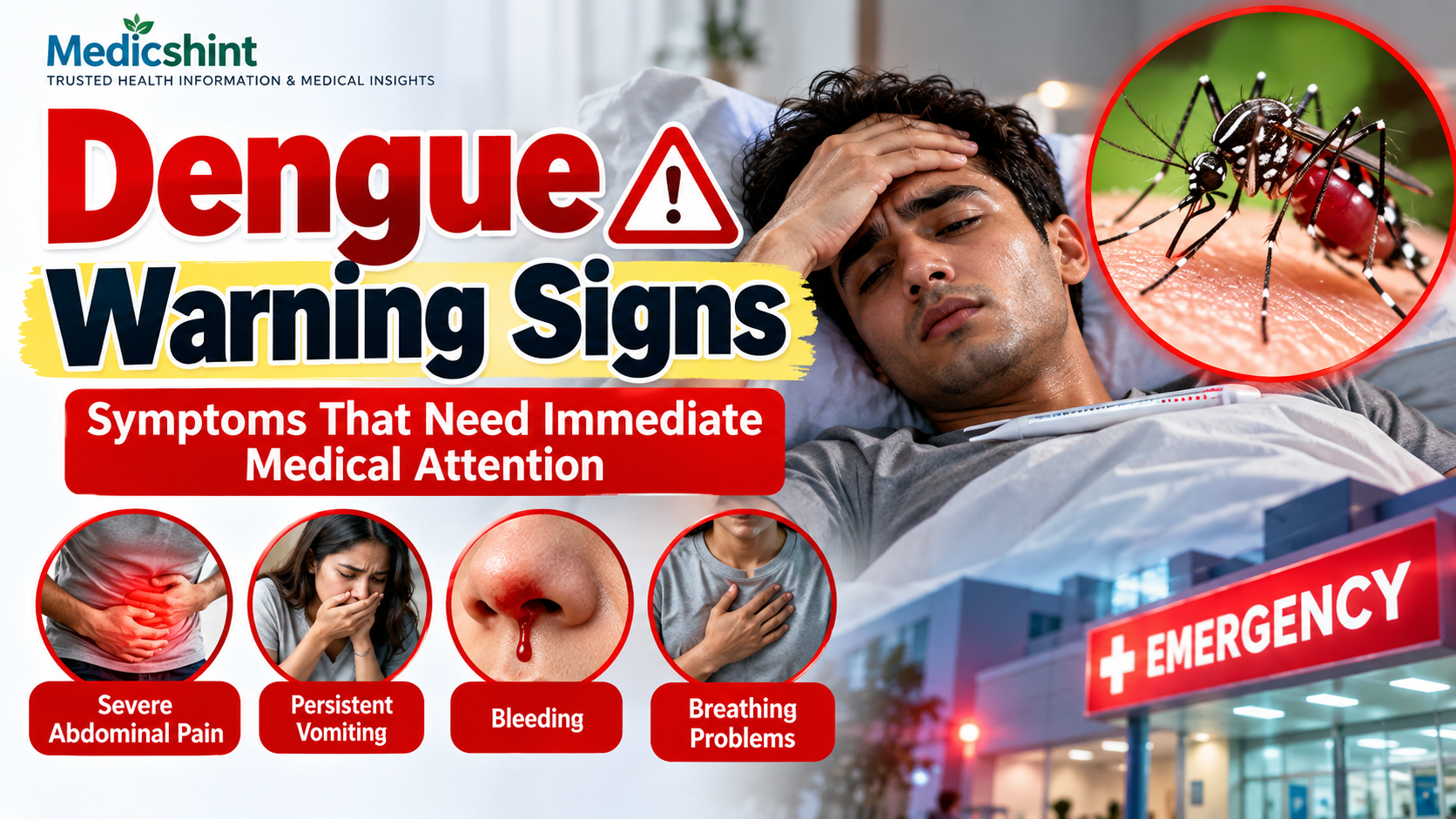
Dengue can begin like many other viral illnesses, with fever, headache, body aches, nausea, vomiting or rash. Most people recover without developing severe disease, but some patients can progress to severe dengue, which may require urgent medical treatment. World Health Organization
One of the most important things to understand is that dengue warning signs may appear when the fever starts to come down. A lower temperature does not always mean that the person is recovering. The critical phase can occur around the time the fever decreases, making careful monitoring especially important. Iris
If someone with suspected or confirmed dengue develops any serious warning sign, they should receive immediate medical attention.
Medical Disclaimer: This article is for general health education only. It does not diagnose or treat dengue. If you or someone around you develops severe symptoms, contact a healthcare professional or seek emergency medical care.
What Are Dengue Warning Signs?
Dengue warning signs are symptoms that may indicate the illness is becoming more serious and that the patient needs prompt medical assessment.
WHO identifies several important warning signs, including severe abdominal pain, persistent vomiting, bleeding, rapid breathing, marked weakness or restlessness, and blood in vomit or stool. World Health Organization
These symptoms should not be ignored or treated as an ordinary fever.
1. Severe Abdominal Pain
Severe or persistent abdominal pain is one of the important dengue warning signs.
A person who previously had mild symptoms but then develops significant abdominal pain should be medically assessed promptly.
Do not assume that severe stomach pain is simply caused by something the person ate, especially when it occurs during a suspected dengue infection.
2. Persistent Vomiting
Occasional nausea or vomiting can occur with dengue. However, persistent vomiting is more concerning.
Repeated vomiting can make it difficult for a person to maintain adequate fluid intake and may accompany worsening illness.
If vomiting continues or the person cannot keep fluids down, seek medical advice promptly. World Health Organization
3. Bleeding From the Nose or Gums
Bleeding from the nose or gums can be a warning sign during dengue.
Other unusual bleeding should also be taken seriously, particularly if it occurs alongside worsening weakness or other concerning symptoms.
WHO specifically lists bleeding from the nose or gums among symptoms associated with severe dengue. World Health Organization
4. Blood in Vomit or Stool
Blood in vomit or stool requires urgent medical assessment.
This is different from ordinary nausea or mild stomach upset and may indicate significant bleeding.
Anyone with suspected dengue who notices blood in vomit or stool should not wait for symptoms to resolve at home. World Health Organization
5. Rapid or Difficult Breathing
Changes in breathing are another serious warning sign.
A person may develop rapid breathing or difficulty breathing as severe dengue progresses. Severe dengue can involve fluid leakage and respiratory distress, which may require hospital management. World Health Organization
If breathing becomes difficult, seek emergency medical care immediately.
6. Extreme Weakness or Unusual Restlessness
Severe dengue can cause significant weakness, fatigue or unusual restlessness.
A person who suddenly appears much weaker than before, becomes unusually restless, or has a noticeable deterioration in their condition should be assessed by a healthcare professional. World Health Organization
7. Very Pale or Cold Skin
Pale and cold skin can be a serious sign, particularly when it occurs together with weakness, breathing problems or other warning signs.
This may indicate circulatory problems and should not be managed as an ordinary fever symptom.
Seek urgent medical attention if these changes occur. World Health Organization
8. Extreme Thirst
Very strong thirst can occur alongside worsening fluid loss.
When excessive thirst occurs together with vomiting, weakness, reduced ability to drink or other warning signs, medical assessment is important. World Health Organization
When Do Dengue Warning Signs Usually Appear?
Dengue illness often progresses through different phases.
The critical phase can occur around the time the fever decreases, commonly around days 3–7 after symptoms begin. This is why a person should continue monitoring their condition even if their temperature starts returning toward normal. World Health Organization
The important point:
Fever going down does not always mean dengue is getting better.
If warning signs appear around this time, medical care should be sought immediately.
Why Is the Fever Going Down Sometimes Concerning?
With many common infections, a falling fever may feel like a reassuring sign.
Dengue can be different.
During the transition from the febrile phase to the critical phase, the patient’s temperature may decrease while complications begin to develop. WHO guidance specifically emphasizes monitoring for warning signs around defervescence. Iris
Therefore, families should pay attention to the person’s overall condition, not just the thermometer reading.
Dengue Warning Signs vs Common Dengue Symptoms
Not every dengue symptom means that severe disease is developing.
Common symptoms may include:
- High fever
- Headache
- Pain behind the eyes
- Muscle and joint pain
- Nausea
- Vomiting
- Rash
- Fatigue
These symptoms are commonly associated with dengue. World Health Organization
Warning signs include:
- Severe abdominal pain
- Persistent vomiting
- Bleeding
- Rapid breathing
- Blood in vomit or stool
- Extreme weakness
- Restlessness
- Pale or cold skin
- Very strong thirst
These require much more urgent attention. World Health Organization
What Should You Do If Dengue Warning Signs Appear?
If someone with suspected or confirmed dengue develops a warning sign:
1. Do not wait for the symptoms to disappear
Warning signs can indicate a serious complication. Prompt medical assessment is important.
2. Contact a healthcare professional
Follow the advice of a qualified doctor or healthcare facility.
3. Seek emergency care for severe symptoms
Breathing difficulty, significant bleeding, severe weakness, blood in vomit or stool, or other serious deterioration should be treated as an emergency.
4. Avoid unnecessary self-medication
WHO advises avoiding aspirin and ibuprofen in dengue because they can increase the risk of bleeding. World Health Organization
5. Keep monitoring the patient
Even if the fever has decreased, continue watching for changes in symptoms.
Who Needs Extra Attention?
Some people may require closer medical monitoring when they develop dengue.
WHO identifies increased concern in situations including:
- Previous dengue infection
- Pregnancy
- Young children
- Older adults
- Certain underlying medical conditions
People with conditions such as diabetes or kidney disease may need individualized medical management. World Health Organization
Can Dengue Become Severe Suddenly?
Dengue can worsen during the critical phase, which is why early recognition of warning signs is important.
Severe dengue can involve:
- Severe plasma leakage
- Shock
- Severe bleeding
- Severe organ involvement
These complications can be life-threatening without appropriate medical care. World Health Organization
Dengue Warning Signs in Children
Parents and caregivers should pay close attention when a child has suspected dengue.
Children may not always explain their symptoms clearly, so changes in behavior, drinking, vomiting, breathing or overall activity level can be important.
If a child becomes unusually weak, restless, difficult to wake, has persistent vomiting, bleeding, breathing difficulty or other serious symptoms, seek medical care urgently.
What About Platelet Counts?
A common concern during dengue is the platelet count.
However, platelet numbers should not be used by themselves to decide whether someone is safe or dangerously ill.
Doctors consider the patient’s symptoms, examination, blood tests and overall clinical condition when assessing dengue severity.
Do not delay medical care simply because a previous platelet result appeared acceptable.
Can You Treat Dengue Warning Signs at Home?
Serious dengue warning signs should not be managed solely at home.
People with warning signs may require medical observation, laboratory monitoring, fluids or hospital treatment depending on their condition.
WHO recommends medical intervention for patients with warning signs and urgent referral for severe dengue. World Health Organization
When Should You Go to the Hospital?
Seek urgent medical care if a person with suspected or confirmed dengue develops:
- Severe abdominal pain
- Persistent vomiting
- Bleeding
- Blood in vomit or stool
- Rapid or difficult breathing
- Extreme weakness
- Pale or cold skin
- Significant restlessness or deterioration
- Other symptoms that make the person appear seriously unwell
These symptoms can indicate severe dengue and should not be ignored. World Health Organization
Frequently Asked Questions
What are the most important dengue warning signs?
Severe abdominal pain, persistent vomiting, bleeding, rapid breathing, blood in vomit or stool, marked weakness or restlessness, pale/cold skin and extreme thirst are important warning signs. World Health Organization
Can dengue get worse after the fever goes away?
Yes. The critical phase can occur around the time the fever decreases, so a falling temperature does not always mean recovery. Iris
Is vomiting a warning sign in dengue?
Persistent vomiting is considered a warning sign and should prompt medical assessment. World Health Organization
Is bleeding normal in dengue?
Bleeding can occur with dengue, but bleeding from the nose or gums and especially blood in vomit or stool should be taken seriously and assessed medically. World Health Organization
Should I take ibuprofen if I have dengue?
WHO advises avoiding ibuprofen and aspirin because they can increase the risk of bleeding. Discuss appropriate fever and pain management with a healthcare professional. World Health Organization
How quickly can severe dengue develop?
Warning signs commonly occur around the critical phase, approximately 3–7 days after the first symptoms, often as the fever decreases. World Health Organization
Final Takeaway
Knowing the dengue warning signs can help families recognize when a routine-looking fever may be becoming more serious.
Severe abdominal pain, persistent vomiting, bleeding, breathing problems, blood in vomit or stool, extreme weakness and other significant changes should never be ignored.
Most importantly, do not assume that a falling fever automatically means recovery. Dengue’s critical phase can occur around the time the fever decreases, so continued observation and timely medical care are essential. World Health Organization
Medical Disclaimer
This article is for educational purposes only and does not replace diagnosis, treatment or medical advice from a qualified healthcare professional. If you or someone in your family develops serious dengue warning signs, seek urgent medical attention.