
Introduction
Gastritis is a condition in which the lining of the stomach becomes inflamed. The term is sometimes used broadly for stomach-lining problems, although gastritis specifically involves inflammation, while gastropathy refers to damage of the stomach lining with little or no inflammation. Gastritis can develop suddenly or gradually and may have different causes. NIDDK
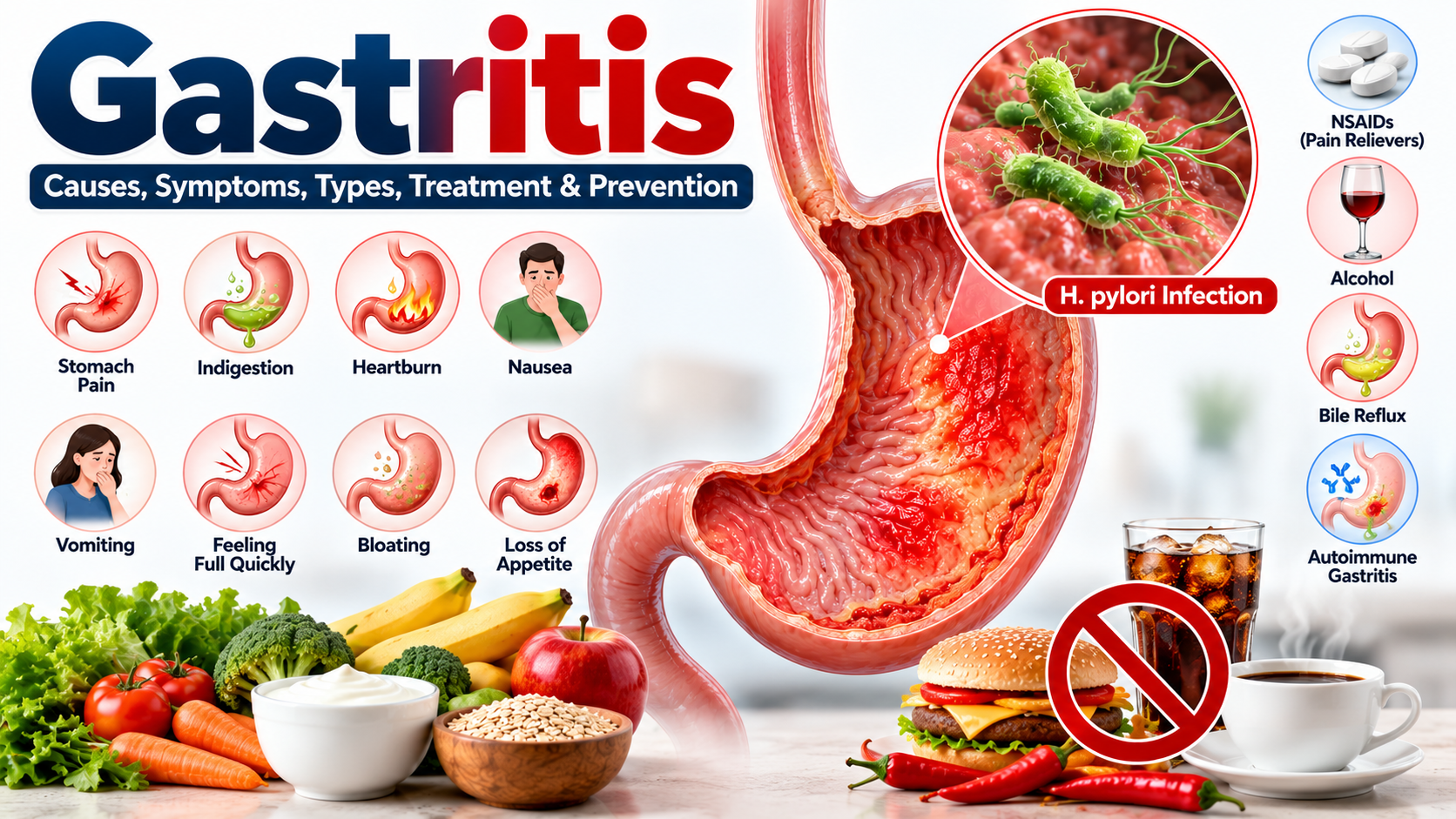
Some people with gastritis have no symptoms. When symptoms occur, they may include upper abdominal discomfort, indigestion, nausea, vomiting, feeling full quickly, or feeling unusually full after eating. In some cases, damage to the stomach lining can lead to bleeding. NIDDK
Common causes include Helicobacter pylori (H. pylori) infection, regular use of certain nonsteroidal anti-inflammatory drugs (NSAIDs), alcohol-related irritation, bile reflux, autoimmune conditions, and severe physical stress associated with serious illness or injury. Treatment depends on the underlying cause. NIDDK
What Is Gastritis?
Gastritis occurs when the stomach lining becomes inflamed. The stomach lining normally provides a protective barrier between the stomach wall and digestive acids.
When this protective system becomes damaged or inflamed, stomach acid and other digestive substances can irritate the lining. The resulting inflammation may cause discomfort and digestive symptoms.
Gastritis can be:
- Acute, developing suddenly and lasting for a shorter period
- Chronic, developing gradually and lasting for a longer period
- Erosive, when the stomach lining develops erosions or ulcers
- Nonerosive, when inflammation occurs without obvious erosions
Different forms have different causes and may require different treatments. NIDDK
What Causes Gastritis?
H. pylori Infection
One of the most important causes of gastritis is infection with Helicobacter pylori, commonly called H. pylori.
This bacterium can live in the stomach and cause chronic inflammation of the stomach lining. H. pylori infection is also an important cause of peptic ulcers. Without appropriate treatment, infection can persist for a long time and may increase the risk of certain stomach complications. NIDDK
NSAID Pain Relievers
Regular use of nonsteroidal anti-inflammatory drugs, or NSAIDs, can irritate or damage the stomach lining.
Common NSAIDs include medicines such as ibuprofen, naproxen, and aspirin. Risk can increase with regular use or higher doses.
People who regularly use these medicines should discuss stomach symptoms or concerns with a healthcare professional rather than stopping prescribed treatment on their own. NIDDK
Alcohol
Excessive alcohol consumption can irritate and damage the protective lining of the stomach.
Alcohol-related irritation can contribute to acute gastritis or gastropathy. Reducing or avoiding alcohol may be recommended when alcohol is contributing to stomach irritation. NIDDK
Autoimmune Gastritis
Autoimmune gastritis occurs when the immune system attacks healthy cells in the stomach lining.
This type of gastritis can affect the stomach’s ability to produce substances needed for normal vitamin B12 absorption. It can also contribute to iron absorption problems and anemia. NIDDK
Bile Reflux
Bile normally moves from the liver and gallbladder into the small intestine. Sometimes bile can flow backward into the stomach.
Long-term exposure to bile can irritate the stomach lining and contribute to reactive gastropathy. NIDDK
Severe Physical Stress
Serious illness, major injuries, severe burns, critical illness, or sepsis can reduce blood flow and protective mechanisms in the stomach lining.
This can result in a condition sometimes called stress gastritis or acute erosive gastropathy. NIDDK
Other Conditions
Less common causes can include certain digestive diseases, infections, food allergies, celiac disease, Crohn’s disease, sarcoidosis, and some cancer treatments. NIDDK
Gastritis Symptoms
Gastritis does not always cause symptoms. When symptoms occur, they may include:
- Upper abdominal pain or discomfort
- Indigestion
- Burning or gnawing discomfort
- Nausea
- Vomiting
- Feeling full quickly
- Feeling unusually full after meals
- Reduced appetite
- Bloating
- Unintentional weight loss in some cases
Symptoms can vary depending on the underlying cause and severity. NIDDK
Because similar symptoms can occur with other digestive conditions, symptoms alone cannot confirm gastritis.
Types of Gastritis
Acute Gastritis
Acute gastritis develops suddenly. It may be associated with irritants such as NSAIDs or alcohol, or with severe illness and physical stress.
Removing the underlying trigger and treating the cause can allow the stomach lining to heal. NIDDK
Chronic Gastritis
Chronic gastritis develops gradually and can persist for a long time.
H. pylori infection and autoimmune gastritis are examples of conditions that can cause chronic inflammation of the stomach lining. NIDDK
Erosive Gastritis
Erosive forms damage the protective stomach lining and may produce erosions or ulcers.
In some cases, these changes can cause stomach bleeding. NIDDK
H. pylori Gastritis
This type results from H. pylori infection and can persist without treatment.
Healthcare professionals can use breath, stool, blood, or other appropriate tests to evaluate for H. pylori. NIDDK
Autoimmune Gastritis
Autoimmune gastritis results from an immune reaction against stomach cells.
Because it can affect nutrient absorption, healthcare professionals may evaluate people for iron deficiency or vitamin B12 deficiency when appropriate. NIDDK
Who Is More Likely to Develop Gastritis?
Several factors may increase the likelihood of gastritis or gastropathy.
These include:
- H. pylori infection
- Regular NSAID use
- Older age
- Excessive alcohol use
- Smoking
- Certain autoimmune conditions
- Severe physical stress
- Some cancer treatments
- Certain digestive conditions
- Previous stomach surgery
Risk factors vary depending on the specific type of gastritis. Mayo Clinic
How Is Gastritis Diagnosed?
A healthcare professional usually begins by asking about symptoms, medical history, medicines, and other possible causes.
Depending on the situation, testing may include:
H. pylori Testing
Doctors may use:
- Urea breath testing
- Stool testing
- Blood testing in certain circumstances
A urea breath test can detect H. pylori by measuring changes in labeled carbon dioxide after a person consumes a preparation containing urea. NIDDK
Upper GI Endoscopy
An upper gastrointestinal endoscopy allows a healthcare professional to examine the lining of the esophagus, stomach, and upper small intestine.
Small tissue samples called biopsies may be taken during the procedure for examination. Endoscopy can help identify inflammation, erosions, ulcers, bleeding, and other abnormalities. NIDDK
Other Tests
Depending on the symptoms and suspected cause, doctors may also order blood tests, stool tests, or other investigations.
Testing is individualized according to the person’s symptoms and medical history.
How Is Gastritis Treated?
Treatment depends on the cause.
Treatment for H. pylori Gastritis
H. pylori gastritis is generally treated with a combination of medicines designed to eliminate the bacteria.
Treatment commonly includes two or more antibiotics together with an acid-reducing medicine. In some treatment plans, bismuth may also be included.
It is important to complete the prescribed treatment. Healthcare professionals may recommend follow-up testing after treatment to confirm that the infection has been eliminated. NIDDK
Treatment for NSAID-Related Gastritis
If NSAIDs are contributing to stomach irritation, a healthcare professional may recommend stopping them, lowering the dose, changing the medicine, or using another approach depending on the person’s circumstances.
People should not independently stop medicines that have been prescribed for another condition. NIDDK
Acid-Reducing Medicines
Depending on the condition, healthcare professionals may recommend medicines that reduce stomach acid.
These can include:
- Proton pump inhibitors
- H2 blockers
- Antacids in some situations
The appropriate medicine depends on the cause and severity of symptoms. NIDDK
Treatment for Autoimmune Gastritis
Autoimmune gastritis may affect iron and vitamin B12 absorption.
Healthcare professionals may recommend appropriate supplements or vitamin B12 treatment when deficiency is present. NIDDK
Treatment for Alcohol-Related Irritation
When alcohol contributes to gastritis, reducing or avoiding alcohol may be part of treatment.
Additional treatment may be needed if significant inflammation, erosions, or bleeding have developed. nhs.uk
Gastritis and Diet
Diet is often associated with stomach discomfort, but it is important not to assume that food causes most cases of gastritis.
NIDDK notes that eating, diet, and nutrition do not play an important role in causing the majority of gastritis or gastropathy cases. However, certain foods and drinks may worsen symptoms in some individuals. NIDDK
Some people may find it helpful to reduce foods or drinks that trigger their symptoms, particularly:
- Alcohol
- Very spicy foods
- Highly acidic drinks
- Large meals
- Excessive caffeine
- Foods that personally worsen symptoms
There is no single gastritis diet that works for everyone.
For general nutrition guidance, our Healthy Diet article provides information about balanced eating and essential nutrients.
Lifestyle Habits That May Help
Along with appropriate medical treatment, some habits may help reduce stomach irritation.
These can include:
- Avoiding excessive alcohol
- Not smoking
- Discussing regular NSAID use with a healthcare professional
- Avoiding foods that consistently trigger symptoms
- Following prescribed H. pylori treatment carefully
- Maintaining a balanced diet
- Seeking medical evaluation for persistent symptoms
Lifestyle measures should complement—not replace—appropriate medical treatment when gastritis has been diagnosed.
Possible Complications of Gastritis
Many cases of gastritis improve with appropriate treatment. However, some forms can lead to complications.
Stomach Ulcers
Long-term inflammation or damage to the stomach lining can contribute to ulcers.
H. pylori infection and NSAID-related stomach damage are important causes of peptic ulcers. NIDDK
Stomach Bleeding
Erosions and ulcers can sometimes bleed.
Possible signs include black, tarry stools or vomit containing red blood or material that looks like coffee grounds. NIDDK
Anemia
Certain forms of gastritis can interfere with iron absorption or cause chronic blood loss.
H. pylori and autoimmune gastritis can contribute to iron-deficiency anemia in some people. NIDDK
You can read our detailed guide on anemia for more information about causes, symptoms, diagnosis, and treatment.
Increased Risk With Some Chronic Forms
Some long-standing forms of chronic gastritis can increase the risk of stomach cancer, particularly when significant changes to the stomach lining develop. The overall risk depends on the specific type and extent of the condition. Mayo Clinic
When Should You See a Doctor?
See a healthcare professional if stomach pain or indigestion:
- Lasts for more than a week
- Keeps returning
- Is getting worse
- Interferes with eating
- Is accompanied by unexplained weight loss
- Is associated with repeated vomiting
- Causes difficulty swallowing
- Produces persistent loss of appetite
Persistent symptoms should not automatically be assumed to be gastritis because other digestive conditions can cause similar symptoms. nhs.uk
Seek Urgent Medical Care for Bleeding
Get urgent medical attention if you:
- Vomit blood
- Vomit material that looks like coffee grounds
- Pass black, sticky stools
- Have significant or severe abdominal pain
- Feel faint, very weak, or unusually light-headed
These symptoms can indicate gastrointestinal bleeding or another serious condition. NIDDK
Frequently Asked Questions
What is gastritis?
Gastritis is inflammation of the stomach lining. It can be acute or chronic and may result from causes such as H. pylori infection, NSAID use, alcohol-related irritation, autoimmune disease, or severe physical stress. NIDDK
What are the most common gastritis symptoms?
Common symptoms include upper abdominal discomfort, indigestion, nausea, vomiting, and feeling full quickly or after eating. Some people have no symptoms. NIDDK
Is H. pylori a cause of gastritis?
Yes. H. pylori infection is one of the most important causes of gastritis and can cause chronic inflammation of the stomach lining. NIDDK
Can ibuprofen cause gastritis?
Regular use of NSAIDs such as ibuprofen can irritate and damage the stomach lining and may contribute to gastritis or reactive gastropathy. NIDDK
Can gastritis cause bleeding?
Some forms of gastritis or gastropathy can cause erosions or ulcers that bleed. Vomiting blood or passing black, tarry stools requires urgent medical attention. NIDDK
Can gastritis cause anemia?
Some forms, particularly H. pylori and autoimmune gastritis, can affect iron absorption or contribute to iron-deficiency anemia. NIDDK
Is gastritis curable?
Treatment depends on the underlying cause. H. pylori gastritis can be treated with medicines that eliminate the infection, while other forms require treatment aimed at the specific trigger or condition. NIDDK
Medical Disclaimer
This article is provided for general educational and informational purposes only. It is not a substitute for professional medical advice, diagnosis, or treatment.
Gastritis can have different causes, and similar symptoms may occur with other digestive conditions. Do not start, stop, or change prescription medicines based solely on information in this article.
If you have persistent abdominal symptoms, vomiting, unexplained weight loss, bleeding, or severe pain, seek appropriate medical evaluation.
If you experience vomiting blood, black or tarry stools, severe abdominal pain, fainting, or other signs of a medical emergency, seek urgent medical care.
References
- National Institute of Diabetes and Digestive and Kidney Diseases (NIDDK) — Gastritis & Gastropathy. NIDDK
- NIDDK — Symptoms & Causes of Gastritis & Gastropathy. NIDDK
- NIDDK — Diagnosis of Gastritis & Gastropathy. NIDDK
- NIDDK — Treatment of Gastritis & Gastropathy. NIDDK
- Mayo Clinic — Gastritis: Symptoms and Causes. Mayo Clinic
- NHS — Gastritis.