

Do you go to bed exhausted but then lie awake for hours? Or do you wake several times during the night and still feel tired in the morning? Occasional bad nights are common. However, repeated sleep problems may point to insomnia.
Insomnia is a sleep disorder that makes it hard to fall asleep, stay asleep or get enough restful sleep. As a result, it can affect your concentration, mood, energy and daily life. Therefore, knowing the symptoms of insomnia and their causes can help you find the right treatment.
What Is Insomnia? Short-Term vs Chronic Insomnia
Insomnia means you regularly struggle to fall asleep, stay asleep or go back to sleep after waking too early. Even when you have enough time and a good place to sleep, you may still feel tired during the day.
Insomnia can last a short time during stressful periods, or it can continue for months. It may appear on its own, or it may come with other health conditions, medicines or lifestyle habits.
Doctors describe two main types:
- Short-term insomnia: sleep problems that last days or weeks, often after stress, illness, travel or a change in routine.
- Chronic insomnia: sleep problems that happen at least three nights a week for three months or longer.
Insomnia Symptoms: Signs You May Have It
The insomnia symptoms differ from person to person. For example, some people cannot fall asleep, while others wake often or wake too early and cannot go back to sleep. Common symptoms include:
- trouble falling asleep at bedtime
- waking several times during the night
- waking earlier than you planned
- feeling tired even after a full night in bed
- daytime sleepiness and low energy
- irritability, anxiety or mood changes
- trouble concentrating or remembering things
- worrying about sleep
One bad night does not mean you have insomnia. Instead, doctors look at how often the problem happens, how long it lasts and how much it affects your day.
Causes of Insomnia: Why You Can’t Sleep
Several factors can cause insomnia, and more than one often plays a part.
Stress and Anxiety
Worries about work, money, family or health can keep your mind active at night. Anxiety can also make you fear the next sleepless night, and that fear makes sleep even harder.
Irregular Sleep Schedules
Changing bedtimes, shift work, jet lag and long weekend sleep-ins can upset your body clock. A steady routine helps keep it on track.
Caffeine and Nicotine
Coffee, tea, cola and energy drinks can disrupt sleep, especially in the afternoon and evening. Nicotine is also a stimulant, so it can delay sleep too.
Screens Before Bed
Phones, computers and TVs keep your mind busy. In addition, bright light at night can shift your sleep timing.
Medical Conditions
Chronic pain, acid reflux, asthma, an overactive thyroid, restless legs syndrome, sleep apnea, depression and anxiety disorders can all disturb sleep. If a health problem is the cause, treating it often improves your sleep.
Medicines
Some cold and allergy medicines, stimulants and other drugs can affect sleep. However, never stop a prescribed medicine on your own. Ask your doctor or pharmacist if your medicine could be the cause.
Your Sleep Environment
Noise, light, uncomfortable bedding and a room that is too hot or too cold can all interrupt sleep.
Insomnia Risk Factors: Who Gets It?
Insomnia can affect anyone, but some people face a higher risk. You are more likely to have it if you:
- live with ongoing stress or have had a major life change
- work irregular hours or night shifts
- have a physical or mental health condition, or ongoing pain
- are older, pregnant or going through menopause
- use caffeine, nicotine or medicines that disturb sleep
- have a family history of sleep problems
Having a risk factor does not mean you will get insomnia. It simply means your sleep habits deserve extra care.
How Insomnia Affects Your Health
Poor sleep affects both mind and body. In the short term, it can cause tiredness, irritability, headaches and poor concentration. When insomnia lasts, it can also harm your work, studies, relationships and quality of life.
Insomnia often occurs alongside depression, anxiety and other health problems. It also links to a higher risk of certain conditions, although that does not always mean insomnia causes them. In turn, poor sleep can make existing conditions harder to manage. For example, if you worry about your heart health, read our guide to high blood pressure.
How Doctors Diagnose Insomnia
A doctor usually starts by asking about your symptoms, sleep schedule, medical history, medicines and daily habits. You may hear questions such as:
- How long do you take to fall asleep?
- How often do you wake at night?
- Do you feel sleepy during the day?
- Do you use caffeine or nicotine?
- Do you snore loudly or wake up gasping for air?
A sleep diary can help. For one or two weeks, write down your bedtime, wake-up time, night awakenings, caffeine and daytime tiredness. Not every case needs a sleep study. However, your doctor may suggest one if they suspect another sleep disorder, such as sleep apnea.
Insomnia Treatment: CBT-I, Medicines and Sleep Aids
The best insomnia treatment depends on how long the problem has lasted, what causes it and whether other health conditions play a role.
CBT-I for Insomnia
Cognitive behavioral therapy for insomnia (CBT-I) is a structured program that helps you change the thoughts and habits that disturb your sleep. It includes sleep education, relaxation methods, ways to reduce worry about sleep and a steady sleep routine. Doctors usually recommend it as the first treatment for chronic insomnia in adults. You can use it with a trained professional or through a guided program.
Prescription Sleep Medicines
A doctor may prescribe medicine when it suits you. They will weigh the cause of your insomnia, your other conditions, possible side effects and how long you need treatment. Some sleep medicines cause next-day drowsiness, interact with other drugs or lead to dependence. Therefore, take them only as your doctor directs, and never use someone else’s prescription.
Over-the-Counter Sleep Aids
Some nonprescription products make you drowsy, but they do not suit everyone. Antihistamine sleep aids, melatonin and herbal supplements are not automatically safe or effective for long-term use. Talk to a doctor or pharmacist first, especially if you are pregnant, older, have a chronic condition or take other medicines.
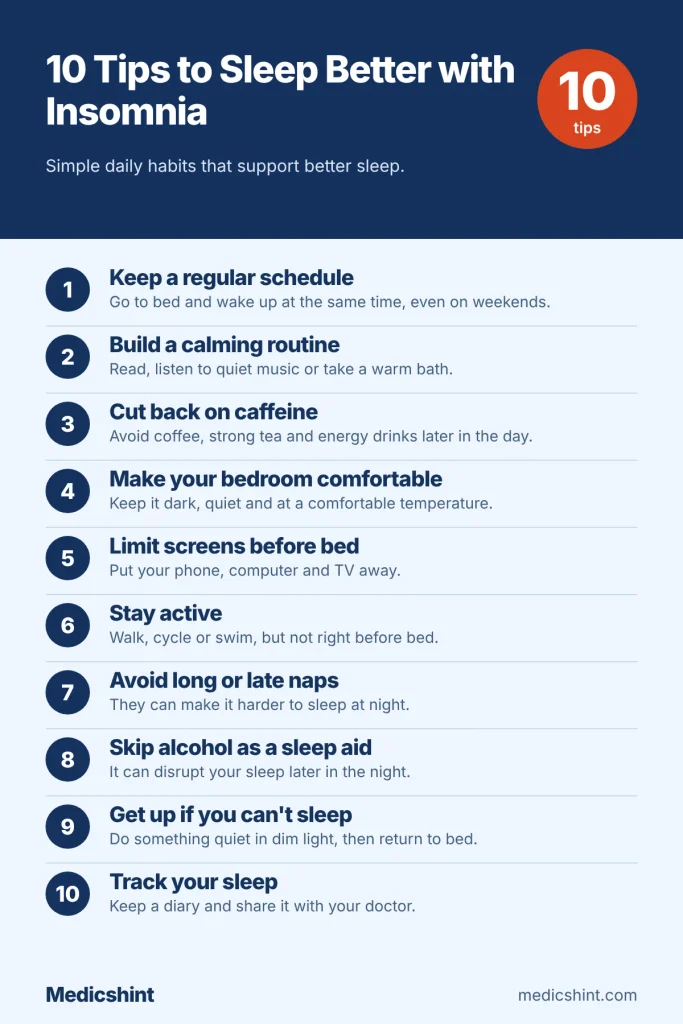
How to Sleep Better: 10 Tips for Insomnia
Healthy habits cannot always cure chronic insomnia, but they give you a good starting point and can help with occasional bad nights.
- Keep a regular schedule. Go to bed and wake up at about the same time every day, including weekends.
- Build a calming bedtime routine. Read, listen to quiet music, take a warm bath or try gentle relaxation. Choose activities that help you unwind rather than wake you up.
- Cut back on caffeine. Avoid coffee, strong tea and energy drinks later in the day. Some people need to stop even earlier.
- Make your bedroom comfortable. Keep it dark, quiet and at a comfortable temperature.
- Limit screens before bed. Put your phone, computer and TV away, and use that time for something calming instead.
- Stay active. Walking, cycling or swimming can improve sleep. However, if hard exercise makes you feel alert, avoid it close to bedtime.
- Avoid long or late naps. A long nap in the late afternoon can make it harder to fall asleep at night.
- Don’t use alcohol to fall asleep. It may make you sleepy at first, but it disrupts sleep later in the night.
- Get up if you can’t sleep. If you lie awake and feel frustrated, do something quiet in dim light, and return to bed when you feel sleepy. CBT-I also uses this method, because it breaks the link between your bed and being awake.
- Track your sleep. A simple diary can reveal patterns, such as late caffeine or irregular bedtimes. Share it with your doctor if problems continue.
How Much Sleep Do Adults Need?
Most adults need at least seven hours of sleep a night, and many do best with seven to nine. Needs vary, though. Sleep quality also matters, because time in bed does not always mean restful sleep. If you often feel tired even when you allow enough time, insomnia, another sleep disorder, a medicine or a health condition may be the reason.
When to See a Doctor for Insomnia
Talk to a healthcare professional if:
- you often struggle to fall asleep or stay asleep
- your sleep problems last several weeks or months
- daytime tiredness affects your work, studies, driving or daily tasks
- you feel anxious or low for a long time
- you snore loudly, wake up gasping or stop breathing during sleep
- you think a medicine or health condition affects your sleep
- changes to your routine have not helped
Get urgent medical help in a medical or mental health emergency. Also, do not drive or use machinery when you feel dangerously sleepy.
Insomnia FAQs
What are the first signs of insomnia?
Early signs include trouble falling asleep, waking often at night, waking too early, and feeling tired or irritable the next day.
Why can’t I sleep even when I feel tired?
Stress, anxiety, caffeine, irregular schedules, noise, medicines and health conditions can all keep you awake, even when you feel exhausted.
How long does insomnia last?
Short-term insomnia lasts days or weeks. Chronic insomnia means problems at least three nights a week for three months or longer.
Can I treat insomnia without medicine?
Yes. CBT-I is the recommended first treatment for chronic insomnia in adults. In addition, better sleep habits and treating underlying causes can help, although results vary.
Is melatonin good for insomnia?
Melatonin can help in some situations, but it does not work as a universal treatment. Ask a healthcare professional whether it suits you.
Does insomnia affect mental health?
Yes. Insomnia can affect your mood, focus and emotional well-being, and it often occurs with anxiety and depression. Therefore, discuss lasting symptoms with a healthcare professional.
Conclusion: Managing Insomnia
Insomnia can affect how well you fall asleep, stay asleep and feel rested. Stress, irregular schedules, caffeine, medicines and health conditions can all contribute. A steady routine, a comfortable bedroom, less caffeine late in the day and regular activity can improve your sleep. For lasting insomnia, however, CBT-I and a professional evaluation usually work better than relying on sleep aids alone.
If insomnia affects your daily life, or if it continues despite changes to your routine, talk to a qualified healthcare professional. They can find the cause and discuss the right treatment.
Medical Disclaimer
This article is for general education, and it does not replace professional medical advice, diagnosis or treatment. Do not start, stop or change any medicine based on this article. Read our full medical disclaimer or contact us if you have questions about the site.
This article draws on guidance from the NHS, Mayo Clinic and the National Institutes of Healt