
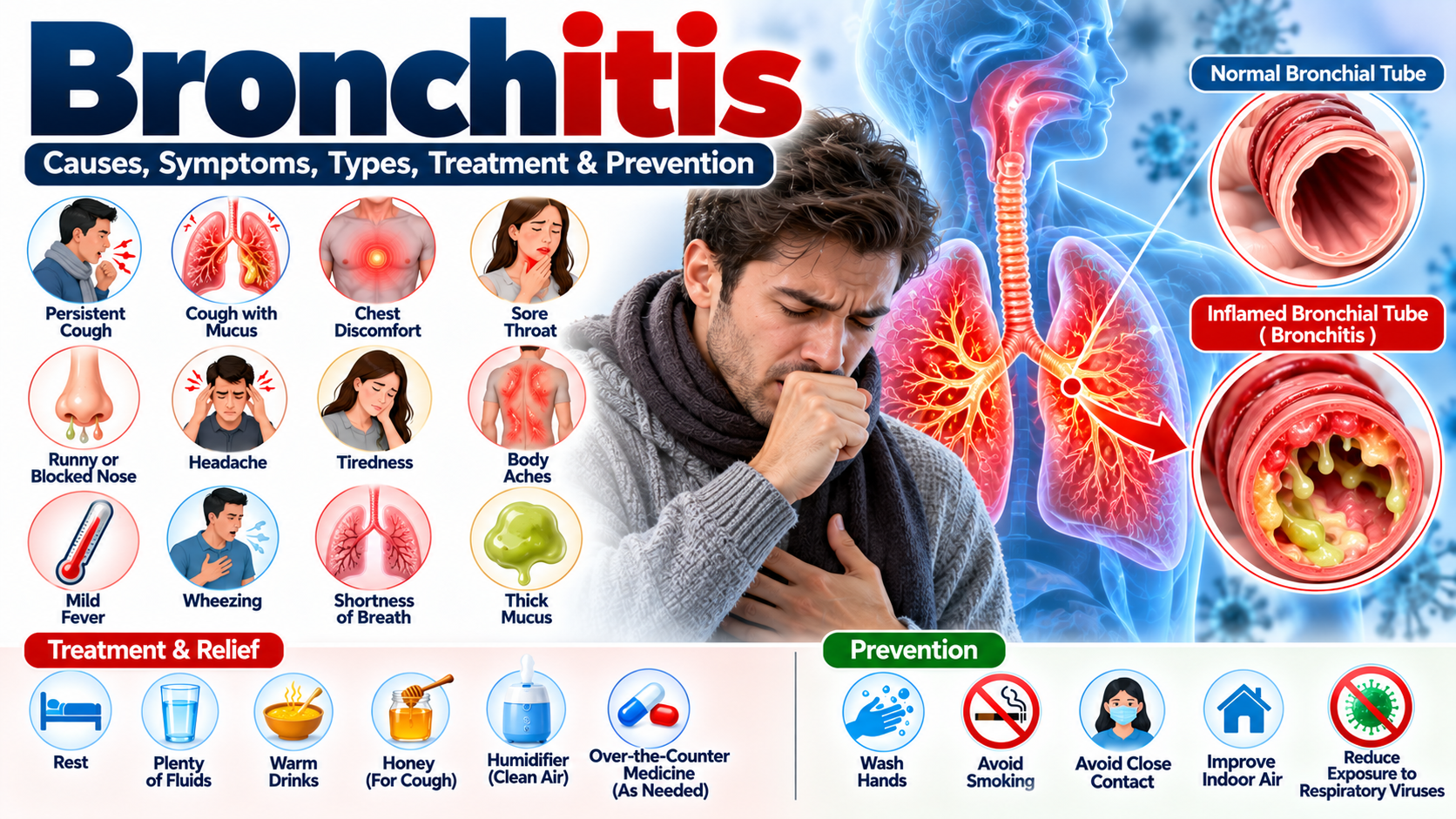
What Is Bronchitis?
Bronchitis is inflammation of the bronchial tubes, the airways that carry air into and out of the lungs. When these airways become irritated and inflamed, they can produce more mucus and cause coughing. CDC
Bronchitis can be acute or chronic. A viral respiratory infection usually causes acute bronchitis, and the condition often improves on its own. Chronic bronchitis involves long-term airway irritation and forms part of chronic obstructive pulmonary disease (COPD).
Types of Bronchitis
Acute Bronchitis
People commonly call acute bronchitis a “chest cold.” It often develops after a cold, flu, or another respiratory infection.
Viruses are the most common cause of acute bronchitis, so antibiotics generally do not help. CDC
Chronic Bronchitis
Chronic bronchitis involves a long-term cough with mucus production and often occurs with COPD. Smoking is a major risk factor, although long-term exposure to other irritants can also contribute.
People with chronic bronchitis may need ongoing medical care to manage symptoms and protect lung function.
Bronchitis Causes
Viral Infections
Viruses cause most cases of acute bronchitis. The same types of viruses that cause colds and flu can sometimes affect the lower respiratory airways. CDC
Smoking
Cigarette smoke can irritate the airways and damage lung tissue. Long-term smoking is a major risk factor for chronic bronchitis and COPD.
Air Pollution
Long-term exposure to polluted air can irritate the respiratory system.
Dust and Chemical Fumes
People who regularly work around dust, industrial fumes, chemical vapors, or other airborne irritants may have an increased risk of chronic airway irritation.
Secondhand Smoke
Regular exposure to tobacco smoke from other people can also irritate the respiratory system.
Bronchitis Symptoms
The most common symptom of bronchitis is a cough.
Other symptoms can include:
- Cough with or without mucus
- Chest discomfort
- Tiredness
- Sore throat
- Mild body aches
- Runny or blocked nose
- Wheezing
- Mild fever
- Shortness of breath
Acute bronchitis often develops after an upper respiratory infection and can occur alongside other cold symptoms. CDC
A cough may continue after the original infection has started improving.
What Does Bronchitis Cough Feel Like?
Bronchitis commonly causes a persistent cough that may produce mucus. The mucus can change in appearance during an infection.
A change in mucus color alone does not necessarily mean that a bacterial infection exists or that antibiotics are necessary. CDC
A healthcare professional should evaluate a cough that becomes severe, causes breathing difficulty, produces blood, or continues longer than expected.
Bronchitis and Common Cold
A common cold mainly affects the upper respiratory tract, while bronchitis involves inflammation of the larger airways leading into the lungs.
Acute bronchitis can sometimes develop after a cold. Both conditions may cause coughing, sore throat, congestion, and tiredness.
If respiratory symptoms become severe or involve significant breathing difficulty, medical evaluation is important.
Our Common Cold article explains common cold symptoms, treatment, and prevention.
Bronchitis and Influenza
Influenza can cause respiratory symptoms and may sometimes lead to complications involving the lower respiratory tract.
People with flu-like symptoms who are at increased risk for severe illness should seek medical advice promptly because antiviral treatment may be useful when started early. CDC
For more information, see our article on Influenza A.
Bronchitis and Asthma
Bronchitis and asthma can both cause coughing and wheezing, but they are different conditions.
Respiratory infections can trigger asthma symptoms in people who already have asthma. Someone with asthma who develops worsening wheezing, chest tightness, or breathing difficulty should follow their prescribed asthma management plan and seek medical care when necessary.
Read our guide to Asthma for more information.
How Is Bronchitis Diagnosed?
A healthcare professional may diagnose acute bronchitis based on symptoms, medical history, and a physical examination.
The clinician may listen to the lungs with a stethoscope and ask about:
- Duration of the cough
- Mucus production
- Fever
- Breathing difficulty
- Smoking history
- Exposure to dust or chemicals
- Existing lung conditions
- Recent respiratory infections
Healthcare professionals may sometimes need additional tests when they suspect pneumonia, asthma, COPD, influenza, COVID-19, or another condition.
Bronchitis Treatment
Treatment depends on whether the bronchitis is acute or chronic and what is causing the symptoms.
Rest
Getting adequate rest can help the body recover from an acute respiratory infection.
Drink Enough Fluids
Adequate fluids help maintain hydration and may make mucus easier to clear.
Humidified Air
A clean humidifier or cool-mist vaporizer may help relieve airway irritation and congestion. CDC
Honey for Cough
Honey may help relieve cough in adults and children aged 1 year and older. However, babies younger than 1 year should not be given honey. CDC
Throat Lozenges
Lozenges or cough drops may provide temporary relief for throat irritation. They should not be given to very young children because of choking risk. CDC
Over-the-Counter Medicines
Some over-the-counter medicines may temporarily relieve fever, pain, or other symptoms. Follow package instructions and ask a healthcare professional or pharmacist if you take other medicines or have chronic health conditions.
Do Antibiotics Treat Bronchitis?
Usually, no for acute bronchitis.
Most acute bronchitis cases are caused by viruses, and antibiotics do not work against viruses. Unnecessary antibiotic use can cause side effects and contribute to antibiotic resistance. CDC
Antibiotics may be appropriate when a healthcare professional identifies a bacterial infection or another condition that requires them.
Do not use leftover antibiotics or someone else’s prescription.
Bronchitis in Children
Children can develop bronchitis after viral respiratory infections.
Symptoms may include:
- Cough
- Runny nose
- Congestion
- Mild fever
- Reduced appetite
- Tiredness
- Wheezing
Parents should pay particular attention to breathing. Rapid breathing, difficulty breathing, bluish lips or face, dehydration, or unusual sleepiness requires prompt medical evaluation.
Over-the-counter cough and cold medicines should not be given to young children without appropriate medical advice. CDC guidance notes that OTC cough and cold medicines are not recommended for children younger than 6 years because they can cause serious side effects. CDC
Bronchitis in Older Adults
Older adults can have a higher risk of serious complications from respiratory infections, particularly when they have underlying heart or lung disease.
Seek medical advice when an older person develops significant breathing difficulty, persistent fever, confusion, dehydration, or worsening chronic disease.
Chronic Bronchitis
Chronic bronchitis is different from a short-term episode of acute bronchitis.
It is associated with COPD and commonly develops in people with long-term exposure to lung irritants, particularly tobacco smoke.
Possible symptoms include:
- Long-term cough
- Regular mucus production
- Wheezing
- Shortness of breath
- Reduced exercise tolerance
- Frequent respiratory infections
People with persistent respiratory symptoms should be evaluated rather than assuming that they simply have repeated chest colds.
Smoking and Bronchitis
Smoking is one of the most important preventable risk factors for chronic bronchitis and COPD.
Stopping smoking can reduce continued exposure to harmful substances and is an important part of protecting lung health.
People who smoke and have a persistent cough should discuss their symptoms with a healthcare professional.
Bronchitis and Healthy Diet
No particular food can cure acute bronchitis. However, maintaining a balanced diet and adequate fluid intake supports general health during recovery.
Our Healthy Diet guide covers balanced nutrition and essential nutrients.
People with chronic diseases may have specific nutritional needs and should follow advice from their healthcare professional.
How to Prevent Bronchitis
Many cases of acute bronchitis are caused by respiratory viruses, so preventing respiratory infections can reduce risk.
Wash Your Hands
Wash your hands regularly, especially after coughing, sneezing, blowing your nose, or touching commonly used surfaces. CDC
Cover Coughs and Sneezes
Use a tissue or your elbow when coughing or sneezing rather than your hands. CDC
Avoid Smoking
Avoiding tobacco smoke is one of the most important ways to protect lung health.
Improve Indoor Air
Good ventilation and cleaner indoor air can reduce exposure to respiratory viruses and irritants. CDC
Stay Away From Others When Sick
If you have a respiratory infection, staying home and limiting close contact can reduce the chance of spreading illness. CDC
When Should You See a Doctor?
Seek medical attention if you experience:
- Difficulty breathing
- Rapid breathing
- Chest pain
- Coughing up blood
- Severe weakness
- Signs of dehydration
- Persistent or worsening fever
- Symptoms that improve and then become worse
- A chronic medical condition that becomes harder to control
People at higher risk of severe respiratory illness should contact a healthcare professional promptly when they become sick. CDC
Frequently Asked Questions
Is bronchitis contagious?
Acute bronchitis caused by a virus can be contagious because the underlying respiratory virus can spread between people. Chronic bronchitis itself is not an infectious disease.
How long does acute bronchitis last?
The cough from acute bronchitis can persist after other symptoms have improved. If symptoms are prolonged, worsening, or concerning, medical evaluation is appropriate.
Can bronchitis turn into pneumonia?
Respiratory infections can sometimes lead to pneumonia or other complications, although most acute bronchitis cases do not become pneumonia. CDC
Is yellow or green mucus a sign that antibiotics are needed?
Not necessarily. Mucus color alone does not establish that a bacterial infection is present. CDC
Can smoking cause bronchitis?
Long-term smoking is a major risk factor for chronic bronchitis and COPD.
Can bronchitis be prevented?
Reducing exposure to tobacco smoke, practicing good hygiene, improving indoor air, and taking precautions when respiratory viruses are circulating can help reduce risk. CDC
Medical Disclaimer
This article is for general educational and informational purposes only. It is not a substitute for professional medical advice, diagnosis, or treatment. Seek medical care for severe, persistent, or worsening symptoms, particularly breathing difficulty, chest pain, or coughing up blood.