
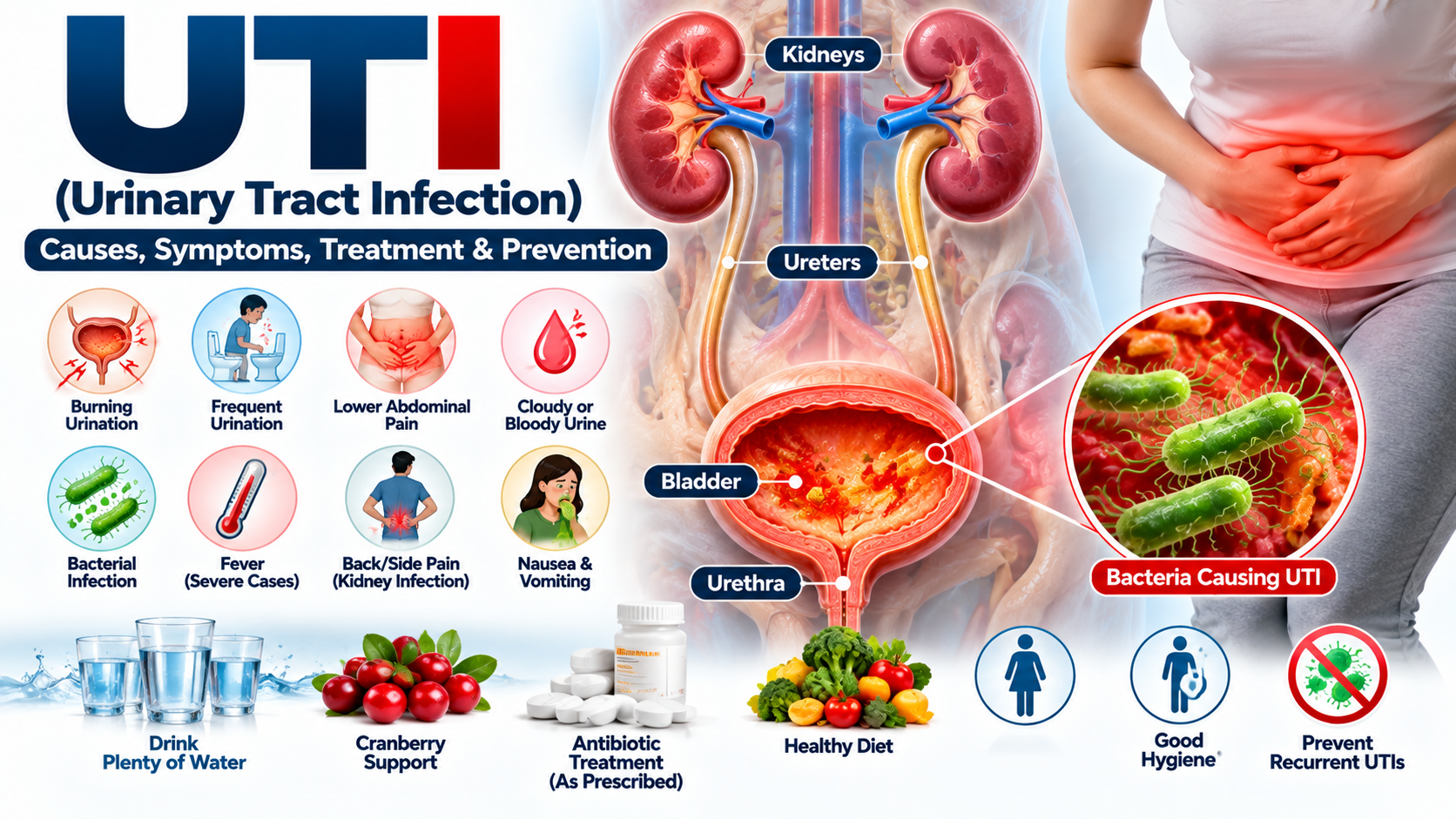
What Is a UTI?
A urinary tract infection (UTI) is an infection that affects part of the urinary system, which includes the kidneys, ureters, bladder, and urethra. Most UTIs are caused by bacteria entering the urinary tract through the urethra and multiplying. A bladder infection, also called cystitis, is the most common type of UTI. NIDDK
UTIs can affect people of different ages, although they are more common in women. In some cases, an infection can remain in the bladder, while in others it can spread to the kidneys and become more serious. NIDDK
Recognizing UTI symptoms early can help people seek appropriate medical care before an infection becomes more complicated.
What Causes a UTI?
Most UTIs occur when bacteria enter the urinary tract through the urethra. Bacteria from the skin or area around the anus can enter the urethra and travel toward the bladder. CDC
The body has several natural defenses against urinary infections, including regular urination. However, certain circumstances can make it easier for bacteria to enter or remain in the urinary tract.
Common factors associated with UTIs include:
- Previous UTIs
- Sexual activity
- Pregnancy
- Menopause
- Certain types of birth control
- Difficulty completely emptying the bladder
- Urinary catheters
- Kidney stones or other urinary blockages
- Enlarged prostate
- Diabetes
- Problems affecting the immune system
- Structural abnormalities of the urinary tract
Women are more likely to develop bladder infections because the urethra is shorter and located closer to the anus, making it easier for bacteria to reach the bladder. NIDDK
UTI Symptoms
UTI symptoms can vary depending on which part of the urinary tract is affected.
Common bladder infection symptoms include:
- Burning or pain during urination
- A frequent need to urinate
- A strong or sudden urge to urinate
- Passing only a small amount of urine
- Pain or discomfort in the lower abdomen
- Cloudy urine
- Blood in the urine
- Strong-smelling urine
These symptoms are commonly associated with bladder infections. NIDDK
Some people may also feel generally tired or unwell.
Some people may also feel generally tired or unwell.
Poor sleep can also contribute to daytime tiredness. If you regularly have difficulty falling asleep or staying asleep, read our guide to insomnia symptoms, causes, and treatment to learn about common sleep problems and available treatment options.
It is important to remember that urine that looks darker or smells stronger by itself does not necessarily mean that a person has a UTI. Dehydration can also change the appearance or smell of urine. nhs.uk
Symptoms of a Kidney Infection
A UTI can sometimes spread from the bladder to one or both kidneys. Kidney infections require prompt medical attention because they can cause serious complications if untreated. NIDDK
Possible symptoms include:
- Fever
- Chills or shivering
- Nausea
- Vomiting
- Pain in the back or side
- Pain around the groin
- Feeling significantly unwell
If urinary symptoms occur together with fever, chills, vomiting, or significant back or side pain, seek medical attention promptly. NIDDK
Types of UTI
UTIs can affect different parts of the urinary tract.
Bladder Infection
A bladder infection, or cystitis, is the most common type of UTI. It usually causes burning during urination, frequent urination, urgency, and lower abdominal discomfort. NIDDK
Urethritis
Urethritis is an infection or inflammation involving the urethra, the tube that carries urine out of the body.
Kidney Infection
A kidney infection, also called pyelonephritis, can develop when bacteria travel upward from the bladder to the kidneys. It is generally more serious than a simple bladder infection and may cause fever, chills, nausea, vomiting, and back or side pain. NIDDK
Who Is More Likely to Develop a UTI?
Although anyone can develop a UTI, certain people have a higher risk.
Women
Women are more likely to develop UTIs because of urinary tract anatomy. Previous infections can also increase the likelihood of future infections. NIDDK
Sexually Active People
Sexual activity can increase the chance of bacteria entering the urinary tract.
People After Menopause
Hormonal changes associated with menopause can affect the urinary tract and vaginal environment and may increase the risk of recurrent bladder infections. NIDDK
People With Diabetes
Diabetes is associated with an increased risk of bladder infections. Managing diabetes according to a healthcare professional’s recommendations is therefore an important part of overall health. NIDDK
People With Urinary Blockages
Kidney stones, an enlarged prostate, or other conditions that interfere with normal urine flow can increase infection risk. NIDDK
People Using Urinary Catheters
Urinary catheters can increase the risk of urinary infections, particularly when they are needed for ongoing medical care.
UTI in Women
UTIs are particularly common among women. Symptoms often include burning while urinating, frequent or urgent urination, lower abdominal discomfort, and changes in urine. NIDDK
Women who repeatedly develop UTIs should discuss the pattern with a healthcare professional. The clinician may look for contributing factors and recommend appropriate prevention strategies.
Some types of birth control, including diaphragms and spermicides, can increase the chance of bladder infections in some people. A healthcare professional can discuss alternative options when recurrent infections occur. NIDDK
UTI in Men
UTIs can also occur in men. However, urinary symptoms in men may require careful medical evaluation because other conditions, including prostate problems, can contribute to urinary symptoms or infection.
An enlarged prostate can interfere with complete bladder emptying and may increase the risk of urinary infection. NIDDK
Men with suspected UTI symptoms should discuss them with a healthcare professional so the underlying cause can be evaluated.
UTI During Pregnancy
Pregnancy can increase the importance of detecting and treating urinary infections. Bladder infections during pregnancy are more likely to spread to the kidneys, so pregnant people with urinary symptoms should contact their healthcare professional. NIDDK
Healthcare professionals may test urine for bacteria during pregnancy and recommend treatment when necessary.
Pregnant people should not self-treat a suspected UTI with leftover antibiotics or medicines without medical guidance.
How Is a UTI Diagnosed?
A healthcare professional may diagnose a UTI using symptoms, medical history, physical examination, and laboratory tests. NIDDK
Urinalysis
Urinalysis examines a urine sample for signs that may indicate infection, including blood and white blood cells.
Urine Culture
A urine culture can identify certain bacteria in the urine. It may help determine whether antibiotics are appropriate and can provide information useful for selecting treatment. Results may take several days. NIDDK
Blood Tests
Blood tests may be used when a more serious infection is suspected, including possible kidney infection. They can also help assess kidney function in certain situations. NIDDK
Imaging and Other Tests
People with recurrent infections may need additional testing to look for underlying causes such as kidney stones or structural problems. Imaging or cystoscopy may sometimes be recommended. NIDDK
UTI Treatment
Treatment depends on the location and severity of the infection and the person’s individual health circumstances.
Bacterial bladder infections are commonly treated with antibiotics prescribed by a healthcare professional. However, antibiotics are not automatically appropriate for every urinary symptom, and a clinician may need to determine the cause before treatment. NIDDK
Antibiotics
When antibiotics are prescribed, they should be taken exactly as directed by the healthcare professional.
Do not:
- Share antibiotics with another person
- Save leftover antibiotics for future illnesses
- Use someone else’s prescription
- Change the prescribed treatment without medical advice
Incorrect antibiotic use can contribute to antibiotic resistance, which can make infections more difficult to treat. NIDDK
Fluids
Drinking enough liquids can help maintain hydration and may help relieve symptoms or support recovery. Water is generally the preferred choice. NIDDK
However, people with conditions such as kidney failure or certain heart conditions may need individualized fluid advice from their healthcare professional. NIDDK
Pain Relief
A healthcare professional may recommend appropriate pain-relieving medicine for discomfort associated with a bladder infection. The choice depends on the person’s medical history and other medicines. NIDDK
Can a UTI Go Away on Its Own?
Some urinary symptoms can have causes other than bacterial infection, and not every person with urinary symptoms necessarily needs antibiotics. A healthcare professional can determine whether testing or treatment is appropriate. NIDDK
Because an untreated bladder infection can spread to the kidneys, people with suspected UTI symptoms should not simply ignore persistent or worsening symptoms. NIDDK
Can Cranberry Prevent or Treat a UTI?
Cranberry products are sometimes promoted for urinary health. However, cranberry products do not treat an existing bladder infection. Research has suggested they may help prevent some bladder infections, but the evidence is not strong enough to be certain. NIDDK
Anyone considering cranberry supplements or other complementary products should discuss them with a healthcare professional, particularly if they take regular medicines or have other health conditions.
UTI Prevention
Some everyday habits may help reduce the risk of bladder infections.
Drink Enough Fluids
Staying adequately hydrated supports normal urinary function. Water is generally the best choice. NIDDK
Do Not Regularly Hold Urine
Use the bathroom when you feel the need to urinate. Taking enough time to empty the bladder completely can support healthy bladder habits. NIDDK
Wipe From Front to Back
For women, wiping from front to back after using the toilet can help reduce the movement of bacteria toward the urethra. NIDDK
Urinate After Sexual Activity
Urinating after sexual activity may help flush bacteria that may have entered the urethra. CDC
Choose Breathable Clothing
Loose-fitting clothing and cotton underwear may help reduce moisture around the urinary area. NIDDK
Avoid Unnecessary Douching
The CDC recommends minimizing douching, sprays, or powders around the female genital area as part of UTI prevention advice. CDC
Recurrent UTIs
Some people experience repeated urinary infections.
NHS guidance describes recurrent UTI as 2 infections within 6 months or 3 within 12 months. People who repeatedly develop UTIs should seek medical evaluation to identify possible contributing factors and discuss prevention options. nhs.uk
A healthcare professional may review:
- Previous urine tests
- Previous antibiotic treatments
- Sexual and reproductive health factors
- Urinary tract problems
- Kidney stones
- Bladder-emptying problems
- Menopause-related changes
- Other medical conditions
In some people, additional testing may be necessary. NIDDK
For people around menopause who experience recurrent bladder infections, a healthcare professional may sometimes consider low-dose vaginal estrogen as part of prevention. NIDDK
UTI and Kidney Infection
One of the most important reasons to recognize UTI symptoms is that an infection can spread from the bladder to the kidneys.
A kidney infection may cause:
- Fever
- Chills
- Nausea
- Vomiting
- Back pain
- Side pain
- Groin pain
Kidney infections can become serious if they are not treated promptly. NIDDK
Anyone with urinary symptoms accompanied by these warning signs should seek medical care promptly.
UTI and Diabetes
People with diabetes have a higher risk of bladder infections. Diabetes management, regular medical care, and attention to urinary symptoms are therefore important. NIDDK
If you have diabetes and develop symptoms such as painful urination, frequent urination, fever, or back pain, contact a healthcare professional rather than relying on home treatment alone.
UTI and Kidney Health
Repeated or untreated urinary infections can sometimes involve the kidneys. People who already have kidney disease may need individualized medical advice about fluid intake, medicines, and infection treatment.
For more information about kidney health, see our article on Chronic Kidney Disease.
UTI and Healthy Diet
There is no specific diet proven to treat an existing bladder infection. Adequate fluid intake is more directly relevant to urinary health, while water is generally the preferred drink. NIDDK
A generally balanced eating pattern still supports overall health. You can learn more in our guide to a Healthy Diet.
When Should You See a Doctor?
Contact a healthcare professional if you have symptoms that could indicate a UTI, especially if they are persistent, severe, or getting worse. NIDDK
Prompt medical attention is particularly important if you have:
- Fever or chills
- Back or side pain
- Nausea or vomiting
- Blood in the urine
- Pregnancy
- Diabetes
- A weakened immune system
- A urinary catheter
- Recurrent UTIs
- Symptoms that are getting worse quickly
These features can indicate a more complicated infection or possible kidney involvement. NIDDK
Frequently Asked Questions
What is the most common symptom of a UTI?
Burning or pain while urinating is a common symptom. Frequent or urgent urination and lower abdominal discomfort can also occur. NIDDK
What causes most UTIs?
Most UTIs are caused by bacteria entering the urinary tract through the urethra. CDC
Can drinking water help with a UTI?
Adequate fluid intake can help maintain hydration and may help relieve symptoms or support recovery. Water is generally the best option. NIDDK
Do antibiotics treat UTIs?
Antibiotics are commonly used for bacterial UTIs, but the appropriate treatment depends on the infection and the individual. A healthcare professional should determine whether antibiotics are needed and which medicine is appropriate. NIDDK
Can cranberry juice cure a UTI?
No. Cranberry products do not treat an existing bladder infection. Some research suggests they may help prevent some infections, but evidence remains uncertain. NIDDK
Can men get UTIs?
Yes. Men can develop UTIs, although bladder infections are more common in women. Urinary symptoms in men may require evaluation for contributing conditions such as prostate problems. NIDDK
Are UTIs dangerous?
Many bladder infections can be treated successfully, but an untreated infection can spread to the kidneys. Kidney infections can become serious, so warning symptoms such as fever, chills, vomiting, or back and side pain should receive prompt medical attention. NIDDK
How can recurrent UTIs be prevented?
Staying hydrated, developing healthy bathroom habits, urinating when needed, wiping front to back, and discussing recurrent infections with a healthcare professional may help reduce risk. Additional prevention strategies may be appropriate for some people. NIDDK
Medical Disclaimer
This article is provided for general educational and informational purposes only. It is not a substitute for professional medical advice, diagnosis, or treatment. If you have symptoms of a UTI, especially fever, chills, vomiting, blood in the urine, pregnancy, or back/side pain, consult a qualified healthcare professional promptly.
Do not use leftover antibiotics or someone else’s prescription to treat urinary symptoms.
References
- National Institute of Diabetes and Digestive and Kidney Diseases (NIDDK)
- Centers for Disease Control and Prevention (CDC)
- NHS