
Introduction
The common cold is a viral infection of the upper respiratory tract that mainly affects the nose and throat. Different respiratory viruses can cause a cold, with rhinoviruses among the most frequent causes. Colds can occur at any time of year, although many respiratory viruses circulate more during certain seasons. CDC
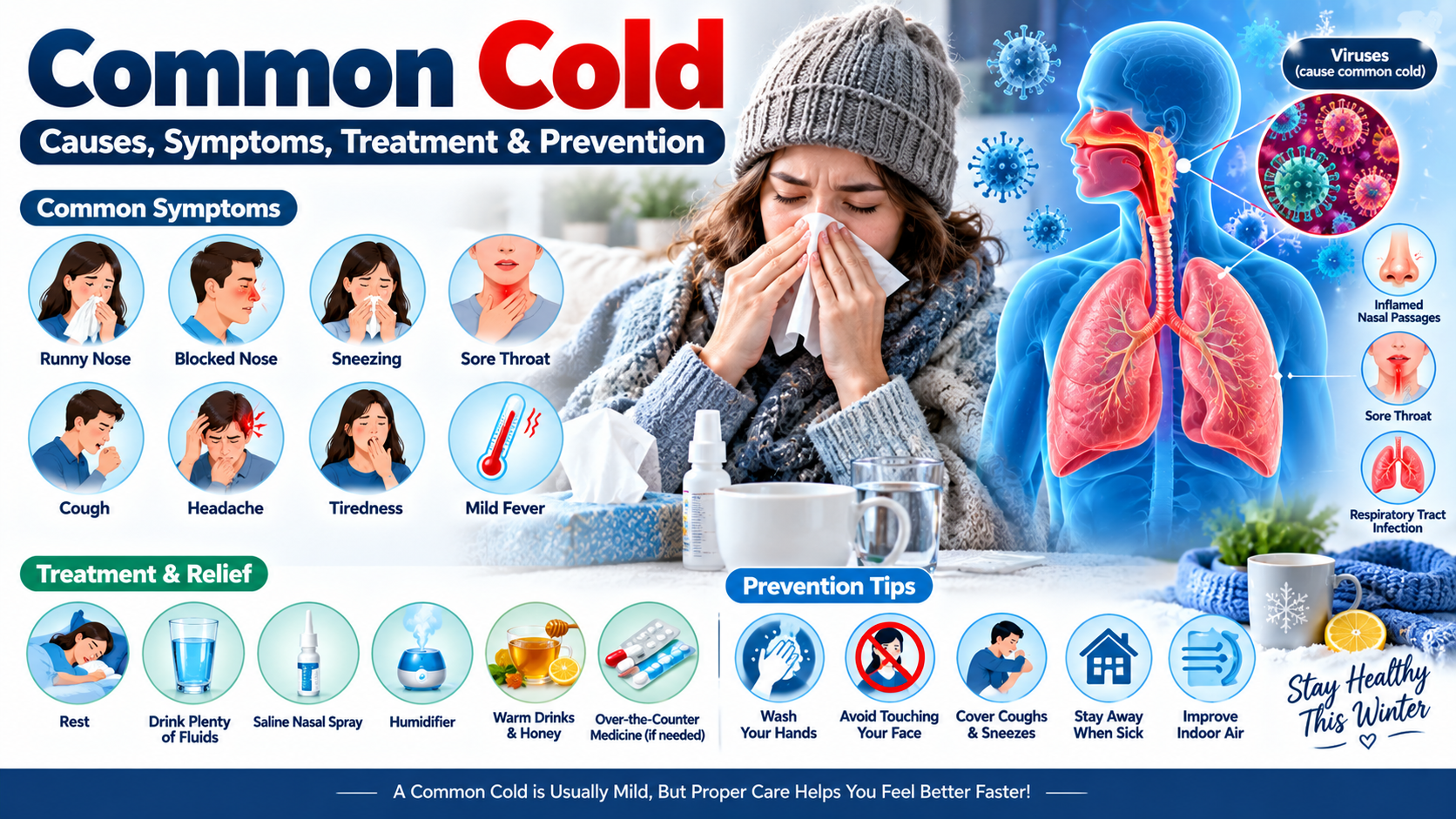
Common cold symptoms usually develop gradually and may include a runny or blocked nose, sneezing, sore throat, cough, headache, tiredness, and mild body aches. Symptoms often become strongest during the first few days before gradually improving. CDC
Most people recover without specific medical treatment. Rest, adequate fluids, and simple measures to relieve symptoms can make the illness more comfortable. Antibiotics do not treat the common cold because it is caused by viruses. CDC
What Is the Common Cold?
The common cold is a viral infection affecting the upper respiratory tract. More than 200 respiratory viruses can cause cold symptoms, and rhinoviruses are among the most common causes. CDC
A cold is generally a mild illness, but symptoms can be uncomfortable and may temporarily affect sleep, work, school, and everyday activities.
Cold symptoms can overlap with other respiratory infections, including influenza and COVID-19. Because these illnesses can sometimes require different treatment, people at higher risk of severe illness should consider appropriate testing and medical advice when cold-like symptoms develop. CDC
Common Cold Causes
Viruses cause the common cold. Rhinoviruses are frequent causes, but several other respiratory viruses can produce similar symptoms. CDC
A person can become infected when respiratory particles from an infected person reach the nose, mouth, or eyes. Viruses can also spread when someone touches a contaminated surface and then touches their face. Close personal contact can also contribute to transmission. CDC
Common situations that can increase exposure include:
- Spending time close to someone who has a respiratory infection
- Touching contaminated surfaces
- Touching the nose, mouth, or eyes with unwashed hands
- Sharing close indoor spaces with infected people
- Contact with respiratory droplets from coughing or sneezing
Common Cold Symptoms
Common cold symptoms usually develop gradually over several days. They may include: CDC
- Runny nose
- Blocked or stuffy nose
- Sneezing
- Sore throat
- Cough
- Hoarse voice
- Headache
- Mild body aches
- Feeling tired or unwell
- Mild fever, particularly in children
- Pressure around the face or ears
- Changes in taste or smell in some people
Symptoms often peak around the second or third day of illness. CDC
Not everyone experiences every symptom. Some people may mainly have nasal congestion and sneezing, while others may develop a cough and sore throat.
How Long Does a Common Cold Last?
Many colds improve within about a week, although symptoms can sometimes continue for longer. NHS guidance notes that people often begin to feel better within 1 to 2 weeks. nhs.uk
A cough may last longer than other symptoms.
If symptoms continue for more than 10 days without improvement, become significantly worse, or improve and then return with increased severity, medical advice may be appropriate. CDC
Common Cold vs Flu
The common cold and influenza can cause similar respiratory symptoms, but they are different viral illnesses.
A cold generally develops more gradually and mainly affects the nose and throat. Influenza often begins more suddenly and can cause more pronounced fever, body aches, fatigue, and overall illness. nhs.uk
| Common Cold | Influenza |
|---|---|
| Usually develops gradually | Often begins suddenly |
| Mainly affects nose and throat | Can cause more widespread symptoms |
| Runny or blocked nose is common | Fever and body aches can be more prominent |
| Usually milder | Can cause more severe illness |
| Usually improves without specific treatment | Antiviral treatment may be appropriate for some people |
Cold-like symptoms can also occur with COVID-19 and other respiratory infections, so symptoms alone cannot always identify the exact virus. CDC
Common Cold Treatment
There is no cure that eliminates the common cold immediately. Most people recover naturally as the immune system clears the virus. CDC
Treatment mainly focuses on reducing symptoms and supporting recovery.
Get Plenty of Rest
Adequate rest can help you feel more comfortable while your body recovers.
Drink Enough Fluids
Drink enough fluids to maintain hydration. Water and other suitable drinks can help prevent dehydration, especially if you have a fever or reduced appetite. CDC
Use Saline Nasal Spray
Saline nasal sprays or drops can help relieve nasal congestion and make breathing through the nose more comfortable. CDC
Use a Humidifier
A clean humidifier or cool-mist vaporizer can add moisture to the air and may help relieve congestion or throat irritation. CDC
Soothe a Sore Throat
Warm drinks and appropriate throat lozenges can help soothe throat discomfort.
Honey may help relieve cough in adults and children aged 1 year and older. Honey should not be given to babies younger than 1 year. CDC
Over-the-Counter Medicines
Some over-the-counter medicines can temporarily reduce symptoms such as pain, fever, or nasal congestion. Always follow the product instructions and check with a healthcare professional or pharmacist if you take other medicines or have an underlying health condition. CDC
Do Antibiotics Treat a Common Cold?
No. Antibiotics do not treat the common cold because colds are caused by viruses rather than bacteria. Taking antibiotics unnecessarily can cause side effects and contributes to antibiotic resistance. CDC
A bacterial complication can occasionally develop after a viral respiratory infection. If a healthcare professional identifies a bacterial infection, antibiotics may then be appropriate.
Do not use leftover antibiotics or someone else’s prescription to treat cold symptoms.
Common Cold in Children
Children can experience many of the same symptoms as adults, including:
- Runny nose
- Nasal congestion
- Sneezing
- Cough
- Sore throat
- Mild fever
- Reduced appetite
- Irritability
- Difficulty sleeping
Young children may have more difficulty describing their symptoms and can sometimes have feeding or sleeping problems when congested. nhs.uk
Parents and caregivers should use extra caution with medicines. Some over-the-counter cough and cold medicines are not recommended for young children because they can cause serious side effects. CDC
Never give a child a medicine unless it is appropriate for their age and the correct dose is known.
Common Cold During Pregnancy
Pregnancy can change which medicines are appropriate. People who are pregnant should consult a healthcare professional or pharmacist before taking over-the-counter cold medicines, herbal products, or supplements.
Simple measures such as rest, fluids, saline nasal spray, and appropriate warm drinks may help with symptoms, but medication choices should be individualized.
Common Cold Complications
Most colds are mild, but respiratory viral infections can sometimes contribute to complications.
Possible complications include:
- Sinus infection
- Middle ear infection
- Bronchitis
- Pneumonia
- Asthma symptoms or attacks
- Worsening of certain chronic medical conditions CDC
People with asthma, chronic lung disease, heart disease, kidney disease, diabetes, weakened immune systems, or other significant health conditions may need medical advice sooner if respiratory symptoms develop.
Common Cold and Asthma
A respiratory viral infection can trigger asthma symptoms in some people. Wheezing, chest tightness, coughing, or difficulty breathing should not automatically be assumed to be a simple cold.
If you have asthma and develop worsening breathing symptoms, follow your prescribed asthma action plan and seek medical advice when needed.
For more information, see our article on Asthma.
Common Cold and Healthy Diet
There is no specific food that can cure a common cold. However, maintaining a balanced diet can help support overall health.
During illness, choose foods that are easy to tolerate and continue drinking enough fluids.
Our Healthy Diet guide explains essential nutrients and practical healthy eating habits.
How to Prevent a Common Cold
Because many different viruses can cause colds, prevention focuses on reducing exposure and limiting the spread of respiratory viruses.
Wash Your Hands
Wash your hands regularly with soap and water, particularly after coughing, sneezing, blowing your nose, or touching potentially contaminated surfaces. CDC
Avoid Touching Your Face
Avoid touching your eyes, nose, and mouth with unwashed hands because respiratory viruses can enter the body through these areas. CDC
Cover Coughs and Sneezes
Use a tissue when coughing or sneezing and throw used tissues away promptly. If a tissue is not available, cough or sneeze into your elbow rather than your hands. CDC
Stay Away From Others When Sick
If you have a respiratory illness, staying home and limiting close contact with others can reduce the chance of spreading infection. CDC guidance recommends returning to normal activities when symptoms are improving overall and you have been fever-free for at least 24 hours without using fever-reducing medicine, followed by additional precautions for the next 5 days. CDC
Improve Indoor Air
Cleaner indoor air can help reduce exposure to respiratory viruses. When practical, improve ventilation and use other appropriate measures to increase fresh air indoors. CDC
Avoid Sharing Personal Items
Avoid sharing cups, utensils, towels, and other personal items with someone who is sick.
Common Cold in Winter
Colds can occur at any time of year, but respiratory viruses may circulate differently across seasons. Influenza and RSV, for example, often circulate more during winter, while other viruses that cause cold symptoms can circulate throughout the year. CDC
During colder months, people may spend more time indoors and in close contact with others, which can increase opportunities for respiratory viruses to spread.
When Should You See a Doctor?
Most colds do not require medical treatment, but certain symptoms should not be ignored.
Seek medical care if you experience:
- Trouble breathing
- Fast breathing
- Chest pain
- Signs of dehydration
- Fever lasting longer than 4 days
- Symptoms lasting more than 10 days without improvement
- Symptoms that improve and then return or become worse
- Worsening of an existing chronic medical condition
- Severe or concerning symptoms CDC
People at higher risk for severe influenza or COVID-19 should contact a healthcare professional promptly when respiratory symptoms develop because antiviral treatment may be time-sensitive. CDC
Frequently Asked Questions
What causes the common cold?
Different respiratory viruses cause colds. Rhinoviruses are among the most common causes. CDC
How long does a cold usually last?
Many people begin feeling better within 1 to 2 weeks, although some symptoms, particularly cough, can last longer. nhs.uk
Can antibiotics cure a cold?
No. Antibiotics do not work against the viruses that cause common colds. CDC
What is the best treatment for a cold?
Most people need rest, adequate fluids, and symptom relief rather than a specific cure. Over-the-counter medicines may temporarily relieve certain symptoms when used appropriately. CDC
Can honey help a cough?
Honey can help relieve cough in adults and children aged 1 year and older. It should not be given to babies younger than 1 year. CDC
Can a cold turn into pneumonia?
Respiratory viral infections can sometimes lead to complications such as pneumonia, although most common colds remain mild and resolve without serious complications. CDC
How can I avoid spreading a cold?
Wash your hands, cover coughs and sneezes, avoid touching your face, improve indoor air when possible, and stay away from others while you are actively sick. CDC
Medical Disclaimer
This article is for general educational and informational purposes only. It is not a substitute for professional medical advice, diagnosis, or treatment. If symptoms are severe, persistent, worsening, or associated with breathing difficulty or chest pain, seek appropriate medical care.