
Introduction
Osteoporosis is a bone disease that makes bones weaker, less dense, and more likely to break. It often develops gradually without noticeable symptoms, which is why it is sometimes called a “silent” disease. Many people do not know they have osteoporosis until they experience a fracture after a minor fall or normal everyday movement. NIAMS
Bone is living tissue that constantly changes. The body removes old bone and replaces it with new bone. When bone loss becomes faster than new bone formation, bone density and strength can decrease. Over time, this can increase the risk of fractures, particularly in the hip, spine, and wrist. Mayo Clinic
Osteoporosis can affect both women and men. The risk generally increases with age, although certain medical conditions, medicines, hormonal changes, lifestyle factors, and nutritional deficiencies can contribute to bone loss at different ages. NIAMS
This article explains osteoporosis causes, symptoms, risk factors, diagnosis, treatment options, and practical ways to support bone health and reduce fracture risk.
What Is Osteoporosis?
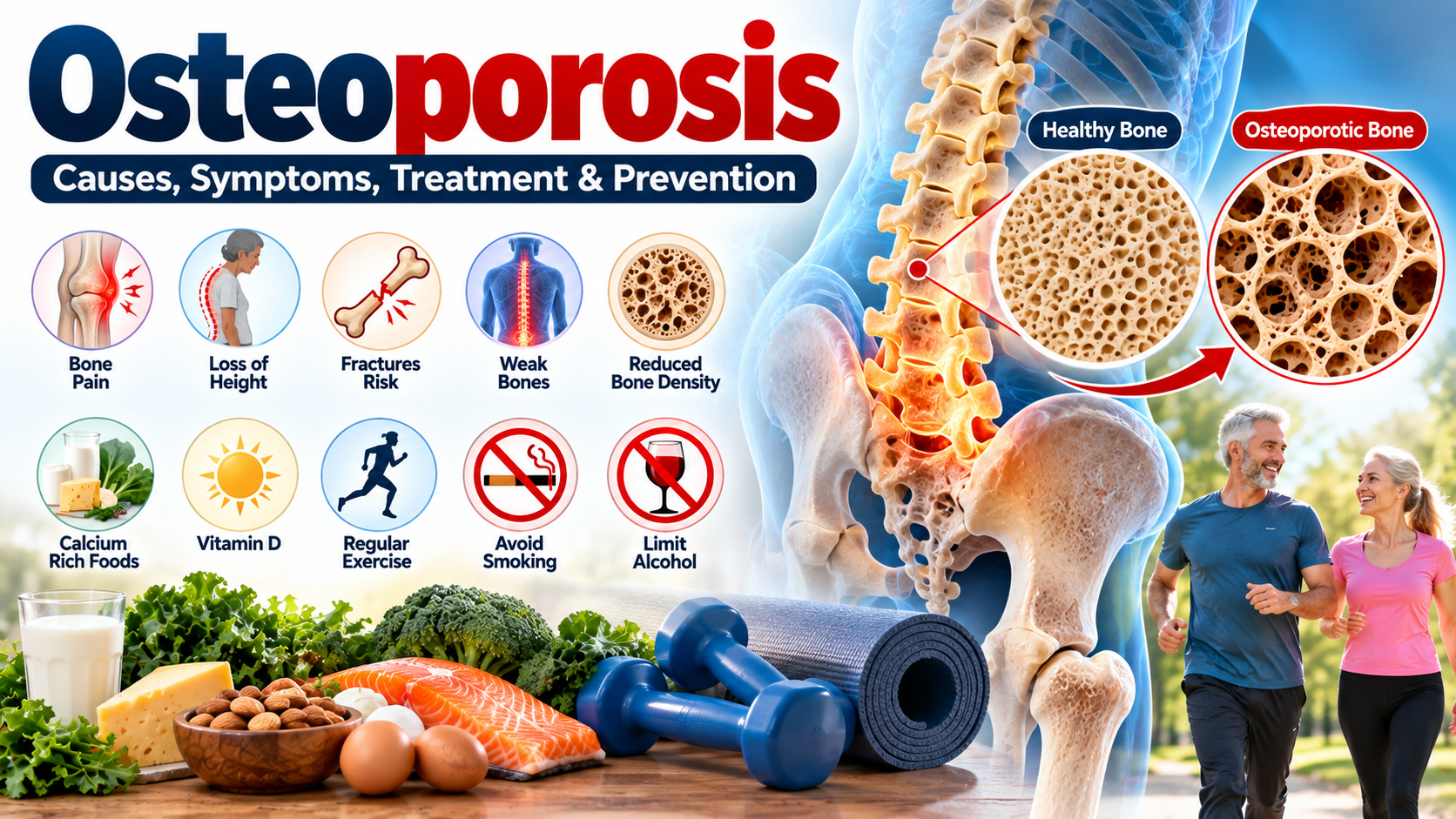
Osteoporosis occurs when bone mineral density and bone strength decrease enough to make fractures more likely. Healthy bones have a strong internal structure, but osteoporotic bones become more porous and fragile.
Bone mass usually increases during childhood and early adulthood. Most people reach peak bone mass around their 20s or 30s. After that, bone loss gradually becomes more common as the normal bone-remodeling process changes with age. Mayo Clinic
Osteoporosis does not always cause pain or obvious physical changes in its early stages. A person may have significant bone loss without knowing it until a fracture occurs.
Osteoporosis Causes
The main underlying problem is an imbalance between bone breakdown and bone formation. Several factors can contribute to this process.
Aging
Bone loss becomes more common with increasing age. As people get older, the body may remove old bone faster than it replaces it. This gradual loss can eventually reduce bone strength. Mayo Clinic
Hormonal Changes
Changes in hormone levels can affect bone health. For example, the reduction in estrogen associated with menopause can accelerate bone loss. Low testosterone levels can also contribute to osteoporosis in some men. NIAMS
Low Calcium Intake
Calcium is an important mineral for maintaining bone structure. A diet that consistently provides too little calcium can contribute to reduced bone density and increased fracture risk. Mayo Clinic
Vitamin D Deficiency
Vitamin D helps the body absorb calcium and plays an important role in maintaining healthy bones. Low vitamin D levels can therefore contribute to poor bone health.
Long-Term Use of Certain Medicines
Some medicines can increase the risk of bone loss when used for long periods. Long-term corticosteroid use is an important example. Other medicines can also affect bone health depending on the individual and the treatment. NIAMS
Certain Medical Conditions
Some health conditions may increase osteoporosis risk, including certain hormonal disorders, gastrointestinal diseases, rheumatoid arthritis, some cancers, and other chronic conditions. NIAMS
Smoking and Heavy Alcohol Use
Smoking is associated with increased risk of osteoporosis and fractures. Heavy alcohol consumption can also negatively affect bone health. NIAMS
Osteoporosis Symptoms
Osteoporosis often has no symptoms in its early stages. This is one of the reasons it can remain undiagnosed for years. NIAMS
Symptoms may become noticeable after bone loss has caused a fracture.
Possible signs include:
- A bone fracture after a minor fall
- Back pain caused by a spinal fracture
- Loss of height over time
- A stooped or hunched posture
- Repeated fractures
- Sudden pain after bending, lifting, or another relatively minor movement
Spinal fractures can sometimes occur without an obvious fall or accident because weakened vertebrae may collapse under normal pressure. NIAMS
Common Osteoporosis Fractures
Osteoporosis can affect many bones, but fractures commonly occur in the:
- Hip
- Spine
- Wrist
Hip and spinal fractures can have significant effects on mobility and independence, particularly in older adults. Mayo Clinic
Osteoporosis Risk Factors
Several factors can increase the likelihood of developing osteoporosis.
Age
The risk generally increases as people get older because bone loss becomes more common with aging.
Sex
Women have a higher overall risk, particularly after menopause, but osteoporosis can also affect men. Older men can develop significant bone loss and fractures as well. NIAMS
Family History
Having a parent or sibling with osteoporosis, especially a history of hip fracture, can increase the risk. Mayo Clinic
Small Body Frame
People with smaller or thinner body frames may have less bone mass available as they age, which can increase their risk.
Poor Nutrition
A diet low in calcium, vitamin D, protein, or overall nutrients can negatively affect bone health. Severe dieting and being underweight may also contribute to bone loss. NIAMS
Physical Inactivity
Regular physical activity helps maintain bone and muscle strength. Long periods of inactivity may contribute to bone loss and can also increase fall risk. NIAMS
Smoking
Smoking is associated with weaker bones and a greater risk of fractures. NIAMS
Alcohol
Chronic heavy alcohol use can increase the risk of osteoporosis and fractures. NIAMS
Certain Medicines
Long-term corticosteroids and some other medicines may increase the risk of osteoporosis. People taking medicines for chronic conditions should discuss their bone-health risks with their healthcare professional rather than stopping prescribed medicines themselves. NIAMS
How Is Osteoporosis Diagnosed?
Doctors may assess osteoporosis risk using medical history, physical examination, risk factors, previous fractures, and bone-density testing.
Bone Mineral Density Test
The most common test is dual-energy X-ray absorptiometry (DXA or DEXA).
A DXA scan measures bone mineral density, usually at the hip and spine. It is quick, painless, and uses low levels of X-rays. The results can help doctors identify low bone density, diagnose osteoporosis, estimate fracture risk, and monitor treatment. NIAMS
Medical History
A healthcare professional may ask about:
- Previous fractures
- Family history
- Diet
- Exercise
- Smoking
- Alcohol use
- Current and previous medicines
- Other medical conditions
- Hormonal or menstrual history when relevant
The doctor may also assess height, posture, balance, walking pattern, and muscle strength. NIAMS
Osteoporosis Treatment
Treatment depends on bone density, fracture risk, age, medical history, and the underlying causes of bone loss.
The main goals are to reduce further bone loss and prevent fractures. NIAMS
Healthy Nutrition
A balanced diet containing adequate calcium, vitamin D, protein, fruits, vegetables, and other nutrients supports bone health.
Calcium-rich foods can include:
- Milk and yogurt
- Cheese
- Leafy green vegetables
- Calcium-fortified foods
- Tofu and some soy products
- Fish with edible bones, such as canned sardines
Individual calcium requirements vary by age and other factors, so supplementation should be discussed with a healthcare professional when dietary intake is insufficient. Mayo Clinic
Vitamin D
Vitamin D supports calcium absorption and bone health. Some people may need vitamin D from food, sunlight exposure, or supplements depending on their circumstances.
People with suspected deficiency should discuss testing and supplementation with a healthcare professional rather than taking high-dose supplements without guidance.
Exercise
Physical activity is an important part of maintaining bone and muscle health.
Weight-bearing activities such as walking can help support bones. Strength training can improve muscle strength, while balance exercises can help reduce fall risk. NIAMS
People who already have osteoporosis or previous fractures should discuss an appropriate exercise program with a healthcare professional or physical therapist.
Medicines
When fracture risk is sufficiently high, doctors may recommend medicines that slow bone loss, reduce fracture risk, or help build bone.
Bisphosphonates are among the commonly used medicines for osteoporosis. Other treatment options may be appropriate depending on the person’s condition and fracture risk. Mayo Clinic
Treatment should be individualized by a qualified healthcare professional.
Osteoporosis Prevention
Bone health should be supported throughout life rather than only after osteoporosis develops.
Eat a Balanced Diet
Include adequate calcium, vitamin D, protein, fruits, vegetables, and other nutrients.
Our article on a Healthy Diet explains practical ways to build balanced eating habits.
Stay Physically Active
Regular weight-bearing and muscle-strengthening activities can support bone and muscle health. Balance exercises may also help reduce falls. Mayo Clinic
Avoid Smoking
Not smoking can help protect bone health and reduce other health risks.
Limit Alcohol
Heavy alcohol consumption can contribute to bone loss and increase the likelihood of falls and fractures. Mayo Clinic
Prevent Falls
Fall prevention becomes particularly important for older adults and people who already have weak bones.
Helpful steps include:
- Keeping floors and hallways clear
- Improving lighting
- Removing loose rugs
- Using suitable footwear
- Taking care on stairs
- Discussing balance problems with a healthcare professional
Preventing falls can reduce the chance of fractures.
Osteoporosis and Fracture Prevention
Having osteoporosis does not mean a fracture is unavoidable. Medical treatment, physical activity, appropriate nutrition, and fall-prevention strategies can all play a role in reducing fracture risk.
People diagnosed with osteoporosis should follow their healthcare professional’s treatment plan and attend recommended follow-up appointments.
When Should You See a Doctor?
Consider discussing osteoporosis with a healthcare professional if you:
- Have experienced a fracture after a minor fall
- Have unexplained loss of height
- Develop persistent back pain
- Have several osteoporosis risk factors
- Have a strong family history of osteoporosis
- Have experienced early menopause
- Take corticosteroids for a prolonged period
- Have a medical condition associated with bone loss
A healthcare professional can determine whether bone-density testing or further evaluation is appropriate. Mayo Clinic
Frequently Asked Questions
Is osteoporosis painful?
Osteoporosis itself often causes no symptoms or pain. Pain may occur when weakened bones fracture, particularly in the spine. NIAMS
Can men get osteoporosis?
Yes. Osteoporosis affects both women and men. Although women generally have a higher risk, particularly after menopause, older men can also develop osteoporosis and fractures. NIAMS
Can osteoporosis be prevented?
Some risk factors cannot be changed, but healthy nutrition, physical activity, avoiding smoking, limiting alcohol, maintaining adequate vitamin D and calcium intake, and preventing falls can support bone health and reduce fracture risk. Mayo Clinic
What test checks for osteoporosis?
A DXA or DEXA scan is the most common test used to measure bone mineral density and help diagnose osteoporosis. NIAMS
Can osteoporosis be treated?
Yes. Treatment can include lifestyle changes, nutrition, exercise, fall prevention, and medicines when appropriate. The treatment plan depends on individual fracture risk and medical history. NIAMS
Medical Disclaimer
This article is provided for general educational and informational purposes only. It is not a substitute for professional medical advice, diagnosis, or treatment. If you have symptoms, risk factors, a suspected fracture, or concerns about your bone health, consult a qualified healthcare professional.
References
- National Institute of Arthritis and Musculoskeletal and Skin Diseases (NIAMS)
- Mayo Clinic
- National Institutes of Health (NIH)