

Influenza A symptoms usually start suddenly, 1 to 4 days after exposure. Typical flu symptoms include fever, chills, dry cough, sore throat, headache, muscle aches and extreme tiredness. Most healthy adults recover in about a week, but influenza A can become serious in babies, older adults, pregnant women and people with long-term health conditions.
This guide covers influenza A symptoms, how the virus spreads, how long flu lasts, treatment options and the warning signs that need urgent care.
Influenza A Symptoms at a Glance (Quick Facts)
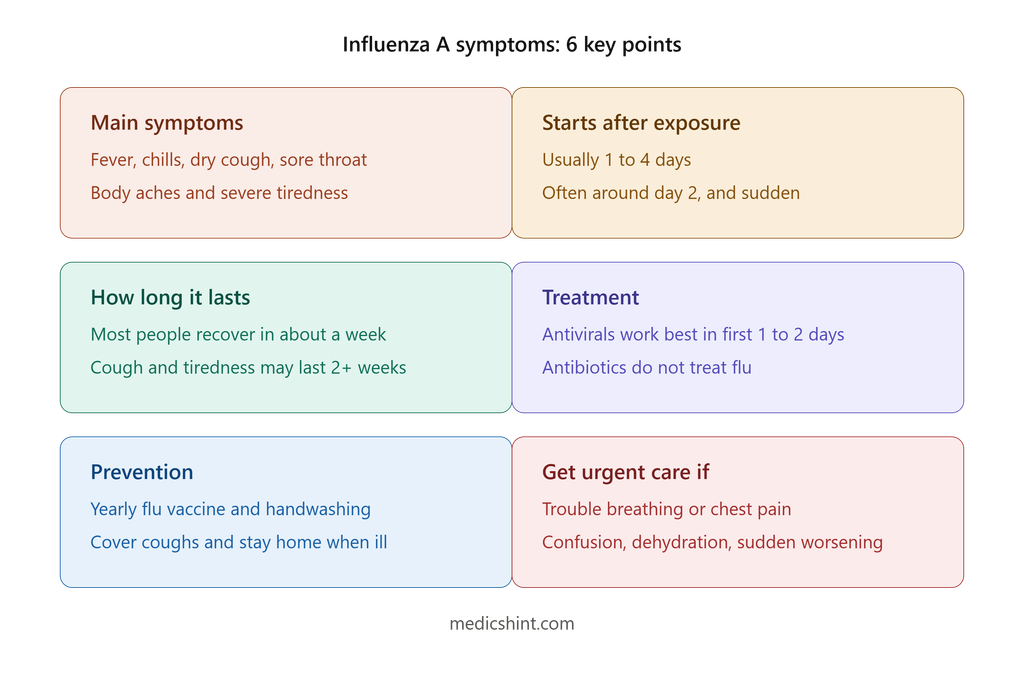
| Question | Answer |
|---|---|
| Common influenza A symptoms | Fever, chills, dry cough, sore throat, body aches, headache, fatigue |
| Start after exposure | Usually 1 to 4 days (often about 2) |
| How long influenza A lasts | About a week; cough and tiredness may last 2+ weeks |
| Do antibiotics work? | No, flu is a viral infection |
| Best time for flu antivirals | Within the first 1 to 2 days of symptoms |
| Urgent warning signs | Trouble breathing, chest pain, confusion, dehydration, symptoms that improve then suddenly worsen |
What Is Influenza A? Meaning, Types and Subtypes
Influenza A is a virus that infects the nose, throat and lungs. Together with Influenza B, it causes most seasonal flu illness each year.
There are four types of influenza virus: A, B, C and D. Type A viruses are grouped into subtypes by two surface proteins, H (hemagglutinin) and N (neuraminidase). The subtypes seen most often in people recently are A(H1N1) and A(H3N2).
The virus changes gradually, so circulating strains can differ from year to year. This is why flu vaccines are updated regularly.
Influenza A vs Influenza B: What Is the Difference?
Both cause seasonal flu with almost identical symptoms, so you cannot tell them apart by how you feel. Only a laboratory test can, and doctors usually order one only when the result would change care.
Influenza A has caused global pandemics and has more subtypes. Influenza B has not caused pandemics and is grouped into lineages.
How Influenza A Spreads: Causes and Common Places
Influenza A spreads through tiny droplets released when an infected person coughs, sneezes or talks. Others can breathe these in. Less often, a person touches a contaminated surface and then touches their eyes, nose or mouth.
Spread is easiest in shared indoor spaces such as:
- Homes with a sick family member
- Schools and nurseries
- Offices
- Buses, trains and other public transport
- Hospitals and clinics
- Hostels and dormitories
- Crowded, poorly ventilated gatherings
A person can pass on the virus about a day before symptoms appear, which is why flu moves quickly through families and workplaces.
Influenza A Incubation Period: How Soon Do Symptoms Start?
Influenza A symptoms usually begin 1 to 4 days after exposure, and about 2 days is typical. Someone can feel well in the morning and be quite unwell by evening.
Common Influenza A Symptoms in Adults and Children
Flu symptoms usually hit harder and faster than a common cold. Not everyone has every symptom. The most common are:
- Fever
- Chills and shivering
- Dry cough
- Sore throat
- Runny or blocked nose
- Headache
- Muscle aches
- Joint pain
- Tiredness and weakness
- A general feeling of being unwell
Children may also have vomiting or diarrhea, which is less common in adults.
Influenza A Fever: Do You Always Get One?
Fever is typical, but not everyone gets one. Older adults and people with weakened immunity may have flu without a clear fever, so a normal temperature does not rule it out.
Influenza A Cough: How Long Does It Last?
Cough often begins dry and irritating, and it can last two weeks or longer after other symptoms fade. A slowly improving cough is common. A cough that is getting worse, or comes with breathlessness or chest pain, needs a medical check.
Flu Body Aches and Joint Pain
Muscle and joint aches can affect the back, arms, legs and neck, and usually appear with fever, chills and headache.
Flu Fatigue and Weakness
Exhaustion is often the hardest part of flu. You may feel weak for days after the fever settles, and recovery is slower in older adults and people with chronic illness.

How Long Does Influenza A Last? Recovery Timeline
In most healthy people the main symptoms ease within several days and the illness clears in about a week. Cough and tiredness can linger for two weeks or more.
Recovery may take longer in:
- Older adults
- Young children
- Pregnant women
- People with lung or heart disease
- People with diabetes
- People with weakened immune systems
If you start to recover and then suddenly feel worse, see a doctor. This pattern can signal a secondary infection such as pneumonia.
Who Is at High Risk of Severe Influenza A?
Anyone can catch influenza, but these groups are more likely to become seriously ill:
- Children under 5, especially under 2, who can also dehydrate quickly.
- Adults aged 65 and over, whose immune response is weaker and who more often have chronic conditions.
- Pregnant women, because pregnancy changes the immune system, heart and lungs. Contact a doctor promptly if you have flu symptoms.
- People with chronic conditions, including asthma and other lung disease, heart disease, diabetes, and kidney or liver disease.
- People with weakened immunity, including those on long-term steroids or chemotherapy.
If you have heart or circulation problems, it also helps to know the warning signs of related conditions. Our guide to high blood pressure symptoms is a useful starting point.
Influenza A and Asthma: Why Flu Can Trigger Attacks
Flu can inflame the airways and trigger more coughing, wheezing and breathlessness. If you have asthma, keep taking your prescribed controller medicine, keep your reliever inhaler within reach and follow your doctor’s asthma action plan. Seek help quickly if breathing is harder than usual or your reliever is not working.
Read more in our [asthma guide](PASTE URL).
Influenza A Complications: Pneumonia and Other Risks
Most people recover fully, but flu can sometimes cause:
- Pneumonia, caused by the flu virus itself or by bacteria afterwards.
- Worsening of existing illness, such as asthma, chronic lung disease, heart disease or diabetes.
- Severe breathing problems, which may need hospital care.
- Rare complications, such as sepsis or inflammation of the heart or brain.
Warning signs of pneumonia: breathlessness, a cough that keeps getting worse, chest discomfort, a fever that returns or stays high, and severe weakness.
How Is Influenza A Diagnosed? Flu Tests Explained
Doctors often diagnose flu from symptoms, an examination and how much flu is circulating locally. Because COVID-19, RSV and other viruses cause similar symptoms, a test is sometimes needed.
Tests use a nose or throat swab. PCR tests are generally more accurate than rapid antigen tests, which can miss some cases. Testing is most useful when:
- Symptoms are severe
- The patient is in a high-risk group
- Hospital admission is being considered
- The result will guide antiviral treatment
- Infection control matters, such as in a care home
Influenza A Treatment: Home Care, Antivirals and Antibiotics
Home Treatment for Influenza A
Most healthy people with mild flu recover at home:
- Rest as much as you need.
- Drink plenty of fluids.
- Eat light, nourishing food when you can.
- Ask a doctor or pharmacist which fever and pain medicine suits you.
- Stay away from others while you are unwell.
Important for parents: do not give aspirin to children or teenagers with flu or flu-like illness. It is linked to a rare but serious condition called Reye syndrome. Ask a doctor or pharmacist what is safe for your child.
Flu Antiviral Medicines: Do They Work?
Antivirals are prescription medicines that act directly on the flu virus. Commonly used ones include oseltamivir, zanamivir, peramivir and baloxavir. The right choice depends on your age, pregnancy, other conditions and how ill you are, so a doctor must decide.
They work best when started within the first 1 to 2 days of symptoms. Started early, they can ease symptoms and shorten illness. They matter most for people who are hospitalised, seriously ill or at higher risk, who should contact a doctor early rather than wait.
Do Antibiotics Treat Influenza A?
No. Flu is caused by a virus, and antibiotics only work on bacteria. Taking them for flu will not speed recovery and can cause side effects and contribute to antibiotic resistance. A doctor may prescribe one only if a bacterial infection develops on top of flu.
When to See a Doctor for Influenza A: Emergency Warning Signs
Most flu cases are not emergencies. Get urgent care for:
- Difficulty breathing or shortness of breath
- Chest pain or pressure that does not go away
- Confusion or trouble staying awake
- Severe weakness
- Signs of dehydration: very little urine, dizziness, dry mouth
- Symptoms that improve and then suddenly worsen
In children, seek care for fast or labored breathing, bluish lips, unusual sleepiness or difficulty waking, refusing fluids, or fever with a rash. Pregnant women, older adults and anyone with a serious long-term illness should get advice early.
How to Prevent Influenza A: 6 Proven Steps
- Get the seasonal flu vaccine. It is the best protection against flu and its complications. A new vaccine is recommended each season because the virus changes and immunity fades. Follow your local health guidance.
- Wash your hands with soap and water for at least 20 seconds, or use an alcohol-based sanitiser if soap is unavailable.
- Cover coughs and sneezes with a tissue or your elbow, bin the tissue and wash your hands.
- Stay home when sick until the fever has gone and you feel better.
- Improve ventilation by opening windows or bringing in fresh air.
- Keep distance from sick people. At home, use a separate room if possible and avoid sharing cups, towels and utensils.
Influenza A Symptoms in Children
Children catch flu often and spread it easily at school. Typical signs are fever, cough, sore throat, runny nose, headache, body aches and tiredness. Vomiting and diarrhea are more common than in adults.
Watch for dehydration, breathing effort and alertness. A child with fast or difficult breathing, or rapidly worsening symptoms, needs to be seen by a doctor.
Influenza A During Pregnancy: Risks and What to Do
Flu is more likely to cause serious illness in pregnancy. If you are pregnant with flu symptoms, contact your doctor or midwife promptly, since early antiviral treatment may be advised. Do not self-medicate. The flu vaccine in pregnancy protects both you and your baby in the first months of life.
Influenza A vs Common Cold: Key Differences
| Flu | Common cold | |
|---|---|---|
| Onset | Sudden | Gradual |
| Fever | Common | Less common |
| Body aches | Often marked | Mild, if present |
| Tiredness | Often severe | Usually mild |
| Stuffy or runny nose | Possible | More prominent |
| Complications | Possible, including pneumonia | Uncommon |
Symptoms vary, so you cannot always tell which virus you have from how you feel.
Influenza A vs COVID-19: Similar Symptoms, Different Viruses
They are caused by different viruses but share many symptoms: fever, cough, tiredness, sore throat, headache, body aches and a stuffy nose. A test may be needed to tell them apart. If you are high risk, contact a doctor early, since treatment options and timing differ.
Fever can also point to other infections. If you have fever with chills and have been in an area where mosquito-borne disease is common, see our [malaria symptoms guide](PASTE URL).
Influenza A FAQs: Your Top Questions Answered
Is influenza A dangerous?
It is often mild in healthy people but can be serious. Risk is higher in young children, older adults, pregnant women, people with chronic conditions and people with weak immunity.
Does influenza A always cause a fever?
No. Some people, especially older adults and those with weakened immunity, have flu without a clear fever.
How long does the influenza A cough last?
Two weeks or longer, even after other symptoms have gone.
Can antibiotics cure influenza A?
No. They treat bacterial infections, not viral ones.
When do flu antivirals work best?
Within 1 to 2 days of the first symptoms. Seriously ill or high-risk people may still benefit later, so do not delay seeing a doctor.
Can influenza A cause pneumonia?
Yes. Flu can infect the lungs directly, and bacterial pneumonia can follow. Seek care promptly if breathing becomes difficult.
Can influenza A be prevented?
You can lower your risk with the seasonal vaccine, handwashing, covering coughs and sneezes, staying home when ill, avoiding sick contacts and improving ventilation.
Conclusion: Recognize Influenza A Symptoms Early
Influenza A is a common, highly contagious respiratory infection. Most healthy people recover in about a week, though cough and tiredness can last longer. Extra care is needed for young children, older adults, pregnant women and people with chronic conditions or weak immunity.
Resting, staying away from others while ill, practicing good hygiene and getting the seasonal vaccine all help limit spread. If symptoms are severe or you are high risk, speak to a doctor early, because antivirals work best when started promptly.
Medical Disclaimer
This article is for general education only. It does not replace diagnosis or treatment from a qualified healthcare professional. If you have severe symptoms, are pregnant, have a long-term condition or are worried about your health, speak to a doctor. In an emergency, go to the nearest emergency department.