
By Medicshint Team | Last updated: November 22, 2026
Asthma symptoms include wheezing, coughing, shortness of breath and chest tightness. They happen because asthma inflames and narrows the airways in your lungs. Asthma has no cure, but most people in the USA and the UK control it well with the right inhalers, a written action plan and a few smart habits. However, a severe attack is an emergency, so call 911 in the United States or 999 in the United Kingdom.
Asthma at a Glance: Key Facts for US and UK Readers
- What it is: a long-term lung condition that affects children and adults.
- Main symptoms: wheezing, cough, breathlessness and chest tightness. They often get worse at night, in the early morning or during exercise.
- Common triggers: colds and flu, pollen, dust mites, mold, pets, smoke, air pollution and cold air.
- Diagnosis: your doctor combines your symptom history with breathing tests such as spirometry.
- Treatment: a quick-relief inhaler for symptoms, plus a daily controller (preventer) inhaler for many people.
- Emergency numbers: 911 in the US and 999 in the UK.
What Is Asthma? A Plain-English Answer for US and UK Readers
Your airways are the tubes that carry air into and out of your lungs. In asthma, these tubes stay inflamed and react strongly to irritants. When a trigger hits, three things happen at once. The airway muscles tighten, the lining swells and extra mucus builds up. As a result, less air flows through, and breathing feels harder.
Asthma affects people differently. For example, some people notice symptoms only a few times a year, while others have them almost every day. Moreover, your pattern can change with age, season and overall health.
Doctors call a sudden worsening of symptoms an asthma attack, a flare-up or an exacerbation. In the USA and the UK, all three terms mean the same thing. Millions of people in both countries live with asthma, so you are far from alone.
Asthma Symptoms in Adults and Children: What to Look For
Four symptoms stand out:
- Wheezing: a whistling sound, especially when you breathe out
- Coughing: often dry, and usually worse at night or early in the morning
- Shortness of breath: a feeling that you cannot get enough air
- Chest tightness: a squeezing or heavy feeling in your chest
You do not need all four, though. In some people, especially children, a cough that never clears up is the only sign. Symptoms also tend to flare during exercise, during colds and after contact with allergens.
Signs You Need Better Asthma Control
- You have symptoms more than a couple of times a week.
- Coughing or breathlessness wakes you at night.
- You reach for your reliever (rescue) inhaler more often than usual.
- Asthma limits your exercise, work or school.
- Every cold triggers a flare-up.
If this sounds familiar, book an asthma review. In the US, for instance, start with your primary care doctor, an allergist or a pulmonologist. Similarly, in the UK, ask your GP surgery for a review with the doctor or asthma nurse.
Night-time symptoms can also wreck your sleep. For general sleep tips, our insomnia guide is a good start. However, waking often with asthma symptoms needs medical advice, not just a new bedtime routine.
Asthma Symptoms in Children
Asthma is one of the most common long-term conditions in childhood. Children may cough, wheeze, breathe fast or tire easily during play. Symptoms often appear at night, during exercise or with colds.
Diagnosis can be harder in young children because breathing tests do not work well at young ages. Instead, doctors rely on symptom patterns, family history and how a child responds to treatment. See a doctor if your child coughs or wheezes repeatedly, gets breathless faster than other children or avoids play because of breathing trouble. However, call 911 or 999 straight away if your child struggles to breathe, cannot speak or feed normally, or has blue or gray lips.
Asthma Attack Warning Signs: When to Call 911 in the USA or 999 in the UK
An asthma attack is a spell when symptoms become much worse than usual. Typical warning signs include:
- Breathlessness that keeps getting worse
- Wheezing or coughing that will not ease
- A tight, heavy chest
- A reliever inhaler that does not help, or whose effect wears off quickly
- Trouble speaking in full sentences
Call 911 (US) or 999 (UK) Straight Away If:
- Breathing is severe or getting worse fast
- You can say only a few words at a time, or none at all
- Your reliever inhaler does not help
- Your lips, face or fingertips look blue or gray
- You feel confused, drowsy or faint
While you wait, sit upright, stay as calm as you can and follow your asthma action plan if you have one. Above all, do not wait for symptoms to become life-threatening before you ask for help. For non-urgent worries, however, call your doctor’s office or nurse line in the US, or NHS 111 in the UK.
What Causes Asthma? Risk Factors in the US and UK
Asthma rarely has a single cause. Instead, it usually develops from a mix of inherited tendencies and environmental exposures.
- Family history: a parent or sibling with asthma raises your chances.
- Allergic conditions: eczema and hay fever (allergic rhinitis) often appear alongside asthma.
- Early-life factors: premature birth, low birth weight, early chest infections and early exposure to tobacco smoke or air pollution all raise the risk.
- Workplace exposure: dust, fumes and chemicals can cause asthma in adults, which doctors call occupational asthma.
- Overweight and obesity: extra weight can raise your risk and make symptoms harder to control.
However, none of these factors guarantees asthma. Likewise, some people with no risk factors still develop it.
Common Asthma Triggers: Pollen, Mold, Smoke and Air Pollution in the USA and UK
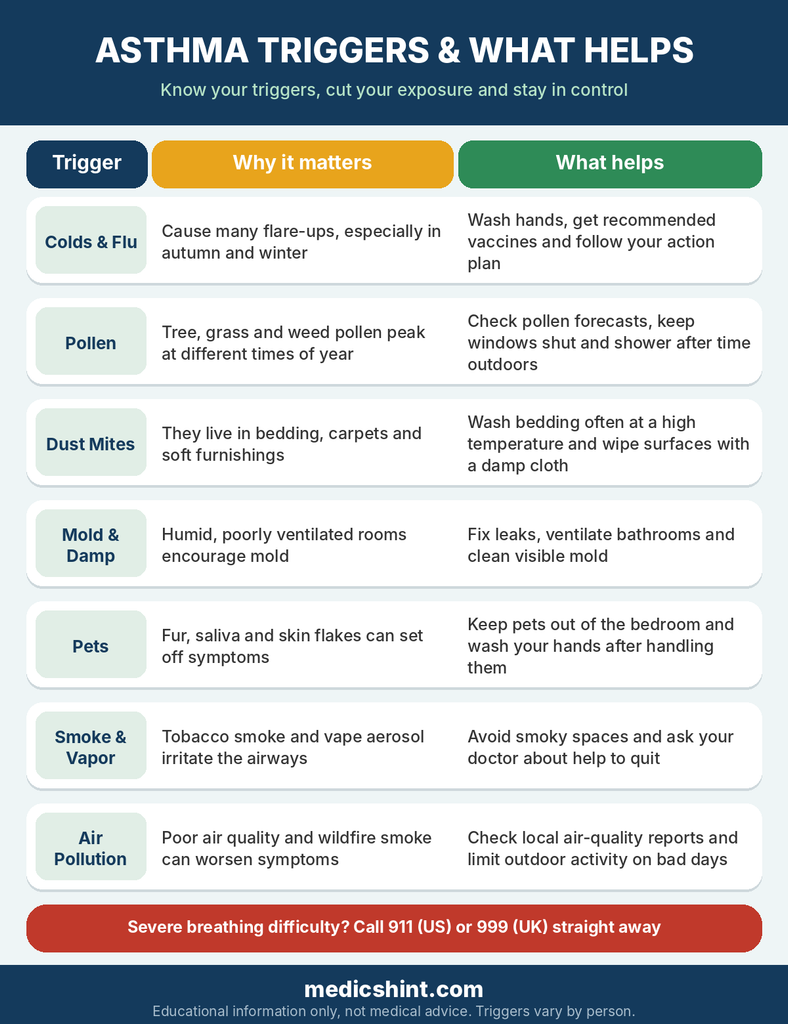
A trigger is anything that sets off or worsens your symptoms. Your triggers may differ from someone else’s, so it helps to note what happens before each flare-up.
| Trigger | Why it matters | What helps |
|---|---|---|
| Colds, flu and other infections | They cause many flare-ups, especially in autumn and winter | Wash your hands, get the vaccines your doctor recommends and follow your action plan when you feel ill |
| Pollen | Tree, grass and weed pollen peak at different times of year | Check local pollen forecasts, keep windows shut on high-pollen days and shower after time outdoors |
| Dust mites | They live in bedding, carpets and soft furnishings | Wash bedding often at a high temperature and wipe surfaces with a damp cloth |
| Mold and damp | Humid, poorly ventilated homes encourage mold | Fix leaks, ventilate kitchens and bathrooms and clean visible mold |
| Pets | Fur, saliva and skin flakes can set off symptoms | Keep pets out of the bedroom and wash your hands after handling them |
| Smoke and vapor | Tobacco smoke, secondhand smoke and vape aerosol irritate the airways | Avoid smoky spaces and ask your doctor about help to quit |
| Air pollution and wildfire smoke | Poor air quality can worsen symptoms | Check local air-quality reports and limit outdoor activity on bad days |
| Cold air and weather | Cold, dry air can set off symptoms, and thunderstorms in pollen season trigger sudden flare-ups in some people | Cover your nose and mouth in cold weather and watch the forecast |
| Strong smells and chemicals | Perfumes, cleaning sprays and workplace fumes irritate the airways | Ventilate rooms and choose fragrance-free products if smells bother you |
| Exercise | It can bring on symptoms when your asthma control is poor | Warm up and follow your doctor’s advice on medicine before activity |
| Strong emotions | Laughing, crying or stress can trigger symptoms in some people | Learn what keeps you calm and keep your reliever close |
Some people with asthma also react to certain over-the-counter pain relievers. Therefore, check with a pharmacist or doctor before you use them, and read our guide to over-the-counter pain relievers for general safety information.
How Doctors Diagnose Asthma in the USA and UK
No single test confirms asthma in everyone. In the US, a primary care doctor, pediatrician, allergist or pulmonologist usually makes the diagnosis. In the UK, however, the process normally starts with a GP or practice nurse, who can refer you to a specialist if needed.

Your healthcare professional will typically combine several pieces of evidence:
- Your story: which symptoms you have, when they happen and what sets them off
- Your history: personal and family history of asthma, eczema or allergies
- A physical examination
- Spirometry: a breathing test that measures how much air you can blow out and how fast
- Bronchodilator response: a repeat spirometry test after a quick-relief medicine, to see whether airflow improves
- Peak flow monitoring: blowing into a handheld meter over several days or weeks
- FeNO testing: a breath test that measures a marker of airway inflammation
- Allergy testing: when allergies may play a part
Because wheezing and breathlessness have other causes, your doctor may also check for other conditions before confirming asthma.
Asthma Treatment: Inhalers and Medicines Explained (US and UK Names)
Treatment aims to control daily symptoms, prevent attacks and let you live normally. Most people use inhalers, which deliver medicine straight to the airways. The names differ between the two countries, so this table shows how the terms line up:
| Type | Common US term | Common UK term | What it does |
|---|---|---|---|
| Quick-relief | Rescue or quick-relief inhaler, often albuterol | Reliever inhaler, often salbutamol (usually blue) | Opens the airways fast when symptoms appear |
| Daily long-term | Controller inhaler, often an inhaled corticosteroid | Preventer inhaler, usually an inhaled steroid | Calms airway inflammation; you take it regularly, even when you feel well |
| Combination | Combination inhaler | Combination inhaler | Contains two medicines; your doctor explains how and when to use it |
Albuterol and salbutamol are the same medicine under different names. People with more severe asthma may need extra treatments and a referral to an asthma specialist. In every case, never start, stop or change a medicine or its dose without advice from your healthcare professional, even when you feel better.
Get Your Inhaler Technique Checked
If you use an inhaler incorrectly, less medicine reaches your lungs. Therefore, ask your doctor, nurse or pharmacist to watch you use it and correct any mistakes. In addition, many metered-dose inhalers work better with a spacer, a tube or chamber that makes the medicine easier to inhale.
Asthma Action Plans and Check-Ups: What US and UK Doctors Recommend
An asthma action plan (UK doctors call it a personal asthma action plan) is a written guide you create with your doctor or nurse. It sets out:
- Which medicines you take every day
- What to do when symptoms start to worsen
- Which warning signs mean you need medical help
- When to call your doctor and when to call 911 or 999
Also, keep a copy on your phone and share it with family, school or colleagues. Asthma changes over time, so attend regular reviews. In addition, ask your doctor which vaccinations they recommend for you, such as the yearly flu vaccine, because respiratory infections are a leading cause of flare-ups.
Living With Asthma in the USA and UK: Exercise, Allergies and Everyday Habits
Exercise and Asthma
Asthma should not keep you from being active. In fact, regular exercise supports your lungs and general health. If exercise brings on symptoms, tell your doctor. It can show that your asthma needs better control, and your doctor can advise you on warming up and on using your medicine before activity.
Allergies and Asthma
Allergies and asthma often go together. Therefore, if pollen, pets, dust mites or mold seem to set you off, ask about allergy testing and ways to cut your exposure.
Diet and Healthy Weight
No diet treats asthma. However, a balanced diet and a healthy weight support your overall health and may make symptoms easier to manage. For practical tips, our healthy diet guide explains how to get started.
Can You Prevent Asthma?
No method prevents every case, because genes and environment both play a part. If you already have asthma, though, the best protection is to avoid tobacco smoke, reduce your triggers, take your medicine exactly as your doctor advises and keep your review appointments.
Asthma FAQs for US and UK Readers
What are the first signs of asthma?
Early signs often include a cough that lingers, especially at night, mild wheezing, getting out of breath more easily and a tight chest. However, other conditions can cause these signs, so ask a doctor to assess them.
What does an asthma attack feel like?
Most people describe a tight chest, wheezing, coughing and a feeling that they cannot get enough air. As an attack gets more severe, speaking in full sentences becomes difficult.
Is asthma curable?
No. Asthma is a chronic condition with no cure, but good treatment controls symptoms for most people and allows a normal, active life.
Can adults develop asthma?
Yes. Asthma can start at any age. For example, adult-onset asthma may follow a respiratory infection, allergies or workplace exposure, or appear with no clear cause.
Is wheezing always asthma?
No. Wheezing can have other causes, including infections and other lung or heart conditions. Therefore, a healthcare professional should assess repeated wheezing.
What is the difference between asthma and COPD?
Both cause breathing difficulty, but asthma often begins earlier in life and tends to come and go in response to triggers. In contrast, COPD usually develops later, most often in people who smoke or smoked, and involves lasting airway damage. Some people have features of both, so testing matters.
What is the difference between albuterol and salbutamol?
Nothing. They are the same quick-relief medicine. Americans call it albuterol, while the UK and many other countries call it salbutamol.
Can you exercise with asthma?
Yes. Most people with asthma can exercise safely when they keep their condition under control. However, talk to your doctor if exercise regularly triggers symptoms.
Can asthma go away?
Symptoms can improve or disappear for long periods, and some children seem to grow out of asthma. It can return later, so keep your doctor informed and do not stop treatment on your own.
When should I see a doctor about a cough or wheeze?
See a doctor if a cough or wheeze lasts more than a few weeks, keeps coming back, wakes you at night or limits your activities. However, seek emergency help straight away for severe breathing difficulty.
Final Thoughts: Managing Asthma Symptoms With Confidence
Asthma is a common, long-term condition that makes the airways inflamed and sensitive. It causes wheezing, cough, breathlessness and chest tightness, and infections, allergens, smoke, pollution, weather and more can set it off.
Asthma has no cure, but most people can control it with an accurate diagnosis, the right inhalers used correctly, a written action plan and regular reviews. Above all, know your triggers, know your warning signs, and know when to call 911 in the US or 999 in the UK.
Medical Disclaimer
This article is for general educational and informational purposes only. It does not replace professional medical advice, diagnosis or treatment. Asthma varies from person to person, and a qualified healthcare professional should personalize your care. Medical guidance and terminology can differ slightly between countries, so follow the advice of your own doctor or nurse. Do not start, stop or change asthma medicines without medical guidance. See our full medical disclaimer.
Sources and References
This article draws on general public-health guidance on asthma from the World Health Organization (WHO), the U.S. Centers for Disease Control and Prevention (CDC), the U.S. National Heart, Lung, and Blood Institute (NHLBI) and the UK National Health Service (NHS).
Related Guides on Medicshint
High blood pressure symptoms: warning signs and silent risks
Healthy diet guide: what to eat, what to limit and how to start
Over-the-counter pain relievers: uses, side effects and safety
Insomnia: symptoms, causes, treatment and ways to sleep better